
PANDI and Aceh Provincial Government Discuss Opportunities for Jawi Script in Digital Space
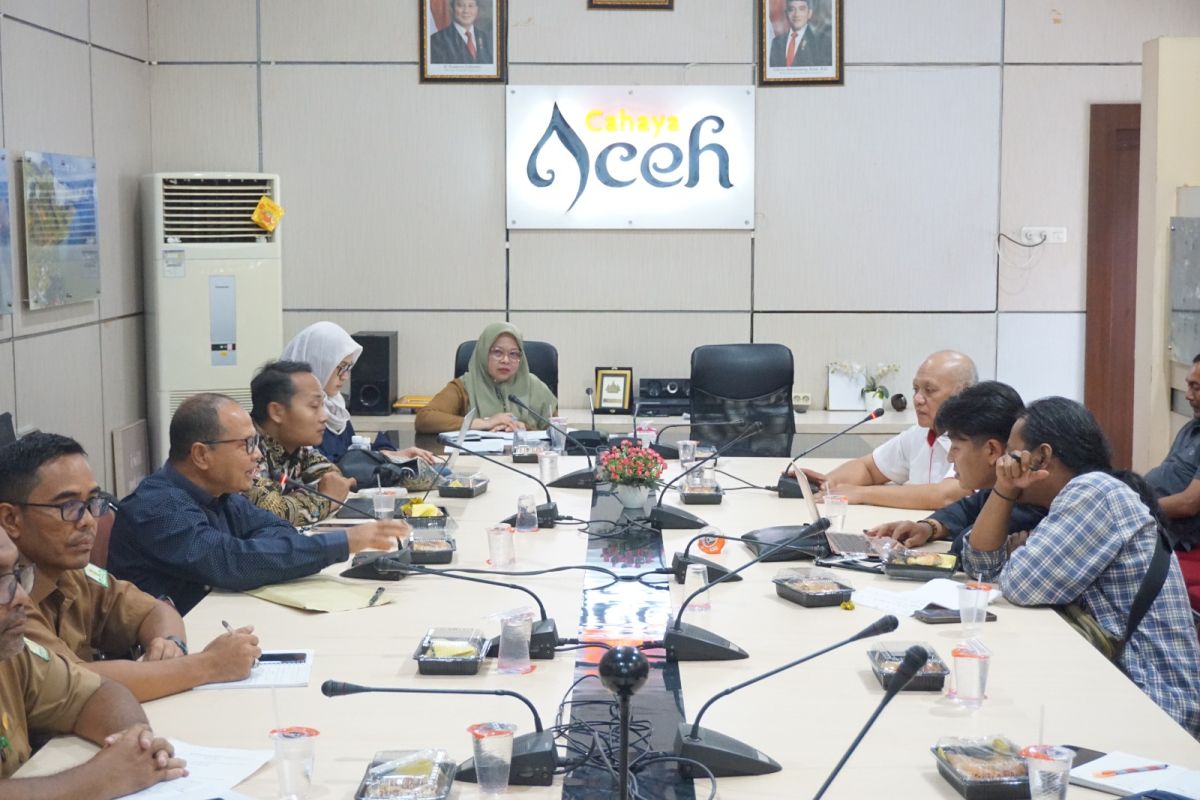
Jakarta (ANTARA) - The Indonesian Domain Name Registry (PANDI) and the Aceh Provincial Government have discussed opportunities to utilise the Jawi script, or Arab Melayu, within the digital space as part of internet domain names.
A meeting was held between the Chairman of PANDI, Isnawan, and the Head of the Aceh Provincial Culture and Tourism Office, Dedy Yuswadi, to discuss the development of local script domains. The discussion highlighted that developing these domains is not merely a technological issue, but a vital part of preserving linguistic and script diversity in the digital realm.
“The internet should be usable by the community in the languages and scripts they are familiar with. Through IDN, we want the richness of Nusantara’s scripts to not only be preserved as cultural heritage but also to live and be utilised within the digital ecosystem,” stated Isn’awan in a statement confirmed on Monday.
Isnawan noted that PANDI is currently studying the development of Internationalised Domain Names (IDN) at the Top-Level Domain (TLD) level, considering various possible representations, such as the names Indonesia, Indo, or Nusantara, written in Jawi script. The study encompasses linguistic aspects, technical requirements, global internet policies, user needs, and the readiness of the digital ecosystem.
The Jawi script has a long history in Aceh and various regions of the Indonesian archipelago, appearing in religious manuscripts, literature, administration, and historical documentation. Consequently, PANDI believes that the involvement of local governments, academics, communities, and practitioners is essential to ensure that the script forms used have a strong linguistic foundation and are accepted by the public.
The Head of the Aceh Culture and Tourism Office, Dedy Yuswadi, expressed the Aceh Government’s commitment to following up on this plan through coordination with relevant regional agencies, including regarding regulatory aspects. “We will follow up on this plan through coordination with relevant regional apparatus, including preparing the regulatory aspects. We just need to prepare the draft and continue following up so that we can move forward by next year,” said Dedy Yuswadi.
As a regional reference, Malaysia has already utilised the .مليسيا IDN ccTLD, which represents the name Malaysia in Arabic script and is managed by MYNIC.
The potential for developing regional scripts in the digital space is also viewed from a creative economy perspective. The Deputy for Digital Creativity and Technology at the Ministry of Creative Economy/Creative Economy Agency, Muhammad Neil El Himam, assessed that the digitalisation of regional scripts could open new markets for creative works and create economic opportunities for the community.
“From a creative economy perspective, the dream is to see more novels or writings published in regional scripts. The market is large because there are millions of regional language speakers. If regional scripts and languages can become an economic source, opportunities will arise in writing, publishing, marketing, and even the creation of businesses and jobs,” said Neil.
He added that the use of local script domains could strengthen this ecosystem. “The .id IDN could also be interesting. For example, a website in Java or Yogyakarta targeting local Javanese-speaking communities could use their own script. Eventually, they could run side-by-side, with both Latin and IDN versions available.”
PANDI is also encouraging support from the Aceh Government in strengthening regulations and policies, coordinating with Jawi script communities, academics, and practitioners, as well as increasing the socialisation and use of the Jawi script among the public and within government environments.
The development of the Jawi script IDN TLD will next require studies regarding writing consistency, the use of Unicode characters, the potential for character similarity, and the readiness of Universal Acceptance to ensure that non-Latin script domains can be used effectively across websites, applications, emails, and other digital services.