
Panda Bond: How Purbaya Plans to Free Indonesia from Dollar Dependency
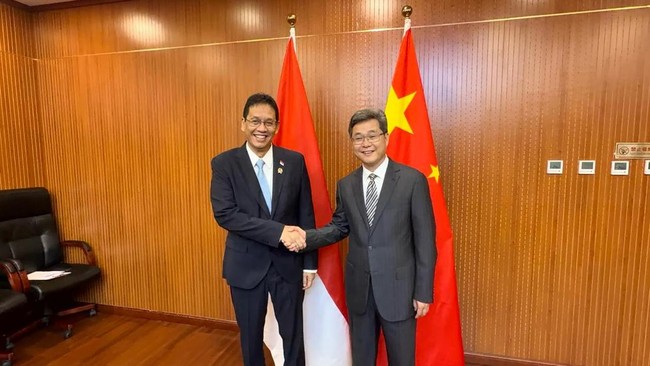
The Ministry of Finance has explained the rationale behind the upcoming issuance of Panda Bonds, framing it as a key diversification strategy for state financing. Plt. Director General of Financial Sector Stability and Development, Herman Saheruddin, stated that the move aims to seek alternative sources of funding beyond the US dollar. “The reason for issuing Panda Bonds is to look for other sources of financing, or it can be said as diversification. With this diversification, the hope is that the risk to our state budget from debt financing sourced from exchange rate risks can be diversified, and we can reduce the impact of dependency on the US dollar,” Herman told reporters in Jakarta on Thursday.
He noted that by securing alternative financing sources, the significant impact of dollar fluctuations on the state budget, as witnessed during the 1998 crisis, can be mitigated. “One of these diversification efforts involves entering countries that have demand, those that have money and are willing to appreciate Indonesia’s reputation and fundamentals, one of which is China,” he added. Herman views China as a partner capable of aiding this diversification, as the pricing of the bonds reflects Indonesia’s economic fundamentals. “China is one of several countries interested in financing Indonesia by purchasing our bonds at a pricing that makes sense, meaning it is not far from our fundamentals,” he explained.
Furthermore, the issuance is intended to minimize the impact of a strengthening US dollar by diversifying currency exposure. “Now we are diversifying. If we are too dependent on the US dollar, I think it will become less stable, and the state budget will continue to suffer deficits if we only rely on the dollar,” he clarified. In a previous meeting with the Regional Representative Council, Purbaya emphasized that the Panda Bond is highly strategic for the government as part of efforts to diversify government securities, with the ultimate goal of strengthening rupiah stability. “Don’t just be dollar-based, but also yuan-based. Their economy is just as large, the second largest in the world, and we have a bilateral swap agreement with China, a local currency transaction scheme, according to Bank Indonesia. So, with this, the pressure on the rupiah will weaken significantly,” Purbaya stated.
He also explained that the interest burden from Panda Bonds is expected to be cheaper than that of US dollar-denominated bonds. “In China, we expect the interest on Panda Bonds to be cheaper than in America, the dollar base,” he said. Purbaya further detailed that the issuance concept will utilize the Local Currency Transaction scheme, eliminating the need for conversion to US dollars. “I am also thinking that later we might use the LCT scheme for the Panda Bond issuance, where they pay in yuan, and the central banks there and here manage it. The point is, I receive rupiah, so I am not affected by fluctuations or pressure from the dollar,” he concluded.