
Pancasila Sanctity Museum: Changing how generations read history
Jakarta (ANTARA) - Historical museums may need to change their storytelling methods to ensure that stories of the past remain understandable to generations that did not experience them.
This idea is evident in the new face of the Pancil Sanctity Museum, located in the Pancasila Sakti Monument area, Lubang Buaya, East Jakarta, which was inaugurated by President Prabowo Subianto on Thursday (1/10), coinciding with the commemoration of Pancasila Sanctity Day.
The museum’s transformation extends beyond building and spatial renovations. The government, through the Ministry of Culture, has altered the storyline, chronology, historical context, and exhibition layout, while adding digital technology and immersive spaces. Minister of Culture Fadli Zon stated that these updates were undertaken to strengthen the museum’s function as a space for historical learning.
This change simultaneously addresses inherent issues within historical museums. The same collections can produce different experiences when the method of presentation changes.
Dioramas, which for decades have been the primary objects of visitor observation, are now placed within a more complete narrative flow, providing visitors with the necessary context regarding the events displayed.
A total of 34 original dioramas have been preserved. These collections depict various Indonesian historical events ranging from 1945 to 1974. By maintaining these authentic dioramas, the revitalisation does not alter the primary objects that form part of the museum’s identity; rather, the update focuses on how visitors interact with the collection.
Fadli explained that the refinements were necessary because the previously presented sequence of events and timelines were incomplete. Historians were involved to complete the narrative and historical context. This change ensures that the exhibition flow does not rely solely on three-dimensional objects, but rather on information that connects one event to another.
The change in delivery is apparent from the moment visitors enter the exhibition space. The museum now utilises an ‘in-situ’ concept, with a flow that connects the museum building to several historical sites within the Lubang Buaya area.
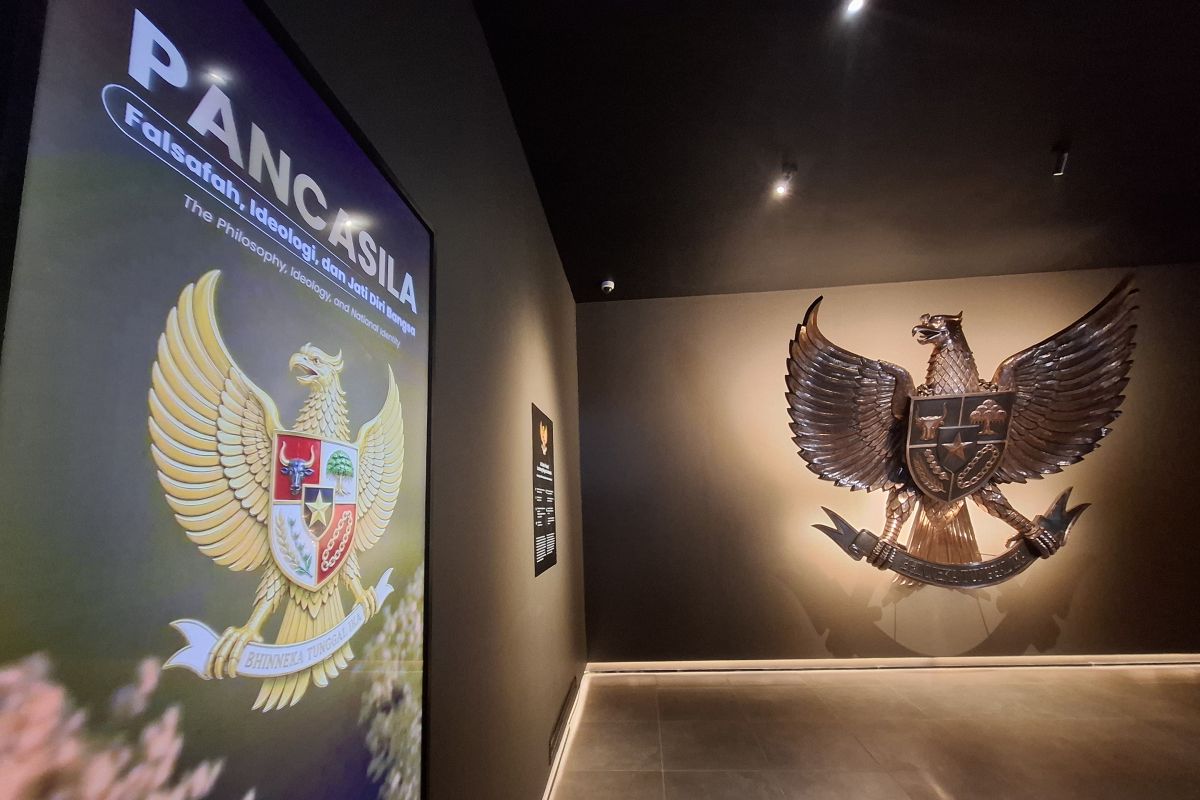
On the ground floor, visitors will find a three-dimensional relief installation of the Garuda Pancasila, followed by information regarding the birth and formulation of Pancasila, the dynamics of global communism, and the history of the movement’s entry into Indonesia.
This arrangement shifts the museum’s position from a space that merely presents collections to a space that guides visitors through a sequence of knowledge. Textual, visual, and audio information work together as links between the exhibited objects and the events being explained.
Technology has become a key part of this transformation. Several dioramas are now equipped with video displays. The glass of the dioramas instantly transforms into a screen displaying videos about the events depicted in the diorama scene. These animated videos were created using AI.