
Pancasila is Sound, but Reality is the Problem
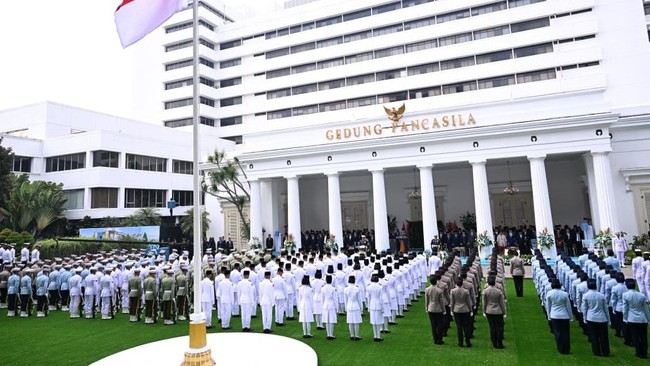
There’s something odd every June 1st. The nation suddenly loves Pancasila. National hashtags explode, red-and-white themed content floods timelines, quotes from founding fathers flood stories with golden aesthetic filters. Algorithms celebrate, the state feels it has fulfilled its duty, and we unwittingly participate in a performance more akin to collective theatre than genuine reflection. Afterwards, silence returns in the following days. Pancasila is shelved once more. We live in an era where a value can go viral in eight hours and be forgotten in two. An era where truth competes with content, justice is measured by likes, and the loudest voice isn’t always the right one—but the most viral. This is where Pancasila faces its true test—not from ideological enemies, but from the noise we create ourselves. Amidst the noise, there is a silence seldom discussed. The silence of a small congregation whose place of worship is sealed because they lost out to a louder, larger crowd. The silence of a young woman reported to police for posting unpopular opinions. The silence of indigenous communities whose ancestral land titles are overruled by concession permits signed in Jakarta. The silence of workers whose wages stagnate while capital owners’ financial reports break records. We memorise the first and fifth principles, yet these silences often go unheard amidst the clamour of commemorations. On June 1, 1945, Sukarno did not speak to a happy nation. He addressed a nation yet to exist, to an uncertain future, confident that the foundation laid that day would determine the course of Indonesia’s ship for decades to come. The founders were not building an ideology for display. They were assembling a tool to be used—a tool strong enough to accommodate all differences, flexible enough to embrace all groups, and sharp enough to cut through any injustice blocking the path. What Sukarno may not have envisioned—or perhaps did—is the possibility that this tool would one day be displayed in a showcase, not as a guiding light for the nation’s conscience. Today, we witness something hard to call anything but historical irony. Pancasila is loudest in the mouths of those least troubled by injustice. It is used as a shield by forces actively eroding its core values. Financial oligarchies continue to encroach and dictate public policy from behind the scenes. Wealth concentrates among a few oligarchs as social safety nets shrink, and democracy slowly transforms into procedure without substance. We have grown accustomed to worshipping names rather than testing their function. We glorify symbols without questioning whether they still reflect reality. And when someone dares to ask, power easily silences the conversation with a fatal accusation: ‘unpatriotic’. True nationalism is not blind loyalty to the state. Nationalism is about loyalty to the values that justify the nation’s existence. So the question we must ask ourselves isn’t whether we love Pancasila. That question is too easily answered with ‘yes’. Instead, a more honest and painful question is: where do we stand when Pancasila is betrayed in its own name? Where are we when minority groups worship in fear while the state turns a blind eye? Where are we when digital spaces overflow with divisive misinformation, while our critical literacy lags behind the speed of fingers spreading hatred? Where are we when public policy emerges not from open consultation, but from shadowy lobbying that never makes the news? Answers to these questions reflect our commitment to Pancasila far more than perfect recitation of its principles. This generation doesn’t need a prettier, louder Pancasila. What’s needed is collective awareness—a consciousness that doesn’t stop at oneself, moving forward by correcting, testing, and reminding each other that these values belong to all, not the state, rulers, or the loudest voices. They rest on the shoulders of every citizen. Pancasila doesn’t need eloquent defenders. It needs those willing to be uncomfortable, to stand on the right side even if unpopular, to speak for the silenced, to test every policy with a simple question: who is this fair for? This is how the founders actualised their vision—not through memorisation, but through collective action. Not through celebration, but through risk, filling gaps and upholding shared aspirations. Sukarno left us not with instructions, but with a reminder sharper than any speech since: ‘however unity is achieved, however it appears, the ship carrying us to independent Indonesia is the ship of unity.’ That’s what Sukarno said. Even now, that ship still sails. But it doesn’t need passengers busy primping on deck while letting the hull…