
Pancasila: Indonesia's Leitstar for Sustainability
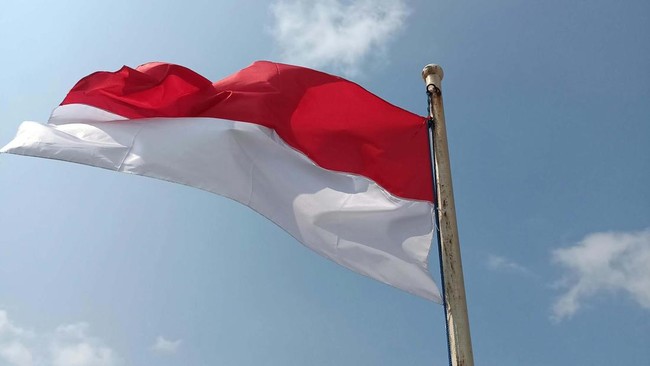
Pancasila, which we commemorate every 1st of June, does more than just lay the foundation of the state. It provides the envisioned image of Indonesia’s future civilisation: what Soekarno called the ‘philosofische grondslag’—a philosophical basis and a ‘leitstar’, a guiding star.
The direction is towards ‘baldatun thayyibatun wa rabbun ghafur’, a prosperous land under the protection of the Almighty. This image is a mandate. The greatness of a nation is measured by how faithfully they realise the image entrusted to them by the founders.
An Image of Sustainability
Long before the formulations of the Club of Rome and the Paris Agreement, the founding fathers had imagined a civilisation built not on ecological extraction and exploitation, avoiding industrial greed and closing the gap of social inequality. All of these are fundamental elements currently popularised as sustainability issues.
The First Principle is not merely an acknowledgement of One Supreme God. It is the theological aspect of the image of sustainability: a society that views nature as a trust to be guarded. The Earth is lent, not gifted. Ecology is a stewardship. Each generation must pass it on in a condition no worse than when they received it.
The Second Principle establishes justice and civility as a mirror of the relationship between humans and one another, and with nature. The image it contains is a society that does not take more than is needed, that does not exploit for the sake of accumulation, and is aware that every action today leaves consequences for those yet to be born. Civility applies not only horizontally among those living now, but also vertically, across generations.
The Third Principle envisions unity not just in independence ceremonies. It imagines ‘gotong royong’ (mutual cooperation) as a collective response to crises in any condition: ecological crises, prosperity crises, or justice crises. No one is left to bear a disaster alone. No region is left to bear the burden of extraction without protection from others.
The Fourth Principle assumes that no major decision is made without hearing the voices of those most affected. Farmers, fishermen, labourers, and indigenous communities: they are not mere spectators of development, but voices that must be present in every deliberation that determines the fate of the land, water, and air of their homes.
The Fifth Principle completes the entire image with the most concrete visual: the economic benefits of the nation’s wealth, from Sabang to Merauke, from cities to remote areas, distributed fairly without painful inequality. Prosperity is not a monopoly of a few; it is the right of every citizen.
Five principles, five images of a sustainable society. Together, they form a blueprint for a civilisation that, even by today’s global standards, is still considered visionary.
The Gap Between Reality and Image
People in Aceh, West Sumatra, and North Sumatra are currently calculating their losses. Fields washed away, houses cracked, livelihoods vanished along with forests cleared for concessions. This is the bill from an extractive economy that for decades has harvested profits from nature without bearing the costs of its destruction.
Clean water must still be paid for by the Indonesian people at a higher price than citizens of Singapore, a country with a much higher per capita income. Food availability remains a luxury for millions of families in rural areas. Energy has yet to reach villages whose lands are actually rich in resource reserves.
Indonesia’s demographic bonus has not yet secured decent employment or affordable housing, alongside weakening industrialisation and property prices that never stop outrunning the ability of the people to chase them. Access to quality education is still unevenly distributed between the centre and the periphery, between those born into the right families and those who are not.
And here lies the widest gap: structural inequality. A system that allows the greed of capital to erode ecology also locks the powerless away from choices that allow them to live in harmony with nature. The poor consume more in sachets, use fossil fuels because they cannot access clean energy, and burn waste because waste management services never reach the alleys where they live.
They depend on what is available and affordable, not what is sustainable. Structural inequality is not just about who is rich and who is poor. It determines who can choose a future and who is forced to survive day by day by whatever means are available.
Indonesia currently ranks 72nd out of 122 countries in the Intergenerational Solidarity Index. This is a marker of all the aforementioned failures and a mirror of how far the reality differs from the ideal image.
Water, food, energy, housing, education, and fair economic access are not just matters of welfare; they are prerequisites for Indonesia’s sustainability as a civilisation. A safe and comfortable ecological carrying capacity is the foundation of all those prerequisites.
When this foundation is systematically eroded, when basic rights are not properly distributed from generation to generation, it is not just prosperity figures that collapse. What collapses is the nation’s capacity to maintain its existence. Civilisations do not perish because they lose wars. They perish because they fail to maintain their own prerequisites for life. Indonesia, with all its natural wealth and demographic potential, is not immune to that law.