
Pancasila in the Digital Age: Time to Learn to Disagree Without Hatred
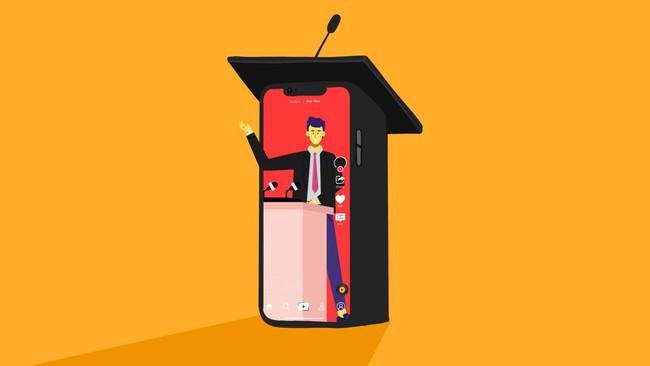
There is a growing unease that is becoming harder to ignore: we are more easily connected, but not necessarily better able to understand one another. Fingers move quickly to reply to comments, share video clips or label people whose views differ from our own.
In digital spaces, differences that should be the basis for conversation often turn into arguments. We have more channels through which to speak, but are we also learning to listen?
This concern matters because the internet is no longer a peripheral space in Indonesian society. The Indonesian Internet Service Providers Association (APJII), in its 2026 Indonesian Internet Profile Survey, recorded internet penetration of 81.72%, or around 235.26 million users, up from 80.66% (229.43 million users) in its 2025 survey.
This means digital space has become part of our shared living environment. People use it to seek information, build relationships, work and study, while also forming views about other groups. What happens there does not stop at the screen; it can affect relationships at school, in the workplace and in the neighbourhood, as well as how we treat our fellow citizens.
The high level of engagement among young people makes this issue even more relevant. In APJII’s 2026 survey, internet penetration among Generation Z reached 89.02%, just below the figure for millennials (90.34%).
Meanwhile, Indonesian Youth Statistics 2024, published by Statistics Indonesia (BPS), shows that young people mainly use the internet for entertainment (88.42%), social media (86.55%) and searching for information or news (86.35%).
These figures do not in themselves indicate a problem. But they are a reminder that social media and the flow of information have become part of everyday life, shaping how young people interact, judge and respond to differences.
The ability to use technology therefore needs to go hand in hand with the ability to consider its social impact. Someone may be adept at using apps, understand their features and find information quickly, yet still be easily provoked by a sensational headline or feel compelled to shame someone publicly.
Digital literacy is not just the ability to operate devices or distinguish between true and false information. It also includes an awareness that every post has an audience, every comment can cause hurt, and every decision to share content helps shape the atmosphere of our shared spaces.
The 2025 Indonesian Digital Society Index (IMDI) offers an interesting picture. The national index stood at 44.53. The infrastructure and ecosystem pillar scored 53.06, while the digital skills (literacy) pillar reached 49.28. The empowerment pillar, however, was the lowest, at around 34 points. It should be noted that the 2025 measurement incorporates the Digital Literacy Index, so comparisons of literacy scores with previous years should be treated with caution.
Even so, the gap between the pillars is a reminder that access and skills do not automatically lead to technology being used to strengthen society’s capacity. The challenge is not simply to connect more people, but to ensure that connectivity helps them participate, collaborate and live alongside one another more constructively.
This is where the role of the Pancasila Ideology Development Agency (BPIP) needs to feel closer to everyday life. Promoting Pancasila should not stop at ceremonies, memorising its principles or occasional messages of national unity on social media.
BPIP needs to bring Pancasila’s values into situations that people actually encounter in the digital world: when someone disagrees in a comments section, receives unverified news, witnesses online bullying or is tempted to circulate content that demeans another group.
Through education, public communication, collaboration with communities and content creators, and digital materials relevant to young people, BPIP can translate the values of humanity, unity and deliberation into guidance that is easy to understand and put into practice.
Under Presidential Regulation No. 7 of 2018, BPIP is tasked with assisting the President in formulating policy direction for the promotion of Pancasila ideology, as well as coordinating, synchronising and overseeing that work comprehensively and continuously.
The regulation does not explicitly mention digital spaces, but its mandate for comprehensive promotion provides a basis for BPIP to reach the spaces where citizens now interact extensively. Success should not be measured by how often Pancasila is mentioned, but by whether people become better able to disagree without insulting, criticise without inciting, and use technology without losing their sense of humanity.
Pancasila provides an ethical framework for assessing such behaviour. The second principle reminds us that the person behind an account is not merely an avatar or a target for mockery, but a human being with dignity. The third principle demands that differences in identity not become a pretext for dividing our shared life.
The fourth principle teaches that decisions and opinions should be formed through considered discussion, not through volume or the number of likes. These values do not ask us to avoid criticism. Honest and forthright criticism is essential, but it should be directed at ideas, policies or actions—not at insulting someone’s identity.
This can begin with simple habits. Before sharing a news story, check its source and context. When you disagree, explain why without belittling others. When you see bullying, do not amplify it by commenting or sharing it for entertainment.
If a discussion becomes heated, pausing does not mean losing; it may be a way to keep the conversation humane. Schools, families, civil society organisations, digital platforms and government institutions each have a role in building these habits. Citizenship education needs to be present not only in the curriculum, but also through examples of behaviour and practical spaces in which to learn.
Responsibility, of course, cannot be placed on individuals alone. Platforms need to provide effective reporting and moderation systems, while public institutions must offer information that is clear, accessible and promptly corrected when it is wrong.
The government should also assess digital literacy programmes by changes in behaviour, not merely by the number of activities or the reach of their publicity. Are people better able to recognise information manipulation? Are discussion spaces becoming safer? Is participation by different groups becoming more meaningful? Questions like these can turn digital literacy from a slogan into an agenda whose results can be assessed.
Ultimately, digital progress cannot be measured only by how many people are connected to the internet or how quickly they master technology. It is also evident when differences do not immediately become hostility, information is not shared irresponsibly, and criticism still leaves room for human dignity.
Digital literacy enables us to speak. Pancasila reminds us that being a good citizen also means knowing when to listen, how to respect differences and why our shared life must not be sacrificed just to win an argument.
Source: jawawa.id (https://jawawa.id/newsitem/pancasila-in-the-digital-age-time-to-learn-to-disagree-without-hatred-1793350326)
Originally published by CNBC Indonesia (https://www.cnbcindonesia.com/opini/20261030152322-14-780977/pancasila-di-era-digital-saatnya-belajar-berbeda-tanpa-membenci), translated from Indonesian