
Pancasila Founder Suffered in Later Years, Detained and Depressed
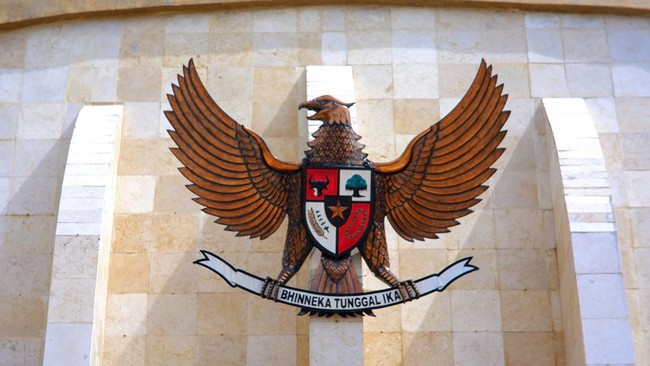
Every 1 June, Indonesia commemorates Pancasila Day. This date refers to the speech by Indonesia’s first president, Soekarno, during the meeting of the Preparatory Committee for Indonesian Independence (BPUPKI) on 1 June 1945.
In this historic address, Soekarno introduced the term ‘Pancasila’ for the first time before the nation’s founders, which was later adopted as the state’s foundational philosophy.
For this role, Soekarno is recognised as both the founder and the architect of Pancasila. He expressed gratitude, stating: ‘I thank God for making me the drafter of Pancasila; for making me the one who unearthed the five pearls buried in the soil of Indonesia’s people, which is Pancasila,’ in his speech ‘Indonesia Will Be Strong As Long As We Remain Loyal to Pancasila’ (5 October 1966).
However, the figure who played a pivotal role in the nation’s foundation met a tragic end in his later years. After being ousted from power, Soekarno lived in isolation, suffering ill health and depression.
This situation began when General Suharto officially replaced Soekarno as Indonesia’s president on 7 March 1967. From then on, Soekarno’s political influence was gradually curtailed.
Soekarno was initially ordered to leave the State Palace and moved to Bogor Palace. However, his status as a political prisoner meant his life was far from peaceful. He was subjected to continuous interrogation over alleged involvement in the 30 September Movement tragedy.
Uncomfortable with life at Bogor Palace, Soekarno was relocated to Wisma Yaso in 1969. It was there that the proclamator spent his final days in isolation.
Historian Peter Kasenda, in his book ‘The Last Days of Sukarno’ (2013), noted that during his time at Wisma Yaso, Soekarno was under tight surveillance and forbidden from communicating with the outside world.
Each day, Soekarno lived alone, grappling with mental pressure from relentless interrogations. This led to a steady decline in his mental and physical health, with reports of him talking to himself.
At the same time, his long-standing kidney disease worsened. While president, he had regular medical treatment for it, but as a political prisoner, he no longer had access to adequate healthcare.
The only doctor available to him was a veterinarian, who was obviously unable to provide proper medical care.
Consequently, Soekarno faced daily mental anguish and kidney pain. His condition deteriorated until he fell critically ill and died on 21 June 1970.
Even after his death, Soekarno’s legacy in Indonesian history remained unrehabilitated. During the New Order regime, the government banned the commemoration of Pancasila Day on 1 June.
The ban took effect from 1970. The government deemed Soekarno’s teachings should not be publicly commemorated. Instead, the New Order regime emphasised the commemoration of Pancasila’s Sanctity Day on 1 October.
Soekarno’s role as the founder and architect of Pancasila was only reinstated after the fall of the New Order regime in 1998. This culminated in 2016 when the government officially designated 1 June as Pancasila Day, a national holiday commemorating Soekarno’s 1945 speech.