
Pancasila Deemed Effective as a Bridge for Differences, Extreme Ideologies, and Divisive Politics
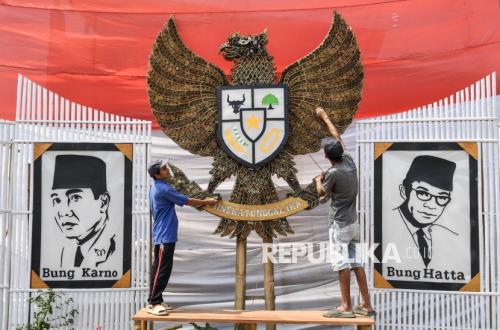
Amidst the heavy influx of transnational ideologies and the strengthening of divisive politics targeting digital spaces, Pancasila has once again proven its resilience. It serves not merely as a ceremonial jargon, but as a vital adhesive that keeps Indonesia intact.
According to radicalism and terrorism observer, Dr Amir Mahmud, the strength of Pancasula is tested when the nation faces two simultaneous threats: extremism in the name of religion and identity politics designed to divide society. “Pancasila is highly effective as a bridge for differences. From Sabang to Merauke, across differences in ethnicity, race, and religion, everything can be accommodated,” Dr Amir Mahmud stated in Solo on Tuesday (6/10/2026).
A lecturer at the Postgraduate Programme of Islamic Religious Education at Nahdlatul Ulama University (UNU) Surakarta, he believes that a pluralistic society like Indonesia cannot survive on superficial tolerance alone. Shared values are required to bind the nation so that differences do not transform into segregation, intolerance, or open conflict. “Pancasila teaches that difference is a social reality that must be managed through humanity, unity, deliberation, and justice,” he said.
Dr Amir Mahmud warned that extreme ideologies today no longer operate in the shadows but are very overt on social media. Narratives of hatred, intolerance, and incitements to violence are packaged using religious language and false nationalism. To face this, security approaches alone will never be sufficient.
“Extremism and radicalism that drive hatred and violence need to be addressed not only through security approaches but also through education, literacy, dialogue, and the strengthening of social resilience,” explained the former combatant. He made a clear distinction: security measures should only be deployed when hate speech escalates into armed physical action. As long as it remains within the realm of discourse and propaganda, the weapons to use are moderate literacy and national dialogue.
Furthermore, he assessed that divisive politics is a new enemy as dangerous as transnational ideologies, as both seek to destabilise unity by exploiting public emotion. Therefore, the government cannot act only at the elite level. Dr Amir encouraged the strengthening of Pancasila down to the village level through Focus Group Discussions (FGD) and open discussion forums involving diverse backgrounds.
“The community must have the ability to recognise that narratives of intolerance, radicalism, and terrorism have the potential to destroy the social order of the nation and state,” he remarked.
In his view, the most effective way to uphold Pancasila is not by building new hatred towards other groups, but by strengthening national consciousness itself. “Combating transnational ideologies and upholding Pancasila is done not by building new hatred, but by strengthening dialogue, literacy, and national awareness. This is what is truly extraordinary,” he said.
For Dr Amir, Pancasila Sanctity Day is a moment for reflection, not just a historical ceremony. The strength of Pancasila lies in its ability to remain alive as living values in societal behaviour and state administration, despite continuous attempts to undermine the Unitary State of the Republic of Indonesia (NKRI).
“Indonesia is a very pluralistic nation; we need a common ground that allows differences to live without turning into conflict. That is the spirit of plurality upheld by our heroes,” he expressed.
He also urged the public not to doubt Pancasila. “Pancasula must continue to be understood, studied, and proven relevant through practical life in society. The measure of Pancasila’s strength is not merely how often we utter or pledge it, but how far its values can answer the real problems facing this nation,” said the Director of the Amir Mahmud Centre.