
Pancasila Day: Students Highlight Importance of Free Nutritious Meals as Human Resource Investment
Human resource development is considered a top priority in the efforts to realise ‘Golden Indonesia 2045’. Amid various government development programmes, the Free Nutritious Meal (MBG) policy is seen as having a strategic role because it addresses the basic needs of the community while serving as a long-term investment in the quality of future generations.
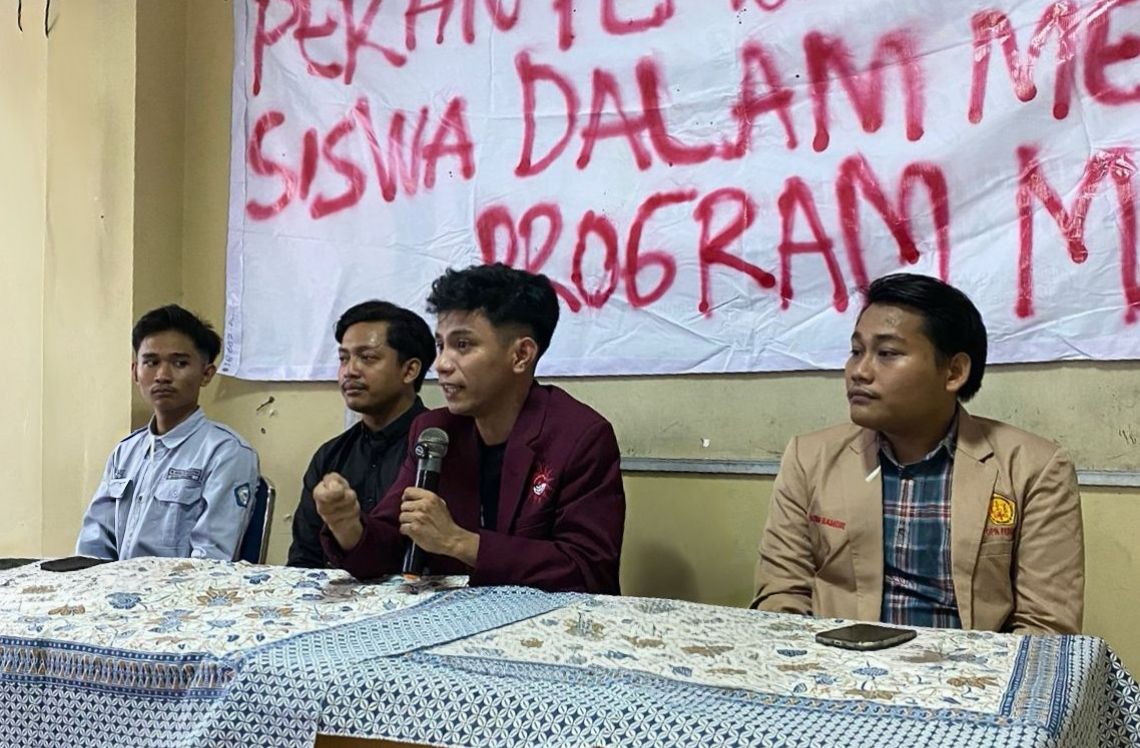
This view emerged during a national discussion organised by the Executive Board of Muhammadiyah and ‘Aisyiyah Universities (BEM PTMA) Indonesia in Banten to commemorate Pancasila Day on 1 June. Under the theme ’MBG as Mandatory Spending for Indonesian Human Resource Development’, the discussion addressed the position of the MBG programme in national development and the challenges of its field implementation.
Yogi Alidrus, the Central Coordinator of BEM PTMA Indonesia, argued that the MBG programme should not be viewed merely as social assistance. According to him, meeting the nutritional needs of the community, particularly children and students, is a strategic state investment in building the quality of Indonesian people.
“A great nation is not only built with magnificent infrastructure but also with the quality of healthy, intelligent, and competitive humans. MBG must be viewed as a long-term investment to produce Indonesia’s golden generation,” said Yogi.
From a public policy perspective, discussion participants assessed that MBG deserves to be positioned as mandatory spending or a priority state expenditure. Indonesia is already familiar with mandatory allocation policies in the education and health sectors. They argued that human resource development also requires sustained budgetary commitment because its impact is decisive for the nation’s future competitiveness.
Investment in nutritional fulfillment is believed to have multi-layered effects across various sectors. In addition to helping reduce stunting rates, the programme has the potential to increase student learning abilities, lower dropout rates, improve public health, and enhance the quality of the national workforce in the long term.
However, participants emphasised that support for MBG does not mean closing the door to criticism regarding its implementation. In a democracy based on Pancasila, constructive criticism is necessary to ensure the programme runs effectively and reaches the intended targets.
Yogi noted the importance of distinguishing between criticism of programme implementation and rejection of the programme’s objectives. He stated that while the goal of improving nutritional quality is correct, implementation must be monitored and evaluated regularly to ensure transparency and maximum benefit for the people.
Several implementation challenges were also highlighted, including the accuracy of beneficiary data. There is potential for data discrepancies in several regions, necessitating stronger data integration between central and regional governments. Furthermore, the nutritional quality of the distributed food must be a primary concern to ensure it meets the specific needs of students.
Budget management remains a critical issue. Given that the programme utilises significant state funds, transparency and accountability are absolute requirements to prevent misappropriation. Additionally, the government must ensure equitable service delivery, particularly in remote, outermost, and least developed (3T) regions, to ensure access is uniform across the archipelago.
Participants also highlighted the need for continuous evaluation of the programme’s impact on the State Budget (APBN). The effectiveness and efficiency of financing must be measured to ensure MBG does not diminish the quality of public services in other strategic sectors.
As a contribution to national development, BEM PTMA Indonesia offered several recommendations, including strengthening public oversight by involving students, academics, media, and civil society. They also urged the government to strengthen digitalisation and data transparency through open monitoring mechanisms to increase accountability and public trust. Furthermore, BEM PTMA noted that MBG could serve as an instrument for regional economic empowerment if it involves local farmers, fishermen, livestock breeders, and MSMEs in the food supply chain.