
Pancasila Day: Nurturing Our Shared Home, Strengthening a Progressive Indonesia
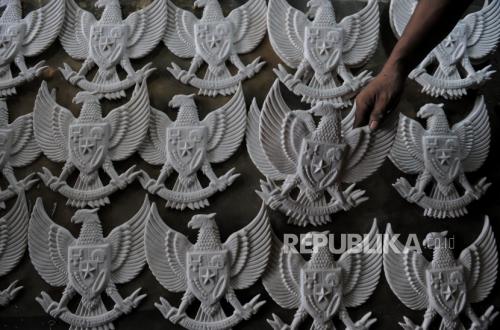
June 1 is not merely a historical marker of Pancasila’s birth. This moment serves as a reminder that the Indonesian nation was built on a noble agreement to coexist amid diversity.
Amid religious, ethnic, cultural, linguistic, and political differences, the nation’s founders successfully formulated a foundation capable of uniting over 280 million people into a strong national bond.
From Yudi Latif’s perspective, as seen in his works such as ‘Negara Paripurna’, ‘Wawasan Pancasila’, and ‘Revolusi Pancasila’, Pancasila is not merely a normative state ideology but a ‘shared home’ that accommodates all elements of the nation without erasing individual identities. Pancasila serves as a convergence point uniting religious values, humanity, democracy, unity, and social justice into a cohesive whole.
This concept is increasingly relevant in today’s Indonesia. The world faces serious challenges including political polarisation, identity extremism, rising intolerance, and social fragmentation threatening national cohesion. Many countries experience public distrust in political institutions and democracy. Yet Indonesia possesses a valuable social asset: Pancasila.
Political scholars like Benedict Anderson describe the nation as an ‘imagined community’—a collective consciousness built for coexistence. In Indonesia’s context, Pancasila is the primary glue of this national community, enabling a highly diverse society to maintain shared national goals.
Mochtar Pabottinggi asserts Pancasila as the ‘Public Ethics of the Indonesian Nation’, regulating state-citizen relations and serving as a moral guide for managing differences and social conflicts.
This aligns with American political philosopher John Rawls’ theory that diverse societies require an ‘overlapping consensus’—a common ground acceptable to all groups. In Indonesia, this consensus is Pancasila, allowing each group to preserve its identity while upholding national unity.
I believe Indonesia’s future politics must prioritise unity over division; ideas over enmity; cooperation over widening differences.
This spirit forms a cornerstone of PSI’s struggle. As a renewal-oriented party, PSI views diversity as a national strength, not a threat. PSI serves as a shared home for all citizens who believe Indonesia can only progress when every segment of society has equal opportunity to contribute.
In this context, Pancasila’s values strongly align with PSI’s mission: upholding tolerance, meritocracy, equal opportunities, respect for the rule of law, and prioritising the people’s interests. PSI’s diversity-focused politics is not merely an electoral strategy but a tangible manifestation of Pancasila in modern democratic practice.
Meanwhile, we must acknowledge the foundational development laid by Joko Widodo over the past decade. National and international studies show that infrastructure development, strengthened regional connectivity, digital transformation, public service reforms, industrial downstreaming, and expanded education access have significantly boosted Indonesia’s competitiveness.