
Pancasila Day: Haedar Nashir Warns Against Rhetoric Without Practice
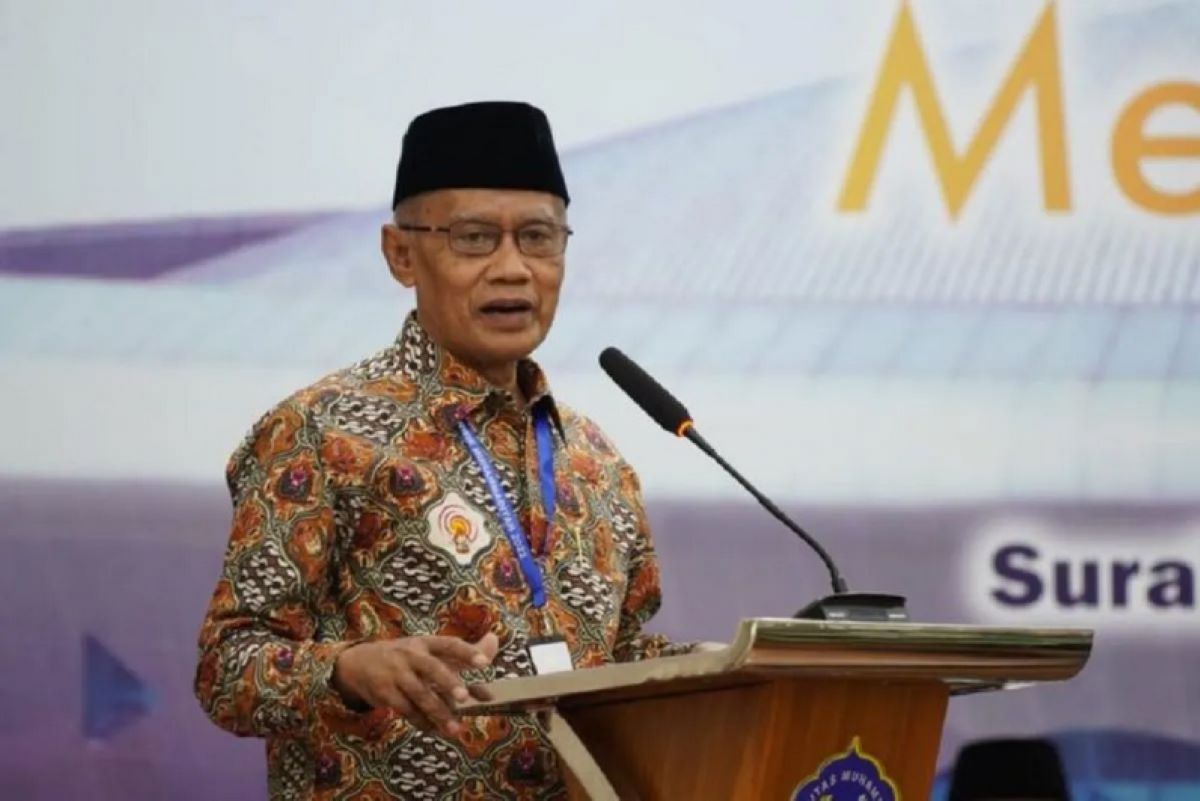
The commemoration of Pancasila Day on 1 June should not stop at ceremonies, rituals, and rhetoric-laden speeches. What matters more is the tangible implementation of Pancasila’s noble values in national life and governance.
Muhammadiyah’s General Chairperson Haedar Nashir stated that if Pancasila is genuinely implemented in personal, social, and state affairs, it will become a tangible reality in Indonesia. Conversely, if it remains merely a slogan without practice, it loses its meaning in national life.
“Pancasila must not exist only in words but be absent in reality. Rich in rhetoric but poor in practice. If Pancasila’s values are not manifested in daily life, it effectively disappears from Indonesia,” Haedar said in a press release on Monday (1 June).
CHALLENGES OF PRACTICAL IMPLEMENTATION
According to Haedar, Indonesia’s main challenge is not the lack of Pancasila commemorations, but the weak implementation of its core values.
“Pancasila must be a lived practice in personal life, collective society, and state governance. A strong, collective, and systematic political and national movement is needed to realise Pancasila’s values in reality,” Haedar said.
He added that Indonesian political practice should reflect the fourth principle of Pancasila, which emphasises consultation and wisdom. Politics must not merely be a battleground for power and group victories but should focus on the nation’s welfare.
STRENGTHENING IDEOLOGICAL INSTITUTIONS
Haedar also warned that state-established institutions tasked with nurturing Pancasila’s ideology must ensure its core values are embedded in the political, economic, social, cultural, and governance systems.
However, this institutionalisation should strengthen its foundational values to foster ethics, policy orientation, and noble thinking, rather than becoming an indoctrinatory practical guide.
Pancasila, Haedar continued, is a moderate ideology. Its five principles occupy a centrist position, avoiding any ideological extremes.
“Pancasila is neither secular, liberal, nor capitalist, nor does it align with Marxism or other extreme ideologies. It harmonises with religious values and is not anti-religious. Therefore, perspectives on Pancasila and national life must remain moderate,” he explained.
CRITICAL REFLECTION ON STATE POLICIES
In reflecting on Pancasila Day, Haedar urged all national elements to critically assess whether current state policies, legislation, and governance practices truly align with Pancasila’s values.
He highlighted persistent structural issues such as corruption, abuse of power, natural resource exploitation, social inequality, thuggery, and oligarchic practices, which remain serious challenges to achieving social justice.
“The question is, have significant and systematic policies emerged to address these issues from central to local levels? Pancasila must be grounded in the nation’s reality,” he said.
NEED FOR ROLE MODELS
Haedar stressed that implementing Pancasila requires strong commitment from state officials, political elites, and all national components. Pancasila’s values must not merely be spoken but reflected in thought, behaviour, and public policy.
He specifically highlighted younger generations—Millennials, Gen Z, and Gen Alpha—who require tangible role models from national leaders on how Pancasila’s values are practised in daily life.
“Young people demand proof and role models. They need leaders, political elites, and national figures who are truly exemplary in building a progressive, just, prosperous, sovereign, and dignified Indonesia,” he concluded. (AT/P-2)
President Prabowo Subianto, along with TNI/Polri personnel and civilians, attended the Pancasila Day commemoration ceremony at Pancasila Building Square.
The current issue is how deeply Pancasila’s values permeate societal behaviour, state governance, and everyday social life.