
Pancasila Day and the Crisis of National Meaning
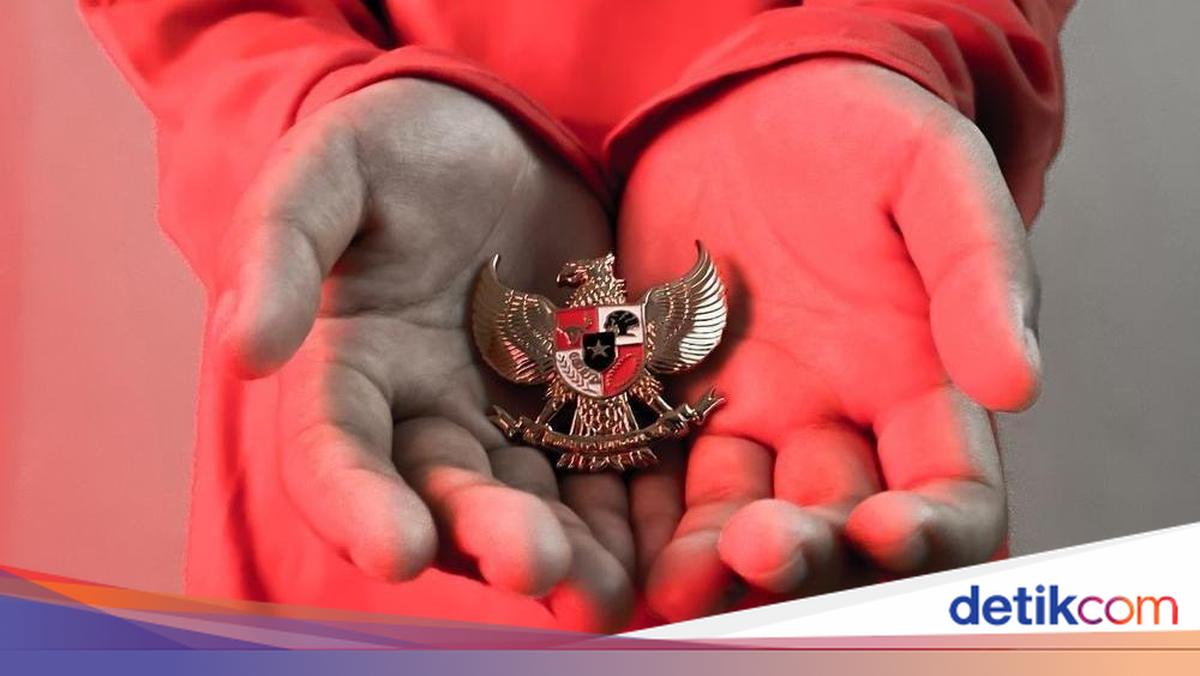
Every 1 June, the Indonesian nation commemorates Pancasila Day. This occasion is not merely a historical marker of the state’s foundation but also a space for reflection on how the nation has been built and sustained to this day.
In today’s fast-paced modern life, we often take Indonesia for granted as if it has always existed, despite the long journey, great sacrifices, and intellectual struggles of the nation’s forefathers that gave birth to the Pancasila foundation for statehood.
Indonesia did not emerge abruptly in an era of independence and stability. The Republic was born from a long, challenging, and meaningful historical process. Thus, commemorating Pancasila Day should not end with annual ceremonies or mere repetition of nationalist slogans, but be an opportunity to re-understand the moral direction and shared aspirations once fought for by the nation’s founders.
Pancasila is not merely the five principles memorised during state ceremonies. More than that, it is a legacy of values, an ethical guide, and a compass for national and state life. When these values are distanced from public life, it leads not only to social and political crises but also a crisis of meaning in nationhood itself.
Indonesia’s Proclamation, Soekarno, in his historic speech on 1 June 1945, introduced Pancasila as ‘philosophische grondslag’ or the philosophical foundation of the state. This thought was later compiled in The Birth of Pancasila (1964).
Soekarno emphasised that Pancasila is not just a political formulation but the result of extracting values already present in the Nusantara society’s spirit.
Thus, Pancasila is not an empty slogan or merely a state document, but the moral identity of the Indonesian nation. However, the nation’s greatest challenge today is the crisis of meaning in nationhood. Many perceive the state merely as a space for power and political interests, whereas the state should actually be built to deliver justice, unity, humanity, and collective prosperity.
In reality, over the past five years, Indonesia has faced serious issues in combating corruption, particularly as corruption is no longer limited to administrative misuse but has penetrated strategic sectors such as procurement, public services, licensing, energy, mining, and political financing.
The Corruption Eradication Commission (KPK, 2024) recorded 541 investigations, 622 probes, 510 prosecutions, 533 final court rulings, and 524 executions between 2020 and 2024. During the same period, the KPK named 691 suspects, conducted 36 sting operations, handled 29 money laundering cases, and designated six corporations as suspects.
Meanwhile, the Audit Board of Indonesia (BPK, 2024) reported in its First Half 2024 Audit Summary that it safeguarded Rp13.66 trillion in state funds, comprising Rp11.09 trillion deposited into the national treasury and Rp2.57 trillion in expenditure savings.
These figures indicate that anti-corruption efforts must go beyond enforcement and be strengthened through prevention, budget transparency, bureaucratic reform, internal oversight, followed-up audits, and deterrent legal enforcement.
At the same time, challenges of intolerance and democratic quality require collective reflection. The Ministry of Religious Affairs (Kemenag, 2024) reported the 2024 Religious Harmony Index at 76.47, up from 76.02 in 2023, with a rising trend since 2020 (67.46 in 2020, 72.39 in 2021, 73.09 in 2022, 76.47 in 2024).
Kemenag (2025) also noted the 2025 Religious Harmony Index at 77.89, the highest since surveys began in 2015, though the ‘togetherness’ dimension scored 65.49, lower than tolerance (88.82) and equality (79.35), indicating strong acceptance of differences but a need to strengthen cross-community social cooperation.
Regarding rights protection, the National Human Rights Commission (Komnas HAM, 2025) highlighted ongoing intolerance and religiously motivated persecution in various regions, necessitating stronger state protection for freedom of religion and belief. In democracy, Statistics Indonesia (BPS, 2026) released the 2025 Indonesian Democracy Index at 78.19, with central government scores of 76.62 and provincial scores of 79.20, indicating Indonesia’s democracy remains in the ‘moderate’ category.
Corruption, intolerance, social polarisation, hate speech, and declining public ethics show Indonesia’s current problems extend beyond economic or developmental issues to a weakening of Pancasila’s values.
Pancasila is indeed a compass for national life. Without value-based guidance, the nation may advance technologically but lose moral direction. The state may grow physically but remain fragile in social unity.
Mohammad Hatta (1960) cautioned that Indonesia’s democracy must be rooted in mutual cooperation and social justice. He rejected democracy focused solely on power struggles without moral responsibility to the people. This warning is increasingly relevant as political life today is often filled with pragmatism, conflicts of interest, and a lack of role models.
Notonagoro (1975) explained that Pancasila is a cohesive value system. Divinity should inspire humanity; humanity should strengthen unity; unity must be realised through consultation; and all should culminate in social justice. When these values lose space in public life, a crisis of meaning is unfolding.