
Pancasila and National Awakening
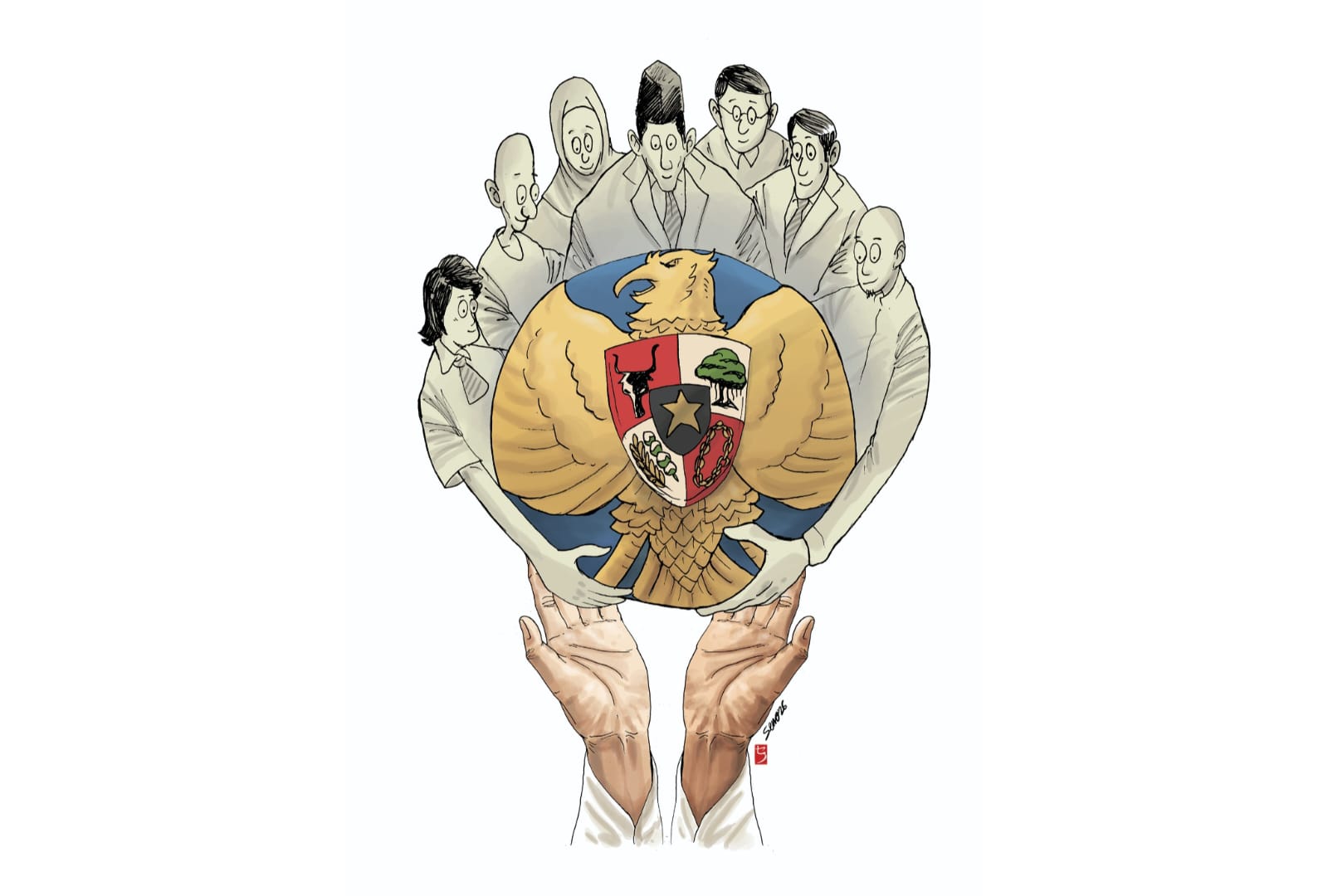
Indonesia commemorates Pancasila’s Birthday, a crucial moment not merely to remember history but to reflect on the nation’s path amid a rapidly evolving and complex global landscape. Commemorating this event shortly after National Awakening Day underscores how national progress stems from collective awareness, unity, and a grand vision for Indonesia’s future. Amid globalisation, technological disruption, and international competition, we must revisit a fundamental question: is national progress measured solely by economic growth, or also by the ability to preserve identity, social justice, and national sovereignty? This question grows increasingly pertinent as the world transitions into a new era marked by artificial intelligence, industrial automation, digital economies, and dynamic geopolitical competition. The World Economic Forum’s 2023 report underscores that nations failing to invest in education, innovation, and technology will see their global competitiveness decline. Thus, a nation’s future is determined less by natural resources and more by its human capital. The Future Agenda Indonesia possesses significant assets to confront these changes, yet the challenges remain formidable. Social inequality remains a pressing issue, with national economic growth yet to be evenly shared across all societal layers. Simultaneously, digital transformation is reshaping employment structures, social interactions, and the competencies required of the workforce. In politics and law, Indonesia’s democracy continues to evolve but faces challenges such as social polarisation, political pragmatism, and declining public ethics. A healthy democracy relies not only on political procedures but also on democratic maturity, moral leadership, and a sense of national responsibility. The current question is whether our political system, including the party structure, aligns with the founding fathers’ vision and the aspirations of the 1998 Reform. This remains a collective challenge for today and the future. In the socio-cultural realm, society grapples with rising individualism, instant culture, and rampant digital misinformation. UNESCO’s 2021 report warns that 21st-century education must produce not just academically capable individuals but also a tolerant, inclusive society capable of coexisting in diversity. This is Indonesia’s greatest challenge: advancing without losing its identity and national character. Globally, Indonesia’s challenges are growing more complex. Food, energy, climate crises, and strategic technology competition have become new arenas of international rivalry. Modern national sovereignty thus extends beyond territorial defence to include self-sufficiency in food, energy, education, economy, and technology. Amid this complexity, Indonesia needs values that are not merely symbolic but actively lived in national life. It is here that Pancasila regains relevance as a unifying ideology, a guide for national development, and a source of national renewal. The spirit of the National Awakening of the early 20th century is not mere historical romanticism. It is the realisation that Indonesia must rise through education, unity, and empowering the people. The founders understood that colonialism operated not just through physical force but also through educational, economic, and scientific backwardness. Thus, education serves as the primary tool for building national consciousness and advancing the nation. This perspective remains relevant today. The OECD’s 2022 report states that human capital is the key factor in a nation’s progress in the knowledge society. Leading nations are not merely resource-rich but those that foster research, innovation, creativity, and technological mastery. This means Indonesia’s modern awakening cannot rely solely on natural wealth. It must build innovation-driven economic independence, strengthen human quality through education and healthcare, and affirm national character to ensure progress remains morally grounded. National awakening must also mean equitable prosperity; high economic growth loses meaning if social inequality widens. Conversely, nationalism without scientific and technological mastery will leave the nation lagging in global competition. Therefore, Indonesia needs national leadership committed to the people’s future. True leadership is not merely about power but the ability to present a grand vision, make strategic decisions, and commit to sustainable societal well-being. Jan Fagerberg’s 2018 study shows that innovation and technological mastery are the foundation of