
Pancasila: A Living Ideology, Not a Ceremonial Display
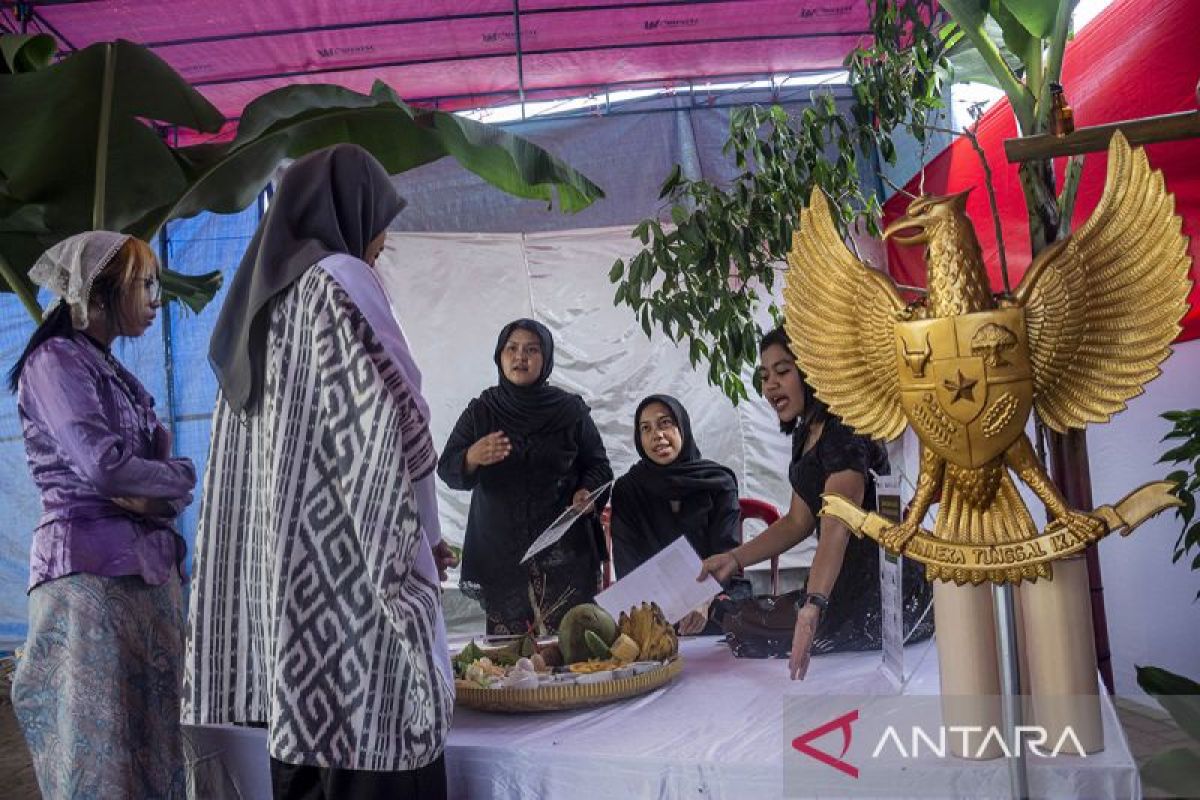
It is time to move Pancasila from ceremonial walls and integrate it into parliamentary chambers, traditional markets, public policies, and into our hearts and daily actions.
Jakarta (ANTARA) – Every June 1, we stand solemnly in fields, attentively listening and watching as the Pancasila text is recited. National speeches echo from central government levels to schools across the archipelago.
Yet, a reflective question often arises after the ranks disband: Is Pancasila truly alive in the nation’s veins, or has it dwindled into mere ceremonial decoration?
Historical records confirm Pancasila was formulated by the nation’s founders not as a dead script. Sukarno described it as Philosofische Grondslag (philosophical foundation) and Weltanschauung (worldview) drawn from Indonesian soil. It was designed as a living ideology – one that moves, breathes, and addresses the challenges of the times.
Today’s social reality reveals a vast gap between the sanctity of Pancasila’s text and daily life practices.
The principle of Belief in the One and Only God is often reduced to a mere KTP entry, while grassroots intolerance between minorities and majorities continues to flare up.
Just and Civilised Humanity is frequently overlooked as digital spaces overflow with cyberbullying, harassment, and a loss of social empathy.
Social Justice for All Indonesians remains the nation’s biggest homework assignment as the economic chasm between rich and poor, and regional development disparities, yawn wide.
When all five principles are merely memorised for exams or bureaucratic formalities, Pancasila undergoes ‘domestication’ – tamed into a ceremonial display.
Grounding Pancasila in the modern era can no longer rely on rigid, one-directional indoctrination methods. Making it a living ideology requires reconstructing thought processes across all aspects of life.
In the legal sphere, revitalising Pancasila means shifting from punitive legal paradigms to just and humane laws. The fourth principle (Deliberation) and fifth (Social Justice) must manifest in Restorative Justice concepts, where resolving legal issues – particularly involving small communities or low-level drug users – prioritises rehabilitation, dialogue, and humanity over merely filling overcrowded prisons.
The fifth principle will never stand if economic policies favour large corporations alone. A living Pancasila ideology demands tangible support for Micro, Small, and Medium Enterprises (MSMEs) as the real backbone of the people’s economy.
Pancasila must enter algorithmic spaces. The value of mutual cooperation should translate into crowdfunding initiatives to aid one another, digital literacy campaigns to counter misinformation, and the creation of inclusive, diversity-respecting creative content.