
Panama Canal Becomes World's New 'Cash Cow' as US and China Jostle for Position
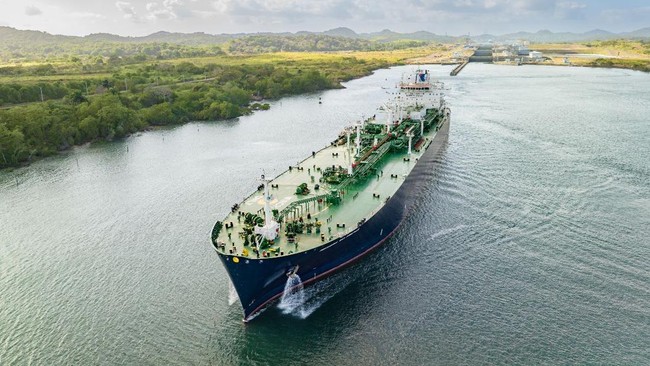
The Panama Canal is becoming an increasingly strategic waterway amid the Middle East conflict and changing global trade flows. Although it handles only about 5-6% of world maritime trade, the canal is a vital route for US energy exports to Asia. Surging demand has caused transit costs to nearly triple, significantly boosting Panama’s income.
The war in the Middle East has triggered a chain reaction thousands of kilometres away. When conflict involving the US and Iran disrupted the Strait of Hormuz this year, demand to cross the Panama Canal surged, approaching its maximum operational capacity of around 36 to 40 ships per day. Flows of energy shipments from the United States to Asia, particularly liquefied natural gas (LNG) and liquefied petroleum gas (LPG), increased sharply.
While Panama enjoys the economic windfall, the canal faces increasingly complex challenges, from the threat of climate change to rivalry between the United States and China. Disruptions in the Strait of Hormuz prompted many countries to seek alternative energy routes and sources, with the number of LNG carriers crossing the Panama Canal in April nearly doubling compared to the same period last year.
Although the canal only handles a small fraction of global maritime trade by volume, its role is growing due to shifts in global energy trade patterns. The rise in US LNG and LPG exports has made the canal a strategic link between the Gulf Coast and Asian markets. Panama anticipated this shift, and since 2016, the canal has expanded its infrastructure to accommodate larger LNG vessels. Currently, about 1 million barrels of LPG cross the canal daily, mostly from the Gulf of Mexico to petrochemical complexes in Asia.
Panama is not content to be merely a transit point. Canal Administrator Ricaurte Vásquez Morales stated the country wants to play a larger role in the global trade chain, aiming to become a trade hub rather than just an interoceanic connector. To achieve this, authorities have launched projects worth approximately US$8.5 billion. These include building an LPG pipeline across the Isthmus of Panama with an additional capacity of up to 2.5 million barrels per day, constructing two new port terminals to increase container capacity, and expanding logistics infrastructure to strengthen Panama’s position as a trade centre.
The surge in traffic has significantly boosted canal revenues. Auction fees for the most sought-after transit slots have nearly tripled, rising from a typical range of US$135,000-140,000 to around US$385,000-425,000 in April and May. One company even paid US$4 million for a single slot. This increase has swelled state coffers, with the canal contributing nearly US$3 billion to the government in the fiscal year ending September 2025, a record high equivalent to more than a fifth of national revenue.
However, Canal Administrator Ricaurte Vásquez Morales cautioned that the current conditions may be temporary, as the surge in demand is driven by disruptions in the Strait of Hormuz. Yet, analysts at Goldman Sachs suggest that energy trade patterns may not fully revert to pre-conflict norms even if the Strait of Hormuz resumes full operations, as the newly established supply chains are likely to persist.
Beyond geopolitical windfalls, the canal’s greatest threat is fundamental: water availability. The lock system relies on lakes filled by rainfall. During the 2023-2024 drought, authorities were forced to halve daily transits from around 36 to 18 ships. Many LNG carriers subsequently opted for the longer route around the Cape of Good Hope, and according to Francis Zeimetz of the Panama Maritime Chamber, some have yet to return. Authorities are also wary of potential new disruptions from the El Niño phenomenon this year. To reduce dependence on rainfall, Panama is finally advancing a long-delayed project to build a new dam.
Source: jawawa.id (https://jawawa.id/newsitem/panama-canal-becomes-worlds-new-cash-cow-as-us-and-china-jostle-for-position-1784386277)
Originally published by CNBC Indonesia (https://www.cnbcindonesia.com/research/20260718042015-128-751790/terusan-panama-jadi-tambang-uang-baru-dunia-as-china-saling-sikut), translated from Indonesian