
PAN Supports KPK's Idea to Limit Cash Usage in Elections
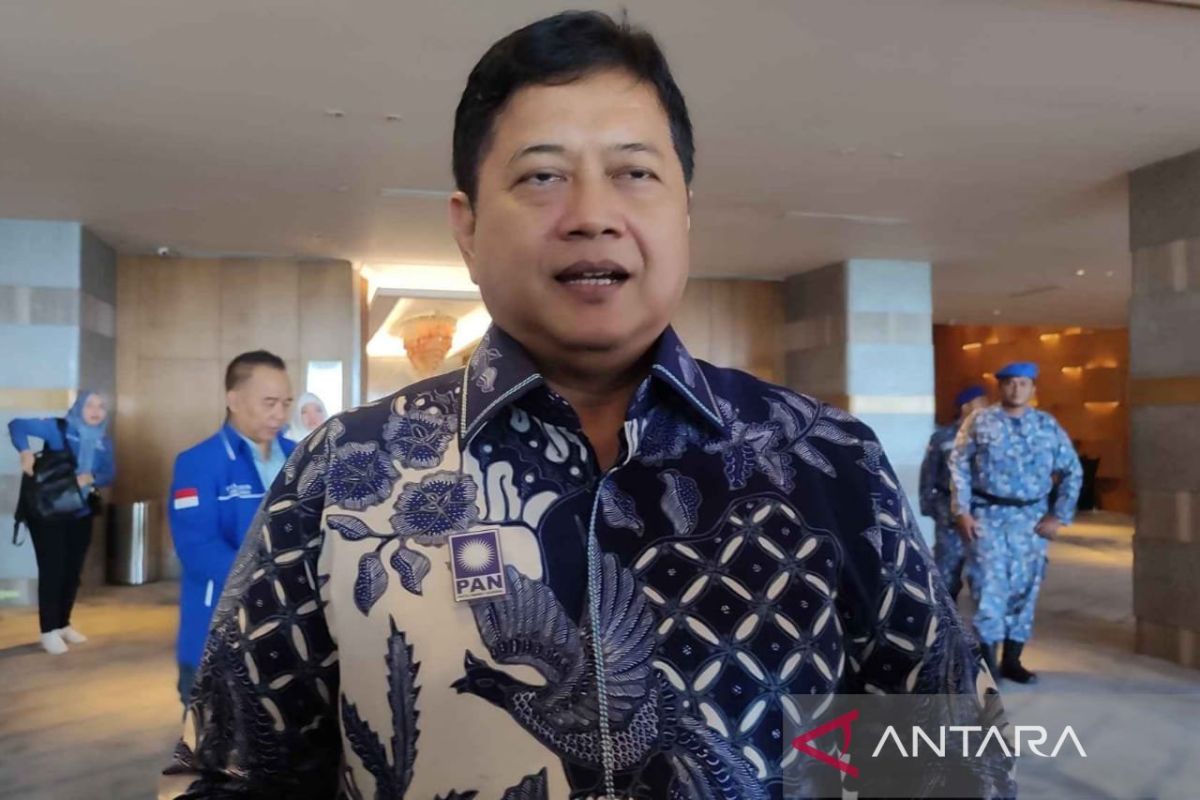
Jakarta (ANTARA) - The National Mandate Party (PAN) supports the Corruption Eradication Commission’s (KPK) view that regulations are needed to limit the use of cash or kartal during the stages of general elections or pemilu.
According to PAN, if this idea is incorporated into the articles of the Election Law, it would purify the people’s votes, encourage transparency, and modernise campaigns.
“The people will choose based on the values, strategies, and capacities of candidates, not just the contents of the bag,” said PAN Deputy Chairman Viva Yoga Mauladi in his statement in Jakarta on Sunday.
“Thus, political justice, competitive equality, and elections with integrity will be created,” he said.
According to Yoga, this idea is necessary not only from the aspect of money politics practices (vote buying) but also concerns the social and cultural system of society, political legal design, and the colour of the power structure.
Detailed formulations and rationales are needed, and an operational-applicative approach must be taken through revisions to the Election Law and the Regional Head Elections Law because Indonesia’s political system is still based on high-cost mobilisation, and cash is the fastest, most flexible, and hardest-to-trace tool.
He revealed that several countries have implemented cash limitation policies in elections, such as India, Brazil, South Korea, and others.
PAN assesses that cash limitations should not be interpreted as obstacles or restrictions on political operations’ flexibility. Instead, all this is directed so that the value of people’s sovereignty as the noble value of democracy is not manipulated into an economic commodity for buying and selling votes.
However, he said, it can be understood that cash limitations do not automatically eliminate money politics, as money politics can adapt and camouflage to shift to digital transfers through third parties or other modi operandi.
He stated that this policy can be effectively used for formal campaign transactions, such as advertisements, logistics, and consultants, in urban areas with high banking access.
From the legal policy perspective, he continued, it is not yet regulated in the Election Law or the Regional Head Elections Law. The existing rules are still limited to regulations on maximum individual and private company donations as well as campaign fund reports.
He said there needs to be an addition of articles on cash transaction limits, mandatory non-cash obligations through banks, e-wallets, QRIS, and creating an integrated oversight mechanism with other state institutions, for example with PPATK and so on.
“Cash limitations can become a control tool as part of political cost reform, provided that the law is enforced fairly and there is a change in habits from party elites and voters to eliminate transactional voting patterns in elections,” said Yoga.