
PAM Jaya Deemed Capable of Meeting Water Needs During Extreme Dry Season
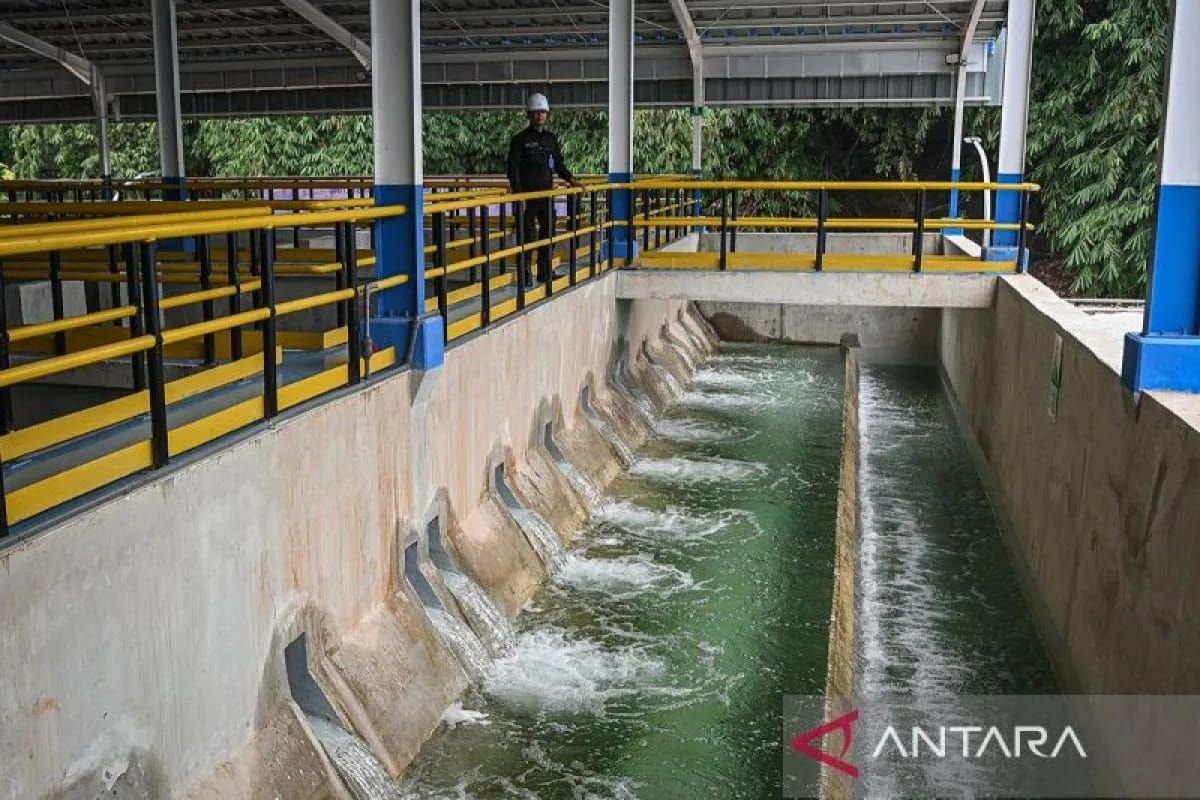
Jakarta (ANTARA) - Public policy expert Sugiyanto believes that PAM Jaya is capable of meeting the water needs of Jakarta’s residents during the extreme dry season predicted by the BMKG to occur in April 2026. “The main issue in facing the dry season that needs to be considered is the availability of raw water sources, and this has already been addressed well,” Sugiyanto said in Jakarta on Wednesday. So far, around 92 per cent or 19,400 litres per second of PAM Jaya’s raw water supply comes from outside Jakarta, sourced from the Jatiluhur Reservoir. The supply from the Jatiluhur Reservoir is managed through cooperation with the central government, particularly the Ministry of Public Works and Housing (PUPR). In addition, the remaining 8 per cent or 2,750 litres per second comes from various surface water sources in Jakarta, such as the Krukut River, Cengkareng Drain, West Flood Canal, Pesanggrahan River, Ciliwung River, Cisadane River Sodetan, Mookervart River, as well as other sources, including seawater. According to him, to support clean water services, PAM Jaya has built various water treatment installations (IPA) and drinking water supply systems (SPAM) spread across several areas. Starting from Buaran I, II, and III, Pejompongan I and II, Pesanggrahan, Cilandak, Ciliwung, to Taman Kota. The number of IPAs will continue to be increased with a target of reaching 18 units by the end of 2029. “This infrastructure serves as the backbone of PAM Jaya in maintaining the continuity of water supply, including during prolonged dry periods,” Sugiyanto said. In terms of raw water sources, the greatest dependence is indeed on the Jatiluhur Reservoir. However, he stated that it is unlikely for the reservoir to experience total drought, even under extreme dry conditions. He believes that what is more likely to happen is a drop in water levels by several metres due to minimal rainfall. Anticipatory steps such as weather modification techniques or artificial rain are usually carried out to maintain the stability of the reservoir’s water volume. Meanwhile, contributions from rivers in Jakarta tend not to experience total drought, but rather a decrease in water discharge due to reduced rainfall in upstream areas such as Bogor and the Puncak region. To strengthen water resilience, various alternative raw water sources continue to be developed, starting from the utilisation of groundwater for certain communities, but this must be done in a limited and controlled manner to prevent environmental impacts, such as land subsidence and other negative effects. “Therefore, regulations on groundwater utilisation need to be tightened,” he said. Other solutions include using desalination technology that allows seawater to be converted into fresh water. Then, wastewater treatment with advanced technology, such as membrane bioreactor, ultrafiltration, and reverse osmosis, also opens up great opportunities in recycling water into safe raw water sources. Another innovation is technology for harvesting water from the air or atmospheric water harvesting, which works by capturing water vapour in the atmosphere through a condensation process. “This technology has great potential to be applied in areas with high humidity levels like Jakarta, especially when surface water sources are limited,” Sugiyanto said.
Source: jawawa.id (https://jawawa.id/newsitem/pam-jaya-deemed-capable-of-meeting-water-needs-during-extreme-dry-season-1775104099)
Originally published by Antara (Indonesian) (https://www.antaranews.com/berita/5505965/pam-jaya-dinilai-mampu-penuhi-kebutuhan-air-saat-kemarau-ekstrem), translated from Indonesian