
Palu City Government develops hydroganic cultivation to optimise limited land
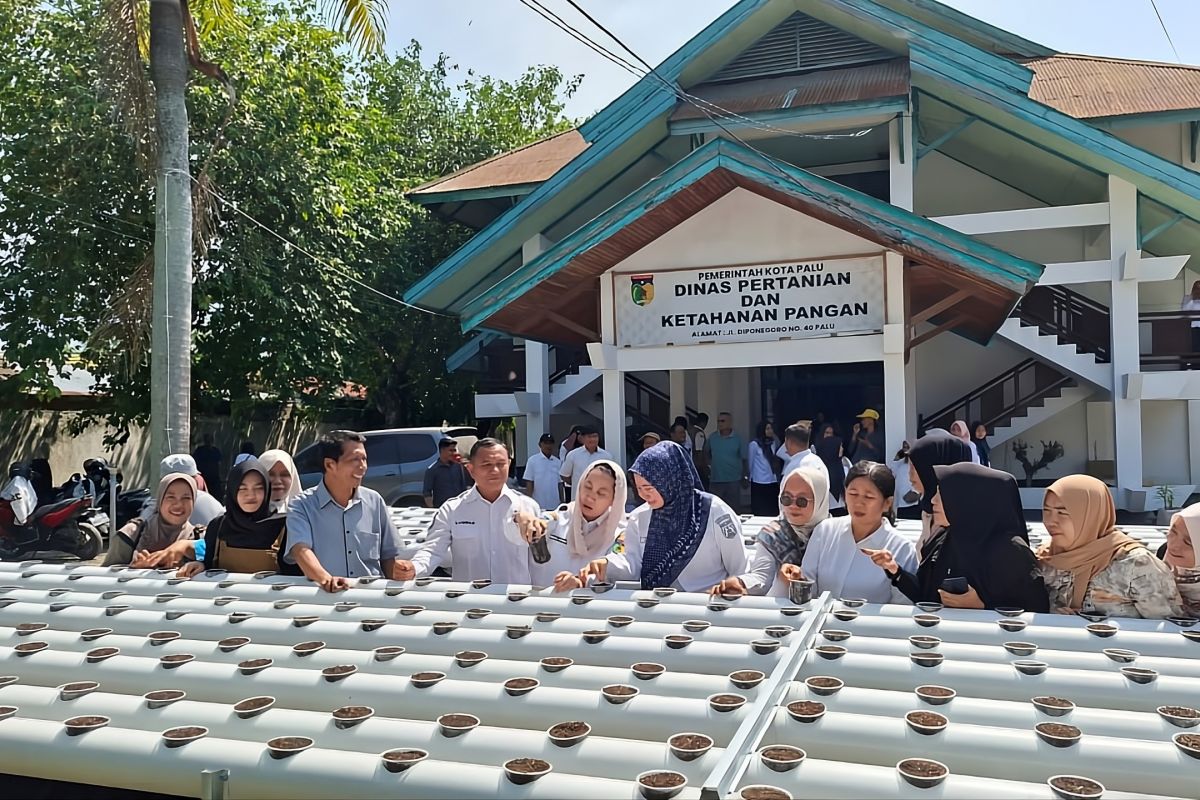
The Palu City Government, Central Sulawesi, is developing a hydroganic cultivation system in an effort to increase urban agricultural productivity by optimising the use of limited land.
“We are developing hydroganic as a form of Urban Farming that can utilise narrow land more productively,” said the Head of the Palu City Agriculture and Food Security Office (DPKP), Lukman, in Palu on Sunday. He explained that hydroganic is an organic-based hydroponic cultivation system suitable for urban areas because it optimises limited land use.
According to Lukman, the system integrates plant cultivation with fisheries within a single ecosystem. The plants use a medium consisting of a mixture of soil and bokashi, while the bottom part of the installation contains fish ponds that produce natural nutrients for the plants. Under this concept, the plants’ nutritional needs are met through fish metabolism, thereby reducing the need for chemical fertilisers.
Furthermore, a single hydroganic installation can be used to cultivate various commodities, ranging from vegetables, chillies, tomatoes, and onions to rice. As an initial step in this development, the Palu City Government has released 3,000 catfish seeds and 1,000 tilapia seeds into two hydroganic installation units. Alongside the fish seeding, the planting of Lembah Palu variety onions and red onions was also carried out as the initial commodities developed through this system.
“This is the first step in developing an integrated, productive, and sustainable urban farming model in Palu City,” he added.
The development of hydroganic cultivation is also being pursued through community capacity building. The Palu City DPKP conducted hydroganic cultivation training attended by 40 participants, including farmers, Women Farmers Groups (KWT), neighbourhood groups (dasawisma), and agricultural extension officers. Participants received direct training on hydroganic technology from a speaker who is also the owner of Bengkel Mimpi from Malang Regency.
In addition to learning about hydroganic cultivation, participants were also equipped with skills to create composters to process household organic waste into solid and liquid organic fertilisers. Lukman stated that these skills are planned to be implemented through the ‘Kelurahan Menanam’ (Village Planting) Programme as part of community-level organic waste management. He expressed hope that the application of hydroganic technology could strengthen regional food security, increase the availability of healthy food for the community, and create more productive and environmentally conscious urban areas.