
PalmCo trains 50 participants to develop bread and cake businesses
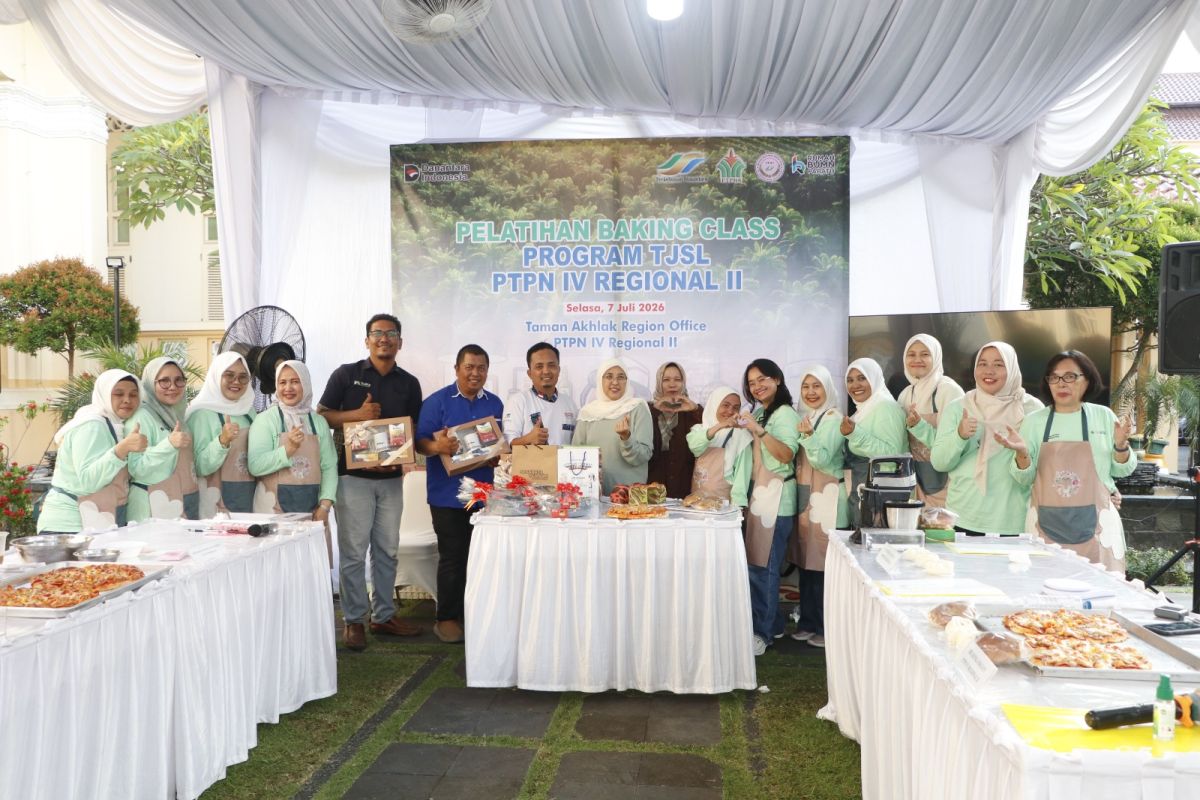
State-owned palm oil plantation and agribusiness company PT Perkebunan Nusantara (PTPN) IV PalmCo has provided bread and cake production training to 50 participants to enhance skills and encourage the development of home-based businesses. The 50 participants comprised micro, small, and medium enterprise (MSME) operators, housewives, productive-age youths, company-assisted partners, and representatives from an inclusive foundation. “For us, the distribution of this TJSL assistance is a corporate social investment to build community self-reliance,” said PalmCo President Director Jatmiko K Santosa in a statement received in Jakarta on Tuesday. The training, titled Baking Class 2026, is part of the Social and Environmental Responsibility Programme (TJSL) focused on enhancing the economic capacity of communities around the company’s operational areas. Jatmiko expressed hope that the skills acquired by participants could be developed into business products and a sustainable source of income for their families. He stated that improving human resource capacity plays an important role in strengthening family economic resilience, especially around the company’s operational areas. “Participants not only learn to make products but are also encouraged to build the courage to start a business, innovate, and read market opportunities,” he said. Participants in the training came from MSMEs assisted by Rumah BUMN Pabatu, the Khadijah Sharaswaty Foundation, and the general public in North Sumatra. The training also involved participants from Sulawesi to broaden the programme’s reach. In its implementation, the company collaborated with Lesaffre Indonesia (Saf-Instant) and PT Indojaya Perkasa Abadi. The training was led by Chef Syamsuddin and a support team using a hands-on practice method, from weighing and mixing ingredients, processing and fermenting dough, to shaping products and baking techniques. Three products were practised: Polo Boy bread, pepperoni pizza, and pao. Participants also received instruction on quality control, maintaining product consistency, and reading market opportunities in their respective environments. After the training, participants were encouraged to form independent business groups, strengthen collaboration among assisted partners, and utilise digital marketing so that the products produced have wider market access. One participant, Winy, said the training material could be directly practised at home and also serve as a foundation for starting a business that could supplement the family income. “This activity is very beneficial because it provides new knowledge and skills that we can immediately practise at home or develop into a business,” Winy said. The activity complements various economic empowerment programmes previously run by the company in several operational areas. In Kampar Regency, Riau, PalmCo collaborated with the local Fisheries Office to provide catfish cultivation and processing training to 50 women from Hang Tuah Village and Genduang Jaya Village. The training in Riau was directed at supporting food security, opening employment opportunities in rural areas, and increasing the economic value of fishery products through the development of processed goods. The programme is part of a locally-based empowerment approach that the company continues to develop across various operational areas and supports the Sustainable Development Goals (SDGs), particularly in the aspects of decent work and economic growth. Meanwhile, the Government also continues to encourage the strengthening of MSME capacity as a driver of the national economy. According to government data at the end of 2024, the number of MSMEs in Indonesia reached approximately 64.2 million business units, contributing around 61.07 per cent to the gross domestic product (GDP) or approximately Rp8,573 trillion. The MSME sector also absorbs around 117 million workers, or about 97 per cent of the total national workforce. The Government continues to promote skills enhancement and entrepreneurship so that more MSMEs have stronger competitiveness.