
Palm Oil Farmers Urge Government Not to Rush B50 Implementation
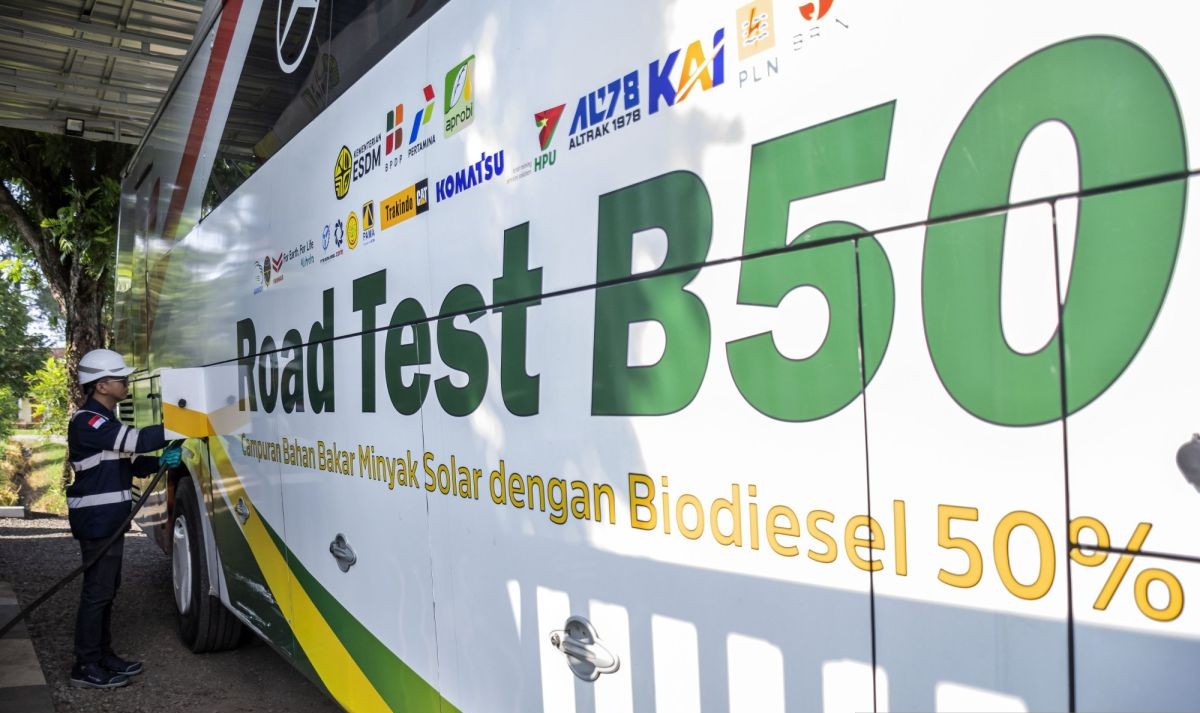
The Indonesian Palm Oil Farmers Organisation (POPSI) and the Clean Transition Coalition are urging the government not to rush the mandatory implementation of B50 biodiesel. They are calling for a thorough consideration of the policy’s impact on smallholder palm oil farmers. Amidst various challenges facing the sector, POPSI believes the B50 policy could potentially add new pressures for millions of farmers. POPSI Chairman Mansuetus Darto stated that the organisation has consistently supported national downstreaming and energy security programmes. “From the outset, we proposed that the government implement flexi blending, with B30 as the minimum limit, while increases to B40 or B50 are carried out flexibly according to national CPO production conditions, global oil prices, the state’s fiscal capacity, and domestic energy needs,” Darto said in a statement on Saturday. He argued that this approach is far more rational than forcing a high blending target when all the financial consequences are ultimately borne by the farmers. This concern about layered burdens aligns with economic modelling from a Traction Energy Asia study. The research data indicates that if implemented carelessly or merely to chase a mandate, the B50 policy could create multidimensional burdens. Without accompanying improvements or debottlenecking in productivity, the B50 policy is projected to drain the budget through a deficit in the Plantation Fund Management Agency (BPDP) of up to Rp28 trillion. Furthermore, it would eliminate state revenues from corporate tax, export levies, and duties amounting to Rp620 trillion over a ten-year period. “We are not rejecting biodiesel. What we reject is when the cost of this policy is ultimately paid by palm oil farmers through ever-lower fresh fruit bunch prices,” Darto stressed. He explained that the increase in CPO export levies to 12.5 percent to support B50 implementation will further reduce the net CPO price, which serves as the basis for domestic transactions. The impact will be felt directly at the plantation level because the purchase price of fresh fruit bunches follows the CPO price after various levies and costs are deducted. “As a result, even when global CPO prices are relatively high, the price received by farmers no longer reflects the true market value. Fresh fruit bunch prices will be increasingly depressed because the policy burden is ultimately transmitted to farmers as the weakest link in the palm oil industry,” he asserted. Therefore, POPSI is requesting that the government conduct a comprehensive evaluation of the B35 and B40 implementations before deciding on the nationwide enforcement of B50. This evaluation must cover the impact on fresh fruit bunch prices, the sustainability of BPDP funds, the government’s fiscal capacity, the competitiveness of Indonesian palm oil exports, inflation of derivative commodities, and farmer welfare. Darto stated that the biodiesel programme must be a policy that benefits all palm oil industry players, especially farmers as the main raw material suppliers. He said national energy security should not be built by sacrificing the welfare of millions of palm oil farmers. “If the entire policy burden continues to be placed on farmers, what occurs is not a just energy transition, but layered pressure on Indonesian palm oil farmers,” Darto concluded.