
Palm Oil Farmers Enter Downstream Sector, Cooperatives Prepared to Own CPO Mills
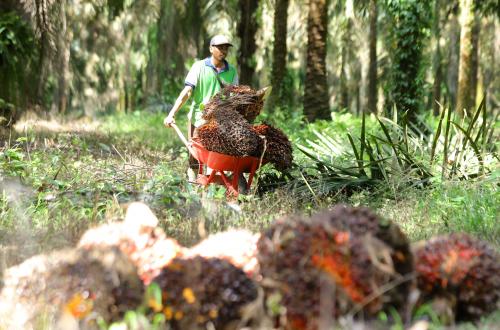
The downstream processing of palm oil is being directed closer to farmers through cooperatives to ensure economic value does not stop at the plantation sector. With 2,587 cooperatives in the plantation sector, the government sees this network as a basis to strengthen farmers’ positions while expanding their involvement in the palm oil processing industry.
Minister of Cooperatives Ferry Juliantono stated that cooperatives can play a larger role in the palm oil industry supply chain, including entering the processing sector. According to him, cooperative involvement in the downstream sector can increase farmers’ bargaining power while opening opportunities for improved welfare.
“For the land that has been taken over by the PKH Task Force and entrusted to Agrinas Palma for management, of course the President (Prabowo Subianto) wants the management of that land to involve the community and cooperative members who are palm oil farmers,” Ferry said in a written statement in Jakarta, Wednesday (12/8/2026).
Ferry said that cooperatives which are still active and located around palm oil plantation areas can become supply chain drivers while developing processing activities. One opportunity is building crude palm oil (CPO) mills so that cooperatives are not only in the upstream sector.
“Cooperatives are encouraged to establish their own CPO mills so that the need for cooking oil and its derivative products can be met independently by cooperatives,” Ferry stated.
According to Ferry, increasing the productivity of smallholder plantations requires new strategies and instruments, one of which is consolidating palm oil farmers through cooperative business entities. Two models can be pursued, namely strengthening existing cooperatives and consolidating primary cooperatives through cooperative business entities on a larger scale.
Financing support is a crucial factor in developing this model. Ferry mentioned that existing plantation cooperatives can utilise financing from the Cooperative Revolving Fund Management Institution (LPDB) to develop palm oil processing businesses.
“One example is Koperasi Mandiri Makmur, which has also been provided financing by LPDB to produce CPO, with construction currently at 45 percent,” Ferry said.
The programme is also linked to the management of palm oil plantations resulting from forest area enforcement. President Director of PT Agrinas Palma Nusantara (Persero) Mohammad Abdul Ghani explained that Agrinas Palma received an assignment through Presidential Regulation No. 5/2025 to manage seized palm oil plantations from illegally cleared forest areas.
Ghani stated there are approximately 4.1 million hectares of land resulting from the PKH Task Force enforcement that need to be managed to provide economic benefits to the community. From the land entrusted to Agrinas, there is an obligation to allocate at least 20 percent as plasma for the people, so cooperatives can be involved as management partners.
“We will prioritise cooperatives around the land as vendors for plant maintenance, harvesting, and other activities. With the vast area we manage, cooperatives become the main partners in supporting palm oil downstream processing as well as food security,” Ghani said.
Deputy for Cooperative Business Development at the Ministry of Cooperatives Panel Barus said that cooperatives have the opportunity to take a further position in the palm oil business chain. Not only managing plantations, cooperatives can also become owners and managers of CPO processing facilities.
“With more cooperatives moving from the upstream to the downstream sector in palm oil products, it is hoped that this will boost community welfare,” Barus said.
Musi Banyuasin Regent Toha Tohet hopes more cooperatives will follow the steps of KUD Sejahtera Banyuasin, which has built a CPO processing mill. According to him, the existence of processing businesses at the cooperative level can serve as an example for palm oil farmers to strengthen their economic institutions.
“Hopefully this can convince palm oil farmers to join cooperatives, and we hope for assistance from the Ministry of Cooperatives, especially in developing existing cooperatives,” Toha said.