
Palm Oil Downstreaming Expands Business Opportunities for MSMEs
JAKARTA — Palm oil downstreaming is opening up opportunities for micro, small and medium-sized enterprises (MSMEs) to develop value-added products, from food and handicrafts to personal care products. The potential is broad, with around 200 palm oil derivatives available for use as primary or supporting raw materials.
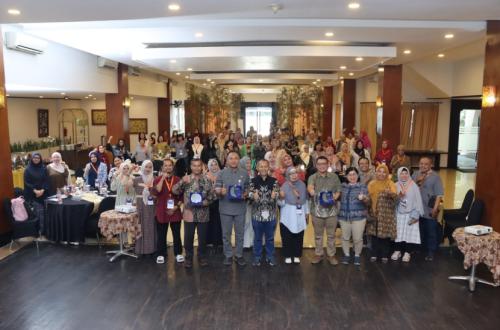
These opportunities were among the topics discussed at Palm Oil Journalists and MSMEs Week 2026, held in Malang on Friday (23 October 2026). The event, supported by the Plantation Fund Management Agency (BPDP), brought together MSME operators and the media to discuss the development of palm oil-based products.
Malang Mayor Wahyu Hidayat said the palm oil commodity was linked to local economic development, including through MSMEs. He said businesses needed to continue innovating and expand their markets so that derivative products could generate greater economic value.
“This event provides a space to strengthen communication, broaden understanding and build public awareness of the palm oil industry,” Wahyu said in remarks read by Farid Suaidi, head of the Micro and Small Enterprise Division at the Malang City Trade, Industry and Cooperatives Office, according to a press release on Monday (26 October 2026).
Markus Susanto, chairman of the Indonesian Oleochemical Producers Association (APOLIN), said many MSME products use palm-derived oleochemical ingredients such as fatty acids, soap noodles and glycerine. These materials are used, among other things, in soap, cosmetics, shampoo, detergents and personal care products.
“Currently, nearly 70 per cent of oleochemical products serve export markets, while 30 per cent are used domestically. Their contribution to export earnings reaches US$5 billion to US$6 billion a year,” Markus said.
Susinggih Wijana, a professor in the Department of Agricultural Industrial Technology, added that palm oil by-products and waste could also be used by MSMEs. Processing these materials for reuse could create business opportunities while supporting a circular economy.
“For example, MSMEs can use palm oil waste as a raw material for animal feed, from production through to distribution. Small and medium-sized businesses can also produce soap on a small-to-medium scale using palm derivatives,” he said.
Helmi Muhansyah, head of the Community and MSME Cooperation Division at BPDP, said palm oil accounted for around 9 per cent of Indonesia’s total non-oil and gas exports. He said the development of downstream crude palm oil (CPO) products could create more opportunities for small businesses to join the industry’s value chain.
The opportunities were also evident in the development of food products by Malang MSMEs. As part of the event, participants visited Clemat Clemut, a small business producing crispy cream puffs in a range of flavours.
Clemat Clemut owner Rully Heri Siswoyo said the business had a production capacity of around two tonnes a month. Its products are sold across Indonesia, while sales to Papua are still being explored.
“Clemat Clemut offers a range of flavours, including chocolate, cheese and apple. We have also just launched vegetable cream puffs, targeting export markets and people with dietary requirements. Our total production across all products reaches two tonnes a month. Our best-selling product is melting soes. We sell throughout Indonesia, except Papua, where we are still exploring sales,” Rully said.
CPO downstreaming can provide MSMEs with a way to secure greater value from palm oil. The challenges lie in processing the materials, maintaining quality, understanding the market and expanding access to sales channels.
Source: jawawa.id (https://jawawa.id/newsitem/palm-oil-downstreaming-expands-business-opportunities-for-msmes-1793015539)
Originally published by Republika (https://ekonomi.republika.co.id/berita/tnihfc416/hilirisasi-sawit-perluas-peluang-usaha-umkm), translated from Indonesian