
Palm Oil Companies Strengthen Efficiency and Sustainability to Tackle CPO Price Volatility
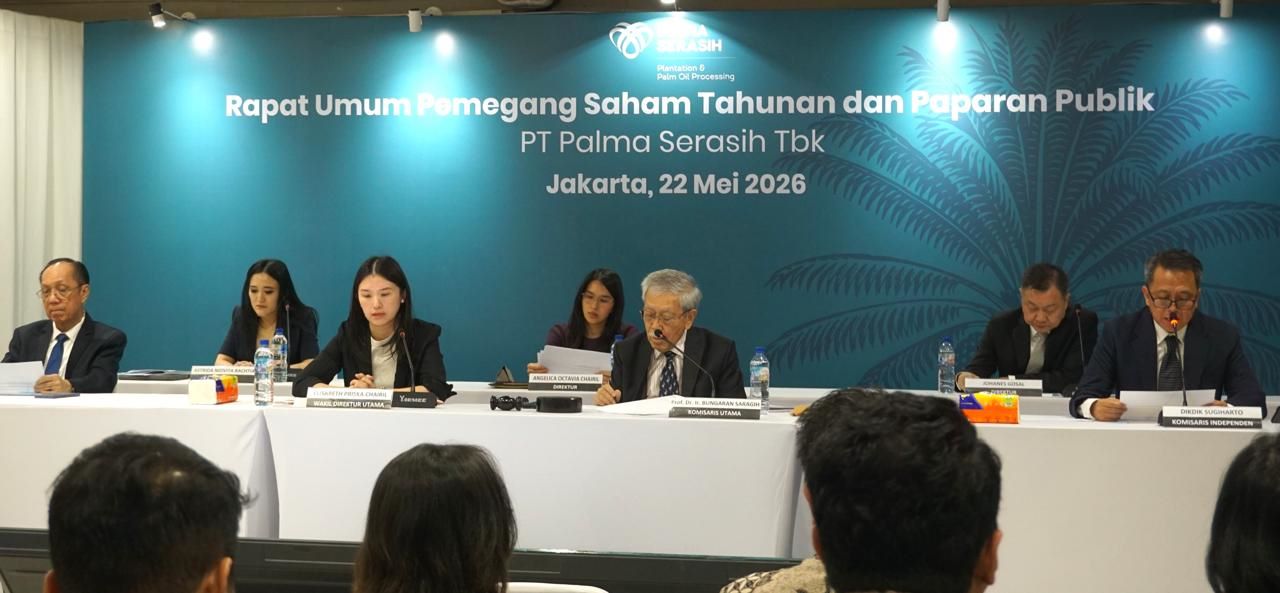
The national palm oil industry continues to face significant challenges amid global crude palm oil (CPO) price volatility, rising production costs, and demands for sustainability practices. Amid these conditions, several palm oil companies are strengthening efficiency and productivity strategies to sustain growth momentum. PT Palma Serasih Tbk (PSGO) is one palm oil plantation company that recorded positive growth in the 2025 financial year, reporting a net profit of Rp442.8 billion, a 26.3% increase from the previous year’s Rp350.6 billion. The performance was driven by higher CPO and palm kernel (PK) selling prices, more effective sales strategies, and reduced financing costs during the year. The profit growth also pushed the company’s net profit margin up from 16.5% to 17.4%. Amid global commodity price uncertainties, this achievement signals that palm oil companies are working to strengthen their business fundamentals to reduce reliance on market price cycles. Astrida Niovita Bachtiar, Director and Corporate Secretary of PT Palma Serasih Tbk, stated the company is focusing on balancing business growth with operational discipline. ‘Dividend distribution reflects the company’s efforts to balance business growth, operational discipline, and long-term value creation for shareholders,’ Astrida said during the company’s public exposure event in South Jakarta on Thursday, 22 May. In line with profit growth, the company approved a cash dividend of Rp113.1 billion, equivalent to Rp6 per share, at the Annual General Meeting of Shareholders (AGM). Alongside financial growth, the company reported fresh fruit bunch (FFB) production of 480.8 thousand tonnes in 2025, with CPO output at 140.2 thousand tonnes and palm kernel at 21.6 thousand tonnes. Management noted that plantation productivity still has growth potential as some plants have not yet reached optimal productive age. Current FFB productivity stands at approximately 18 tonnes per hectare. However, the palm oil industry’s challenges extend beyond commodity prices. Global pressures on environmental and sustainability issues are a major concern for industry players, with exporting countries tightening sustainability standards related to land clearing, carbon emissions, and forest protection. Therefore, PSGO stated that strengthening governance and implementing sustainability principles are key parts of its long-term business strategy. The company claims to adhere to the No Deforestation, No Peat, No Exploitation (NDPE) policy in its operations. Additionally, the company manages high conservation value areas and collaborates on biodiversity protection in its East Kalimantan operational region. ‘Palma Serasih is committed to running its palm oil business responsibly and sustainably, delivering long-term value for shareholders and communities,’ Astrida said. The company also believes palm oil business growth must generate economic impacts for local communities, including job creation, local business development, and improved access to education and healthcare. Amid global industry dynamics, efficiency measures and sustainability strengthening are key for palm oil companies to maintain competitiveness and market confidence. (E-2)