
Paljaya reminds public to regularly schedule WC pumping
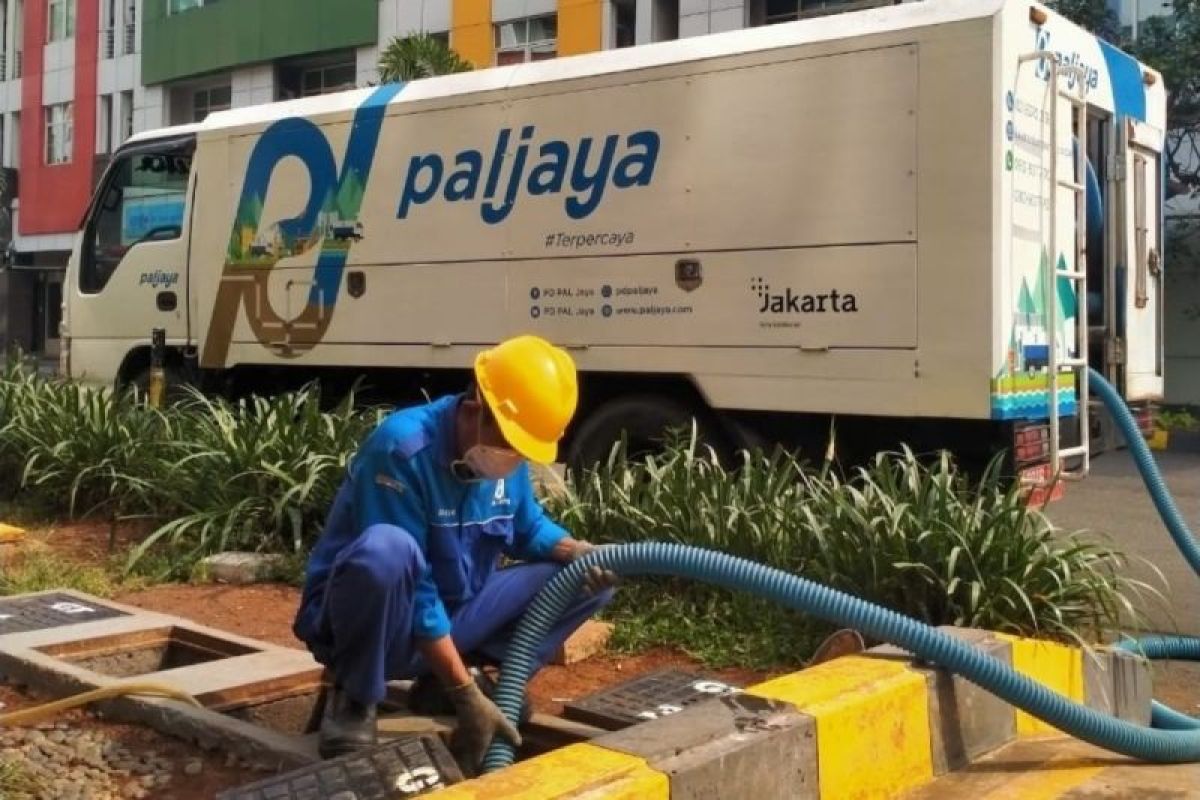
Jakarta (ANTARA) - Paljaya, the state-owned enterprise managing domestic wastewater, reminds the public to regularly schedule WC pumping before problems arise.
Technical and Business Director of Perumda Paljaya, Rizki Shebubakar, stated that household WC pumping should ideally be carried out every 1-3 years, depending on the tank’s capacity and the number of occupants.
“The more occupants living in a house, the faster the faecal sludge volume accumulates. It is advisable to carry out pumping regularly, rather than waiting until the septic tank becomes clogged or overflows,” he said in Jakarta on Thursday.
Rizki explained several indicators that a septic tank needs immediate pumping, including slow-draining toilet water, frequent drain blockages, and seepage around the septic tank.
In addition to causing issues with household wastewater piping, septic tanks that are not regularly pumped can pose environmental problems, as they increase E. coli bacterial contamination, which can lead to diseases such as vomiting and diarrhoea.
“If these symptoms appear, it is best to immediately use official WC pumping services to prevent wastewater from polluting the environment,” Rizki added.
This is in line with the provisions of Jakarta Regional Regulation No. 10 of 2024 on Domestic Wastewater Management, Article 36 paragraph (2), which states that every person managing domestic wastewater through an individual wastewater system is obliged to follow the scheduled faecal sludge service programme.
Paljaya provides integrated services, ranging from modified septic tank provision (BIOPAL), scheduled WC pumping, house connection to wastewater piping networks, wastewater quality testing laboratories, blockage resolution services, recycled water, hazardous waste management services, to sanitation education for the public.
With this integrated system, Paljaya becomes a complete solution (one-stop solution) for domestic wastewater management in Jakarta.
Paljaya also ensures that all pumping results are transported and processed at the Faecal Sludge Treatment Installations (IPLT) in Pulogebang and Duri Kosambi, with the processed output meeting quality standards.
“So, wastewater/faecal sludge is not only pumped and transported, but truly processed until it is safe in accordance with Ministry of Environment and Forestry Regulation No. 11 of 2025 on Wastewater Quality Standards and Wastewater Treatment Technology Standards for Domestic Wastewater,” said Rizki.
The cost for household WC pumping is charged at Rp150,000 per cubic metre.
The public can access Paljaya’s official services through available channels to ensure WC pumping in Jakarta is carried out safely, legally, and environmentally friendly, via Instagram @pdpaljaya or the website www.paljaya.co.id.