
Palangka Raya City Government Accelerates Digital Population Identity Activation
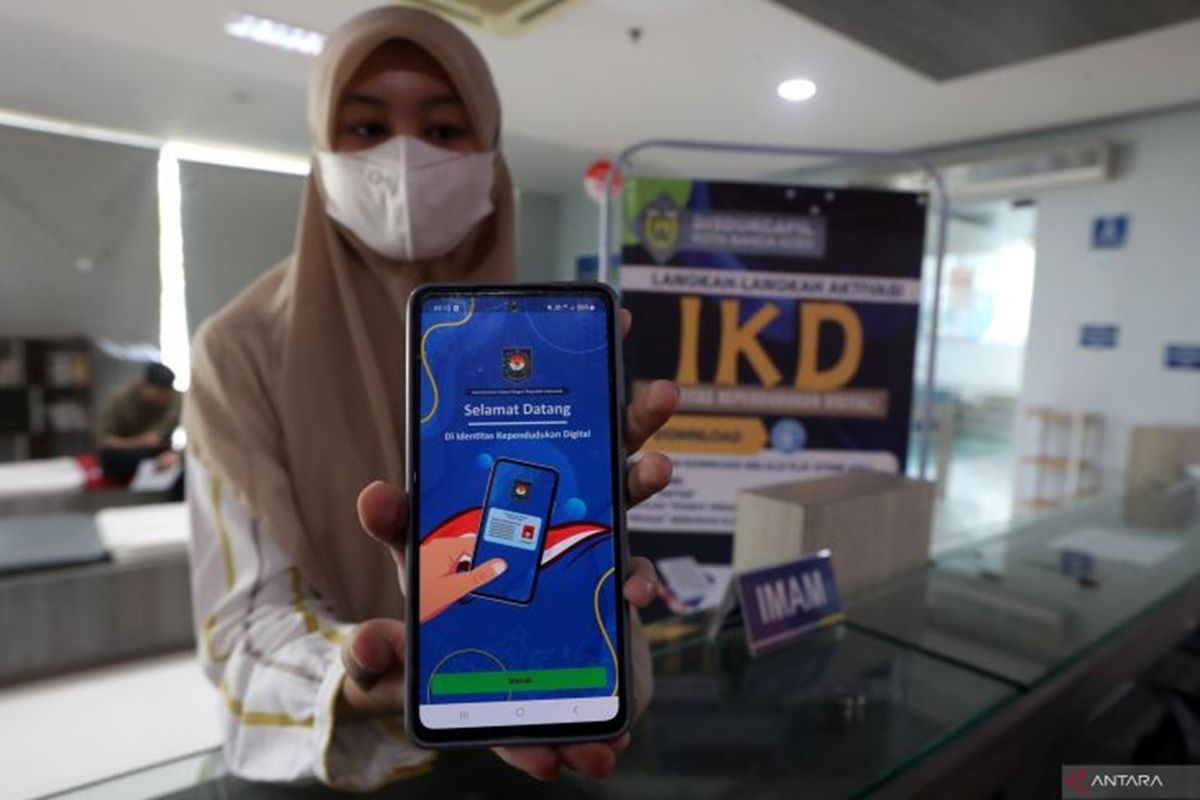
The Palangka Capangka Raya City Government, Central Kalimantan, is continuously striving to accelerate the activation of Digital Population Identity (IKD) as part of a transformation towards faster and easier population administration services for the public.
Sabirin Muhtar, the Expert Staff to the Mayor of Palangka Raya for Economy, Finance, and Development, stated in Palangka Raya on Monday that accelerating the implementation of IKD requires cross-sector synergy to ensure the optimal use of population data. “This serves as a catalyst for us to continue encouraging the wider implementation of IKD across various service spaces, so that the benefits of digital transformation can be felt by all members of the community,” he said.
Sabirin reported that to date, 43,930 residents, or 18.8% of Palangka Raya’s population, have registered for IKD. The government continues to push for increased achievement through collaboration with various agencies and public service venues.
According to him, IKD not only provides convenience in using digital identities but also supports various public services and social protection programmes. Therefore, accurate and up-to-date population data must be continuously strengthened.
Sabirin noted that based on data from the first semester of 2026, the population of Palangka Raya City reached 326,626 people. Out of the 235,247 individuals required to hold an electronic ID card (KTP-el), 232,773 people, or 98.95%, have completed the electronic ID recording process. Meanwhile, the ownership of Child Identity Cards (KIA) for children aged 0 to 16 years has reached 77.59%. This achievement demonstrates the government’s efforts to ensure citizens possess population documents as part of fulfilling their civil rights.
Sabirin emphasised that cross-sector synergy is necessary to provide public services that are fast, easy, accurate, and capable of keeping pace with technological developments. Strengthening population data is also vital to support the education, health, and social protection sectors, as well as development planning and budget allocation.
Meanwhile, the Head of the Palangka Raya City Population and Civil Registry Office (Disdukcapil), Alman Parluhutan Pakpahan, stated that digitalisation is a crucial part of improving service quality to make it easier, faster, more orderly, transparent, and to provide legal certainty to the community. “Our commitment to bringing the state to the community is achieved, among other things, through proactive services and the use of technology,” said Alman.
He added that the strengthening of digitalisation is being carried out through several innovations, including the SiDukcapil Keren application as a means of information and service transparency, and SiDEKAP, to support integrated queue management from the neighbourhood (RT/RW) level to the sub-district level. The resulting service data is subsequently connected to the main SIDOI (Sistem Informasi Dukcapil Oloh Itah) database. This integration is further strengthened through cooperation in utilising population data with 12 technical regional apparatus organisations (OPD) within the Palangka Raya City Government.