
Pakistani Becomes First Foreign Astronaut aboard China’s Space Station
Pakistani astronaut Muhammad Zeeshan Ali has made history as the first foreign astronaut to enter Tiangong, China’s space station. The landmark moment underscores Islamabad’s scientific ambitions and Beijing’s efforts to expand its space diplomacy.
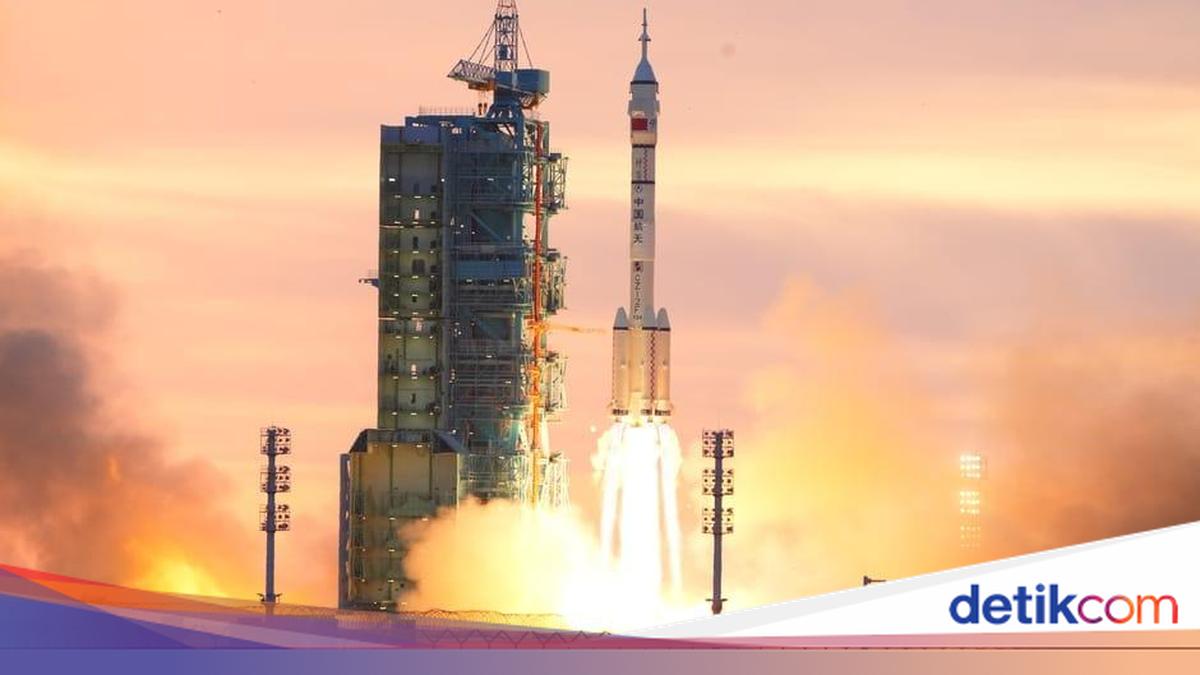
The Shenzhou-24 spacecraft lifted off from the Jiuquan Satellite Launch Centre in north-west China on Wednesday morning (25 November), aboard a Long March-2F rocket. After separating from the rocket and reaching its designated orbit, the spacecraft docked with Tiangong at 11.56am local time, about three and a half hours after launch.
The 40-year-old pilot is now the first Pakistani to orbit the Earth. He will serve as a payload specialist and is scheduled to stay aboard the station for five to 10 days.
Ali is accompanied by two Chinese astronauts: commander Tang Hongbo, 51, and flight engineer Wu Yi, 39. The launch marks the first joint flight between Chinese and foreign astronauts in the history of China’s crewed space programme. On arrival at the station, the three posed for a photograph with the three astronauts from the Shenzhou-23 mission.
In preparation, Ali underwent seven months of training in Beijing. He took intensive Mandarin classes, learned Chinese songs and read Chinese poetry. He also practised calligraphy and played table tennis.
“I am not flying for myself. I carry Pakistan’s name on my shoulders,” Ali told reporters on Tuesday (24 November).
International cooperation
China is promoting Tiangong, which means “Heavenly Palace” in Mandarin, as a hub for international cooperation. Meanwhile, the US-led International Space Station (ISS) is at risk of retirement by 2030 at the latest.
Ali’s stay is much shorter than the six-month rotations typically undertaken by Chinese astronauts. Even so, his mission was greeted with major celebrations in Pakistan.
Hours before the launch, crowds gathered for a send-off ceremony. Many raised their mobile phones to capture the moment.
In Pakistan, shouts of “God is great!” and “Long live Pakistan-China friendship!” rang out as the spacecraft carrying Ali soared into space. Families thousands of kilometres from the launch site watched the milestone in their country’s space programme on television.
In restaurants, patrons followed the broadcast on screens and joined the celebrations, cheering the friendship between Pakistan and China. Scientists at the headquarters of Pakistan’s space agency also watched the launch.
A sign of close China-Pakistan ties
Pakistan’s Prime Minister Shehbaz Sharif congratulated the nation, describing Ali’s mission as a source of national pride and an inspiration to young Pakistanis.
“This is not merely the journey of one astronaut, but the journey of 240 million people of Pakistan. It is the journey of our youth, our scientists and our dreams,” Sharif wrote on X.
“This is tangible proof of the iron-clad friendship between Pakistan and China. We are grateful to our brotherly country, China, for making Pakistan part of this historic mission.”
Pakistan’s President Asif Ali Zardari and Chinese President Xi Jinping also exchanged congratulatory letters. According to a statement from Zardari’s office, they described the participation of a Pakistani astronaut in China’s space mission as an important milestone in relations between the two countries.
China’s state broadcaster CCTV reported that Xi described the Chinese space station as a “vessel” for peace, friendship and cooperation. Xi also said China was willing to uphold the peaceful use of space with other countries and deepen cooperation.
Cooperation dating back to 1990
Space cooperation between China and Pakistan dates back to the early 1990s. China has launched several Pakistani satellites, and a Pakistani-built rover is scheduled to travel on a Chinese lunar mission around 2028.
During his time in space, Ali will assist with several experiments. One will examine how self-healing carbon-fibre composite materials could automatically repair small cracks in spacecraft.
At the launch site, Pakistan’s Minister for Planning Ahsan Iqbal said he hoped the flight would mark the beginning of broader space cooperation with China, including the possibility of a joint lunar mission.
“This shows the way forward: how developing countries can work together to build capabilities in areas that are crucial to future economic development,” he said.
One Chinese astronaut to stay longer
Tiangong, built by China, has been fully operational since late 2022. It can accommodate up to six astronauts during crew handovers, when three incoming crew members are on the station at the same time as the team preparing to return. This time, however, the handover is different.
Shenzhou-23 commander Zhu Yangzhu will remain aboard to support Beijing’s research into how the human body withstands space. The research is an important step towards planned crewed missions to the Moon and potentially to Mars. The other Shenzhou-23 crew members will leave Tiangong with Ali.
Zhu is scheduled to stay for a year. On his return, he will hold the record for the longest single stay in orbit by a Chinese astronaut.
China’s target of putting humans on the Moon by 2030 at the latest remains unchanged, despite delays to the Chang’e-7 lunar mission. The mission failed to meet this year’s launch window because of bad weather associated with a tropical storm.
By comparison, the United States aims to send humans back to the Moon in 2028, amid fierce competition to build a lunar base as a stepping stone to human exploration of Mars. China plans to establish a research base on the Moon with Russia by 2035 at the latest.
Washington has warned that Beijing could seek to control access to resource-rich areas of the Moon. Beijing has rejected the allegation, saying it supports the peaceful use of space.
Source: jawawa.id (https://jawawa.id/newsitem/pakistani-becomes-first-foreign-astronaut-aboard-chinas-space-station-1795607577)
Originally published by detikcom (https://news.detik.com/dw/d-8769761/orang-pakistan-jadi-astronaut-asing-pertama-di-stasiun-luar-angkasa-china), translated from Indonesian