
Pakistani Activists Sentenced to Life Imprisonment, Sparking Criticism and Concern
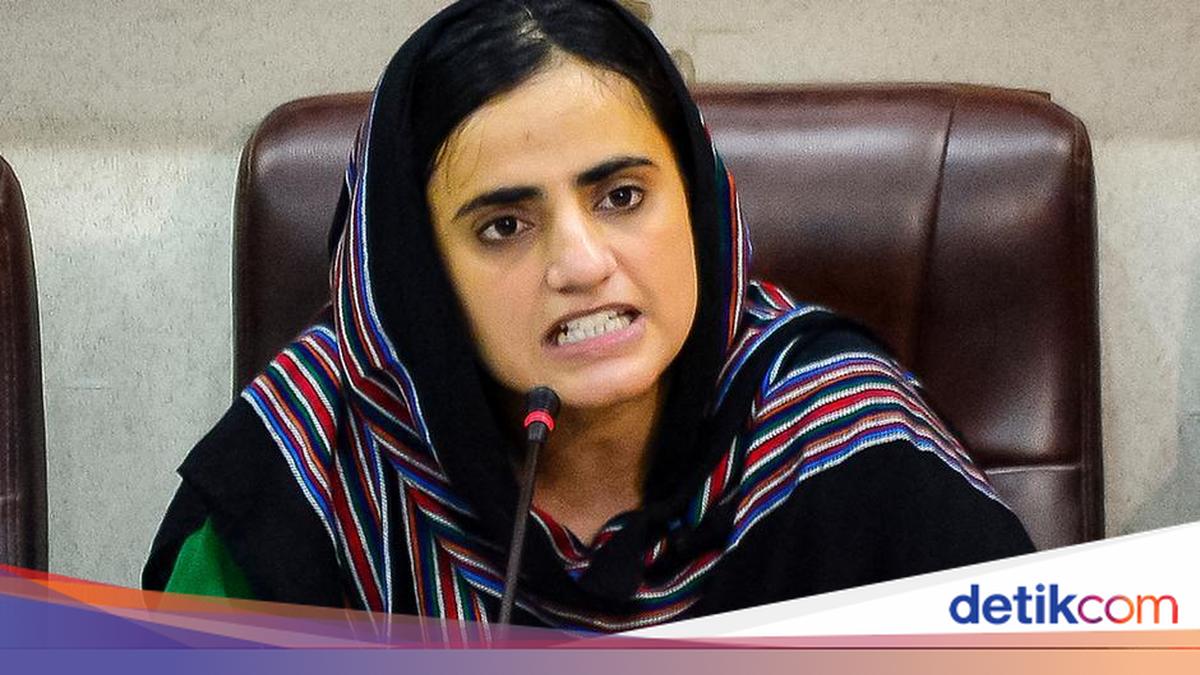
A Pakistani anti-terrorism court has sentenced two civil rights activists to life imprisonment over the death of a paramilitary soldier during a protest in July 2024. The verdict was handed down to 33-year-old Mahrang Baloch and her fellow activist Sibghatullah Shahji on 25 June.
Mahrang Baloch is a leading campaigner against enforced disappearances in Balochistan and heads the Baloch Yakjehti Committee. Both activists boycotted the trial and denied all charges.
Their lawyer, Israr Jattak, stated that an appeal would be filed and that both were in good physical and mental condition. Through her lawyer, Baloch said the ruling demonstrated the use of law as a weapon against activism. “The court has used the law as a weapon against us. The court and the judicial system have shown their weakness through this verdict,” Baloch told DW via her lawyer.
The ruling has provoked strong reactions from human rights organisations. The Human Rights Commission of Pakistan called for a review, arguing that the state’s approach equates advocacy for fundamental rights with extremism and produces biased decisions.
Meanwhile, the Balochistan provincial government maintained that the legal process was conducted fairly. Spokesperson Shahid Rind asserted that the case was based on strong evidence and was not politically motivated.
Prosecutors argued that while Baloch did not directly kill the victim, she was accused of inciting the crowd during a protest in Gwadar in July 2024, which led to violence against security forces. A paramilitary soldier was reportedly killed after being separated from his unit and attacked by the mob. Baloch denied the charges, stating the case was designed to criminalise political dissent and human rights demands.
“These accusations are used to create an atmosphere where political dissent is labelled as a crime and demands for human rights are branded as hostility towards the state,” Baloch said in a statement issued from prison and posted on the official social media account of the Baloch Yakjehti Committee earlier this month.
Originally a doctor, Baloch became a human rights activist and a prominent figure in the Baloch Yakjehti Committee, a rights movement based in Balochistan. Her activism was initially driven by personal experience after her father, Abdul Ghaffar Langove, was allegedly forcibly disappeared in 2009 and later found dead in 2011. Since then, she has organised peaceful protests, sit-ins, and public campaigns demanding justice.
Balochistan, Pakistan’s largest but poorest province, has long been a centre of political tension. The resource-rich region is home to the Baloch ethnic group, which has frequently voiced dissatisfaction with the central government. This tension has fuelled a separatist movement demanding greater autonomy or independence. Armed groups such as the Balochistan Liberation Army regularly target security forces and strategic projects.
The life sentence handed to Baloch has raised concerns among activists. Some fear the ruling could lead to further restrictions on political debate in Balochistan. Sammi Deen Baloch, a central activist with the BYC, warned that suppressing non-violent channels could erode trust in democratic approaches.
“For decades, many in Balochistan have lost faith in state institutions and believe that peaceful struggle is ineffective. Despite this widespread scepticism, many activists have worked to promote the idea that grievances can be addressed through democratic engagement, non-violent mobilisation, and peaceful political action,” he told DW. He added that when public grievances are ignored and peaceful avenues are closed, support for armed resistance could increase.
Abdul Basit, a senior researcher at the International Centre for Political Violence and Terrorism Research in Singapore, assessed that the move could deepen political divisions in Balochistan and worsen relations between the state and the Baloch ethnic group, who have long felt marginalised.
“This will certainly deepen the crisis and is counterproductive for the state. It could push peaceful protesters towards insurgency and narrow the gap between peaceful protest and militancy,” Basit told DW. He argued that a long-term solution requires a political approach through dialogue and building public trust. “Dialogue is the best way to resolve this politically,” he said, adding that counter-insurgency strategies are used to create space for political solutions, though challenges remain as nationalist figures are sidelined.
Activist Sammi Deen echoed similar views, highlighting the impact of the prosecution on Mahrang Baloch, who is widely regarded in Balochistan as a peaceful activist. “If peaceful groups continue to be silenced and their aspirations go unaddressed, people may lose faith in the political process,” he said.
Source: jawawa.id (https://jawawa.id/newsitem/pakistani-activists-sentenced-to-life-imprisonment-sparking-criticism-and-concern-1782730458)
Originally published by detikcom (https://news.detik.com/dw/d-8552525/aktivis-pakistan-dibui-seumur-hidup-tuai-kritik-dan-kekhawatiran), translated from Indonesian