
Pakistan: Mecca Pact for Collective Deterrence without Regional Ambitions
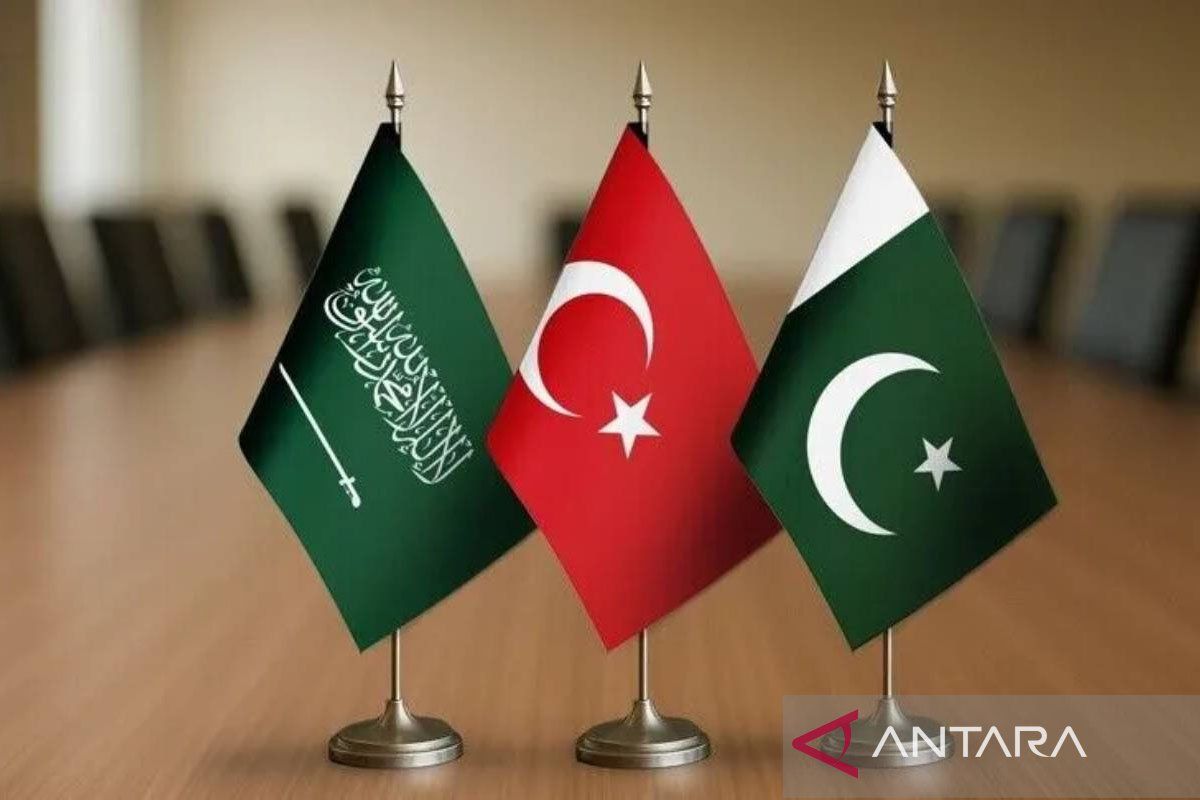
Islamabad (ANTARA) - The Pakistan Army stated on Wednesday that the Mecca trilateral defence pact between Türkiye, Saudi Arabia, and Pakistan is intended for “collective deterrence” and holds no “regional ambitions.”
“This pact formalises the relationships that have existed for decades between Pakistan, Saudi Arabia, and our friendly nation Türkiye within the realm of collective deterrence and the defence of the three nations,” said Army Spokesperson, Lieutenant General Ahmed Sharif Chaudhry, in an interview with the Saudi broadcaster, Al Arabiya.
When asked whether the pact, signed in Mecca last month, primarily represents defence cooperation or the beginning of a broader strategic alliance, Chaudhry emphasised that the pact is “defensive, as implied by its name.”
The pact stipulates that an attack against one member state will be considered an attack against all members.
The alliance’s inaugural meeting was held in Istanbul on 31 August, where it was decided that Pakistan would lead the alliance’s secretariat for an initial three-year period.
“Its nature is defensive. There is no aggressive element. There is no regional ambition. This is collective deterrence,” he said, adding that the agreement is also “complementary.”
“Therefore, this mutual defence agreement is complementary in nature. This agreement does not compete with the other relationships held by these countries,” he said, adding that the three allies maintain independent relations with other nations, blocs, and alliances.
Operational details will not be made public
Responding to questions regarding how Pakistan would react if one of the nations in the alliance were attacked, he stated that the technical implementation of defence commitments is never disclosed to the public in any discussions.
“You know, there are many other agreements that are defensive and binding. However, no country openly shares its operational details,” said Chaudhry.
“The decision, knowledge, and implementation remain entirely within the domain of the three countries,” he asserted.
He also addressed whether the alliance “complements or competes” with Pakistan’s decades-long relationship with China.
“We need to understand that Pakistan-Saudi and Pakistan-Türkiye relations did not emerge out of nowhere. China understands this. The wider world understands how historic these relationships are. We are merely formalising them,” he said.
Responding to questions on whether the defence agreement would become part of a broader Muslim world security architecture, Chaudhry stated that there are no provisions in the agreement referring to it as a Muslim alliance, adding that the alliance is aimed at regional stability.
“This is not a vessel formed exclusively for Muslim nations only,” he said, adding that decisions regarding the expansion of the alliance would be made by the leaders of the three countries.
He added that the alliance remains open to embracing new partners willing to join and who share the same convictions regarding regional peace, stability, and security, as well as possessing a shared vision regarding the principles of non-aggression, non-intervention, and collective deterrence.