
Pakistan in the Gulf Security Circle: Should India Worry About the Makkah Pact?
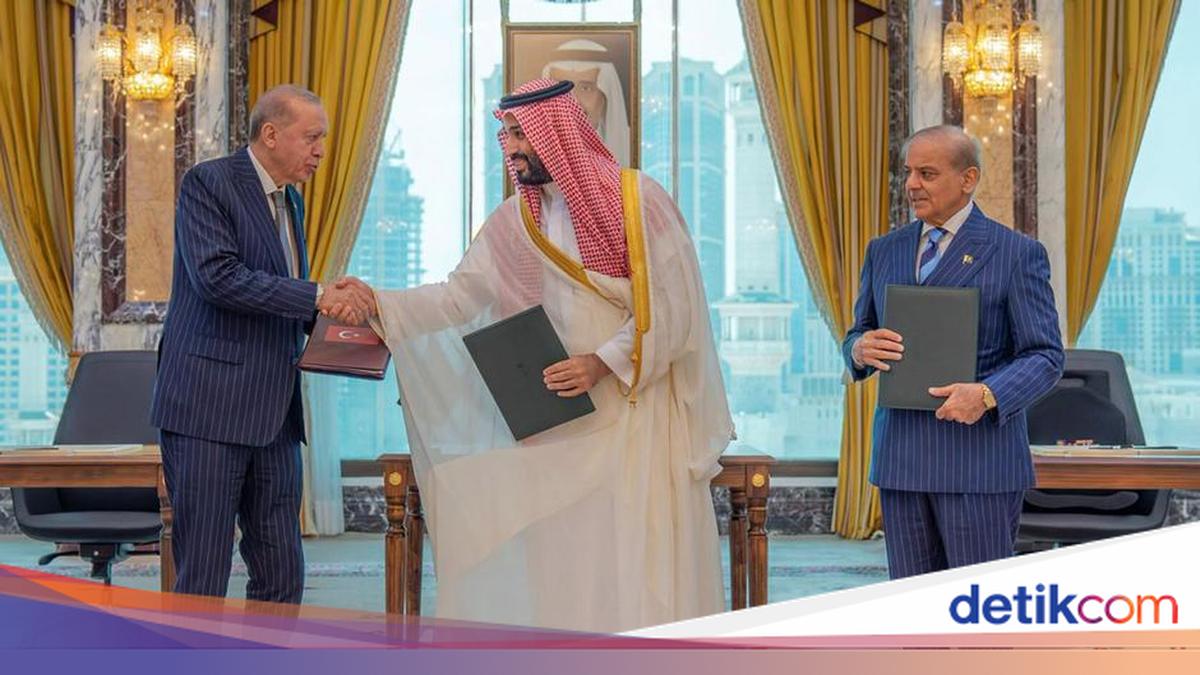
The Makkah Joint Defence Agreement between Saudi Arabia, Turkey, and Pakistan was signed on 7 August, amid the Iran war and the faltering security structure in the Middle East.
Saudi Arabia is seeking new partners due to high uncertainty over whether the United States security umbrella can be relied upon. Turkey is pursuing a larger regional role, while Pakistan is seeking to leverage its long-standing military ties with Riyadh to expand its influence in the strategic region.
The agreement provides for collective defence. An armed attack against one member will be considered an attack against all three.
The deal also formalises a relationship that has in fact long existed. Pakistan has for decades trained and assisted Saudi forces, while defence ties with Turkey have grown through military exchanges and cooperation.
For the government in New Delhi, the question is whether the Makkah pact gives a strategic advantage to its arch-rival in a region vital to Indian interests.
Several Indian analysts do not yet see the regional balance being shaken in the near term. Others view the Makkah pact as a warning that India needs a more visible military presence in a region of high economic importance.
Saudi Arabia is a key energy and investment partner for New Delhi. The Gulf and the Red Sea are crucial to India’s trade and energy security.
The pact allows Pakistan to expand its security role in the Gulf, while providing an institutional framework for closer defence cooperation and, potentially, opening greater access to funding and technology.
However, former Indian High Commissioner to Pakistan Ajay Bisaria believes the agreement will have little impact on the basic dynamics of the India-Pakistan confrontation.
“The Makkah pact is worth no more than the paper it is written on,” Bisaria told DW.
“It does not change much compared with last year’s Saudi-Pakistan defence pact, an arrangement that proved to have only symbolic value for Iran, the United States, and Israel. At that time Riyadh was shaken by the fragility of the American security umbrella,” he said.
Should an India-Pakistan crisis occur in future, the former ambassador does not expect the pact to alter Saudi Arabia’s position.
“For India, this pact needs to be monitored, but it is not something to be overly concerned about,” Bisaria said.
“If another terrorist attack from Pakistan occurs, the situation will probably not be much different from Operation Sindoor, except perhaps for harsher rhetoric,” he said. He was referring to the name of the operation India launched in response to an attack on tourists in Kashmir in 2025, which New Delhi blamed on Pakistan-backed militants. Islamabad denied involvement in the attack.
“Turkey will continue to supply drones and equipment to Pakistan. Meanwhile, Saudi Arabia, rather than rushing to position itself as Pakistan’s defender, is likely to prefer offering its services, more vocally, as a mediator,” he said.
Tara Kartha, a former member of India’s National Security Council Secretariat, believes India need not exaggerate the significance of the agreement.
“India does not need to worry too much about the Makkah pact. Saudi Arabia and Turkey hardly see us as a strategic rival or ‘enemy’,” Kartha told DW.
Most of the Pakistan-Turkey military relationship, Kartha said, already exists. “Turkey’s formidable defence industry will certainly be available to the parties to this pact,” she said.
“But Pakistan and Turkey already have strong defence ties, including joint development of the Kaan aircraft. So, on the ground nothing has actually changed, except possibly increased funding for Pakistan’s defence budget. That is certainly a problem that is not easy to avoid,” she said.
A more pressing concern for India may be whether Saudi resources and Turkish technology can strengthen Pakistan’s military capabilities in the long term.
Beyond the India-Pakistan rivalry, the pact also raises questions about India’s relationship with Saudi Arabia.
The kingdom in Riyadh has built extensive ties with India, spanning energy, investment, trade, and political relations. Saudi Arabia’s efforts to diversify its security partnerships do not necessarily mean choosing Pakistan over India.
Geopolitical analyst Harsh Pant, vice president of the Delhi-based Observer Research Foundation, told DW that India should respond carefully, but not passively.
“Differences in strategic interests among the three members may limit the pact’s cohesion. But New Delhi should use its own relationship with Riyadh to deepen security, intelligence, and economic cooperation,” Pant said.
Closer bilateral ties with Saudi Arabia, he said, could help ensure Pakistan’s new role does not turn into disproportionate influence in the Gulf.
New Delhi must also watch the military dimension closely. If drones, missiles, electronic warfare systems, or other Turkish defence technology become more readily available to Pakistan, India’s security calculus on its western front could change.
Randhir Jaiswal, spokesperson for India’s Ministry of External Affairs, said New Delhi is examining the implications of the pact “from the perspective of India’s national security as well as considerations of regional peace and stability.”
“India remains fully committed to protecting its national interests and will take all necessary steps in this regard,” he said.
Strategic expert C. Raja Mohan told DW that the trilateral agreement points to a larger problem in India’s approach to the Gulf. India’s economic dependence on the region has grown rapidly, while its security presence is relatively limited, he said.
“For India, this should be a warning that New Delhi cannot continue to be a player that relies mainly on diplomacy and economics in the Gulf. India needs a greater military reach in the region as well as deeper and more practical security and defence relationships with individual Middle Eastern states,” Mohan said.
He sees a widening gap between India’s interests and its security presence.
“The gap between India’s economic interests and its limited military-security presence is becoming increasingly difficult to ignore,” he said.
India could deepen defence and intelligence cooperation with Saudi Arabia and other Gulf states, strengthen maritime security in the Arabian Sea and the Red Sea, and closely monitor Pakistan-Turkey military cooperation.
Mohan, a professor of American Studies at Jindal Global University, sees the agreement primarily as an effort by Saudi Arabia to expand its strategic options.
“I see it more as evidence that Arab states are still unable to build a reliable regional security system. Importantly, it shows Saudi Arabia is hedging against uncertainty over the reliability of the United States security umbrella,” Mohan said.