
Paediatrician Warns of Protecting Children from Volcanic Ash Exposure
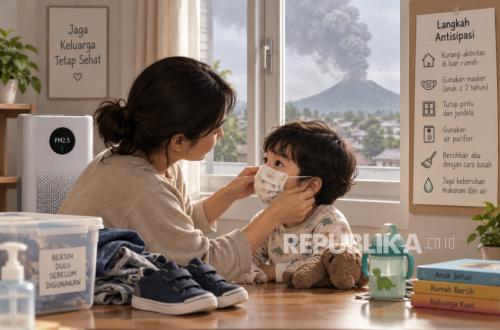
Volcanic ash exposure can disrupt the respiratory tract, particularly in children. Consequently, parents need to limit children’s outdoor activities and ensure their living environment is protected from ash exposure while eruptions are ongoing.
Dr Leonirma Tengguna, a paediatric specialist at RSIA Bina Medika, explained via a social media thread several steps parents can take to protect children from volcanic ash exposure.
Leonirma reminded parents to avoid direct exposure to ash. As long as ash is falling, children should avoid physical activities or playing outdoors.
She also highlighted the use of masks for children. According to her, masks are not recommended for infants under two years of age because they have the potential to obstruct airways. Furthermore, infants of that age are not yet able to remove a mask themselves if they experience breathing difficulties.
For children aged two and above, masks can be used, provided the size fits the face correctly. Masks that are too large, loose, or prone to slipping are considered to provide sub-optimal protection.
Leonirma also urged parents to control indoor air quality. While ash is falling, doors and windows should be kept tightly closed. If using air conditioning, the mode that draws in air from the outside should be turned off.
“If you have an air purifier, now is the time to use it,” Leonirma wrote.
Do Not Clean Ash in Dry Conditions
In addition to maintaining indoor air quality, the method of cleaning volcanic ash must also be considered. Leonirma suggested that ash that has settled in yards or around the home should be moistened or sprayed with water before being cleaned.
According to her, cleaning ash in dry conditions can cause settled particles to become airborne again, making them easier to inhale.
Parents are also advised not to immediately bring items from outside that have been exposed to ash, such as shoes, jackets, or bags, into the house. If one has been active outdoors and exposed to ash, parents should clean themselves and change clothes before carrying an infant.
Protection must also be provided for children’s eyes and skin. If ash enters the eyes, children should not rub them, as this can worsen irritation. Eyes can be immediately rinsed using clean water or artificial tears.
Meanwhile, skin exposed to ash should be cleaned immediately using running water, paying particular attention to skin folds.
Leonirma also reminded the importance of maintaining the cleanliness of drinking water and food during volcanic ash exposure. Water and food storage containers must be tightly closed to prevent ash from entering.
Food ingredients exposed to ash, especially those intended for preparing complementary foods (MPASI), must be washed thoroughly before use.
Recognising Respiratory Disturbances
According to Leonirma, parents also need to recognise danger signs in children following exposure to volcanic ash. Children should be taken to a health facility immediately if they experience rapid breathing, appear to have difficulty breathing, show retractions in the chest wall, exhibit bluish lips, or if an infant refuses to breastfeed or drink entirely.
She also emphasised the importance of maintaining fluid intake. Children experiencing coughing or respiratory tract irritation may become more fussy and reduce their fluid intake.
Therefore, parents are advised to offer breast milk or drinks to children more frequently during periods of volcanic ash exposure.
Source: jawawa.id (https://jawawa.id/newsitem/paediatrician-warns-of-protecting-children-from-volcanic-ash-exposure-1788670615)
Originally published by Republika (https://ameera.republika.co.id/berita/tkxdq1522/dokter-anak-ingatkan-perlindungan-anak-dari-paparan-abu-vulkanik), translated from Indonesian