
Padhang Bulan Fest 2026 Features Renowned Preachers, Serving as a Space for Learning and Da'wah Celebration in Yogyakarta
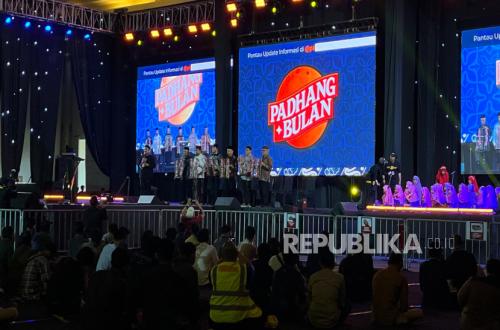
The Padhang Bulan Fest 2026 is being held once again at the Jogja Expo Centre (JEC), presenting a series of da’wah (missionary) activities designed as a space for learning, social gathering, and a celebration of da’wah across various communities. This annual event, taking place from 19–20 September 2026, features numerous preachers and religious figures from diverse backgrounds.
On the first day, Saturday (19/9/2026), attendees include Habib Isa Al Kaff, Ustaz Agam Fachrul, Ustaz Rifky Ja’far Thalib, Ustaz Muh. Faizar, dr Sagiran, Zein Permana, Ustaz Alief Aslan, Syafrian Hidayat, Prof Zainal Arifin Mochtar, Ganjar Pranowo, Bang Fathur, and Gus Ajir Ubaidillah.
The second day, Sunday (20/9/2026), will feature Ustaz Slamet Ibnu Syam, Ustazah Nabilah, Ustaz Amar Ar Risalah, Ustaz Husein Gaza, Teh Indadari, Papap Handy Bonny, Gus Nul Wowok, Gus Kautsar, Gus Sabrang, Ustaz Abdul Somad, Ustaz Salim A. Fillah, and Ustaz Luqmanulh.
The Chairperson of the Padhang Bulan Fest 2026 Committee, Muhammad Akhid Subianto, stated that the presence of these scholars is part of the series of studies and Da’wah Safaris organised during the festival. The activity aims to make da’wah an open space for the public to meet, learn, and build togetherness. He described Padhang Bulan Fest as a momentum to celebrate da’wah in Yogyakarta.
“This event is a celebration of da’wah in Jogja, involving many organisations. There are 16 institutions participating in this event,” said Akhid during an interview during the opening ceremony at JEC on Saturday (19/9/2026).
According to him, Padhang Bulan Fest does not belong to any single organisation or community. Several religious institutions and communities, such as Masjid Jogokariyan, Teras Dakwah, Baitul Mal Merapi Merbabu, various boarding schools (pesantren), Garasi Dakwah, Munzalan, and others, are merging into the single large narrative of Padhang Bulan.
Akhid noted that the spirit brought to the festival is to bring various elements together without emphasising organisational differences. “There is no need for us to discuss who we are, our affiliations, or our organisations, whether it is NU or Muhammadiyah, or even Persis or Salafi. We do not need to talk about that. Our focus is on how we can meet here, gather, and what we can collaborate on,” he said.
With the many figures presented, the discussions at Padhang Bulan Fest are not limited to religious studies. The festival also addresses issues close to community life, such as youth character building, morals, social relations, unity, the community economy, and the contribution of the younger generation to society. The presence of these figures also provides an opportunity for the public to learn religion in a more open, cross-community festival atmosphere.
“The grand theme of Padhang Bulan Fest is, philosophically speaking, a gathering… like friends playing outside together,” he said. “The knowledge shared by the figures can be absorbed, and the public needs to be aware of it.”
In addition to featuring preachers, Padhang_ Bulan Fest 2026 has expanded its festival concept by including musicians such as Letto, YKHC, and Kiai Kanjeng. The number of tenants has also increased from 95 last year to approximately 130 this year, ensuring the event serves not only as a religious study space but also as a meeting point for da’wah with economic activities and MSMEs (Micro, Small, and Medium Enterprises).
“This is a different concept. This year, we hope to reach 30,000 visitors. As of today, 17,000 tickets have been sold, not including on-the-spot purchases,” he added.
Meanwhile, religious figure Ustaz Syukri Fadholi assessed that the Padhang Bulan activity plays a strategic role in Islamic missionary development as well as economic development in the Special Region of Yogyakarta (DIY). He believes such activities can serve as a developmental space for the community, particularly the younger generation.
“The Padhang Bulan da’wah activity is a strategic effort in the context of fostering Islamic missionary work and economic development in the Special Region of Yogyakarta,” said Syukri.
He expressed hope that the activity would continue to receive support from the government and various religious institutions. He noted that religious and moral development is crucial amidst the challenges faced by the younger generation. “Religion teaches noble character (akhlakul karimah), which certainly prepares young people to behave well and live properly within today’s society,” he concluded.