
Padel Effect: When a Lifestyle Trend Becomes a Networked Economy
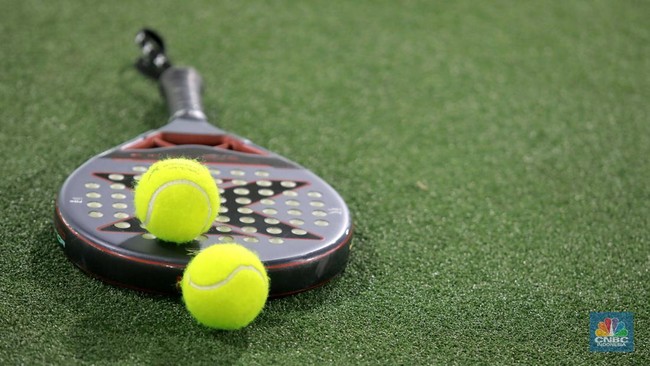
Behind the busy padel courts in Jakarta, Bali, Bandung, and Surabaya, a change is taking place that is bigger than merely a shift in the favourite sport of the urban middle class. What is changing is the way society builds health, reputation, networks, and even economic opportunity. This phenomenon is what I call the Padel Effect.
Padel is not replacing golf. It reflects a transformation of the modern economy: from an ownership economy, when status was determined by what one owned; towards an experience economy, when people seek experiences; and then developing into a network economy, when the greatest value is born from community and networks.
Its development is indeed impressive. The Global Padel Report 2025 places padel as one of the fastest-growing sports in the world, driven by the expansion of clubs and courts in various countries. The International Padel Federation (FIP) also notes that the sport is now played in more than 150 countries with tens of millions of active players.
Indonesia is part of that wave. The Indonesia Padel Report 2025 states that Indonesia is developing into the largest and fastest-growing padel ecosystem in Southeast Asia. By the end of 2025, it is estimated that there will be around 947 padel courts, with Jakarta as the centre of growth, followed by West Java, Bali, Banten, and East Java. The Indonesian Padel Association (PBPI) is also continuing to expand the ecosystem through coaching, international tournaments, and preparations for the 2026 Asian Games.
However, those statistics only explain the industry’s growth. What is far more interesting is the change in public consumption behaviour.
From Ownership Towards Experience
Economist Thorstein Veblen explained that prestige was once built through conspicuous consumption: luxury homes, premium cars, or exclusive club memberships. That pattern is now changing.
B. Joseph Pine II and James Gilmore, through the concept of the Experience Economy, show that modern society values experiences more than ownership. People are willing to pay for marathons, HYROX, concerts, wellness retreats, and padel because what they seek is not merely activity, but meaningful experience.
Richard Thaler adds that human economic decisions are not purely rational. Identity, social recognition, and a sense of belonging to a community are often more decisive. Padel fulfils all of these elements: it is easy to learn, played in pairs, short in duration, inclusive, and highly appealing on social media. Because of this, what padel players actually buy is not just playing time, but experience and networks.
When Community Becomes an Economic Engine
This is where the Padel Effect finds its meaning. Robert Putnam calls trust and networks social capital, which increases economic productivity. Manuel Castells describes modern society as a network society, in which networks become a source of competitiveness as important as capital and technology.
Padel courts are now becoming spaces where businesspeople meet partners, investors meet startups, consultants meet clients, developers meet architects, and MSME players meet potential business partners. Many opportunities are born not in meeting rooms, but in between matches.
This phenomenon is in line with Mark Granovetter’s theory of the Strength of Weak Ties: new opportunities more often come from new relationships than from old friendship circles. Padel multiplies these weak ties because players keep meeting different partners and opponents.
If golf has long been identified with the relationship economy, then padel is beginning to shape a network economy, an economy built on community, collaboration, and trust.
From the Court Towards the Sport Economy
Padel also shows how sport develops into an economic ecosystem. The growth of courts drives investment in facility construction, coaches, referees, sports equipment, booking applications, event organisers, sponsorship, restaurants, and the digital content industry. The impact does not stop at the sports sector.
The Global Wellness Institute estimates that the value of the world wellness economy reached US$6.8 trillion in 2024 and is projected to rise to nearly US$9.8 trillion by 2029, growing faster than the global economy. Padel is part of that transformation.
Furthermore, the sport is beginning to become a driver of sport tourism. Every international tournament brings athletes, coaches, officials, families, sponsors, media, and spectators who drive hotels, restaurants, transport, retail, and local MSMEs.
Bali has capitalised on this momentum through various FIP Tour events, while the development of an international-standard tennis and padel centre in Lombok shows the increasingly close relationship between sport and premium tourist destinations. In other words, padel courts do not only produce athletes, but also create a multiplier effect for regional economies.
Lessons for Indonesia
The biggest lesson from the Padel Effect is not that padel will replace golf or pickleball. The lesson is that the sources of 21st-century economic growth are changing.
If advantage was once determined by physical assets, it is now increasingly determined by the ability to build community, experience, and trust. Cities that are able to provide spaces for interaction through sport, the creative economy, and tourism will find it easier to attract talent, investment, and innovation.
Therefore, sport development needs to be seen as an economic development strategy. Investment in facilities, community development, the hosting of international events, and integration with tourism will produce benefits that go far beyond sporting achievement alone.
In the end, the Padel Effect is not a story about the rise of a single sport. It is a mirror of modern economic change.