
Padang Pariaman adopts agroecology to achieve food sovereignty
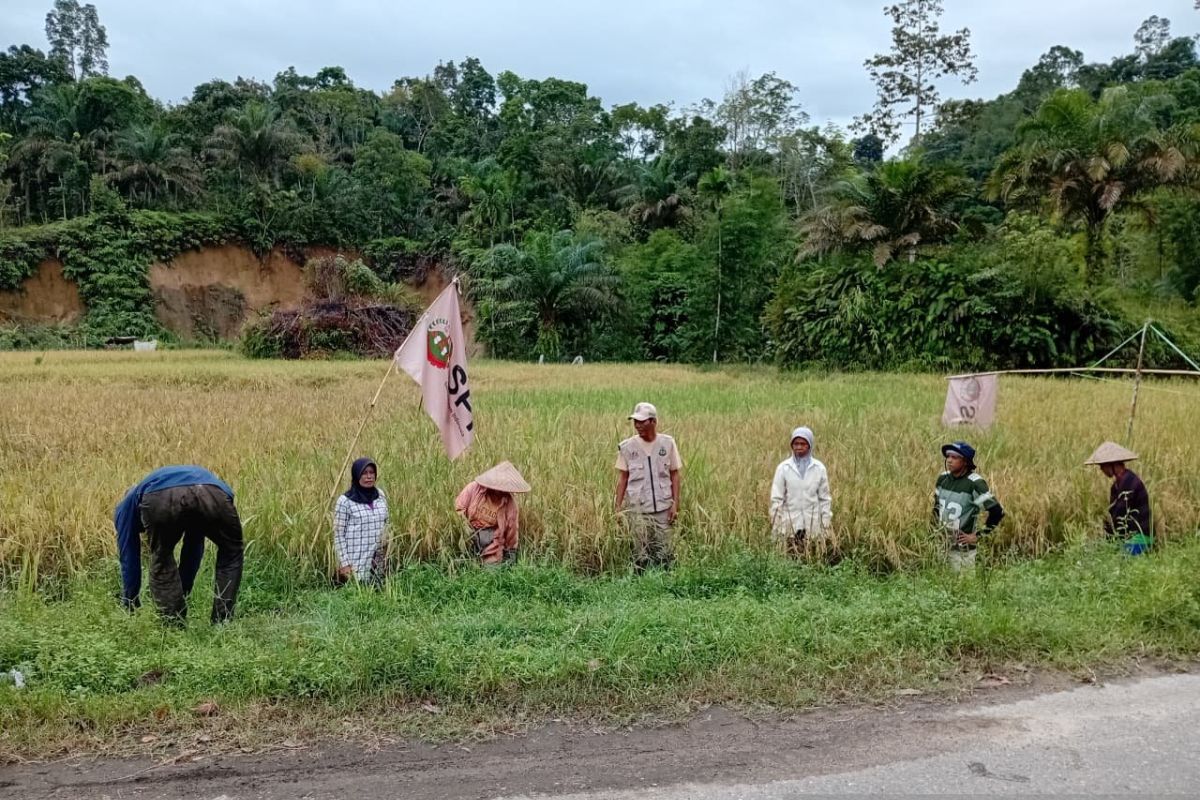
Farmers belonging to the Indonesian Peasants Union (SPI) Sakayan Jauah base in Korong Balah Aie, Nagari Anduriang, 2x11 Kayu Tanam District, Padang Pariaman Regency, West Sumatra, have adopted an agroecological farming system as an effort to achieve food sovereignty.
“Implementing agroecology is one manifestation of farmers’ independence from dependence on an agribusiness system that disempowers farmers. The goal is to make farmers more sovereign and realise agriculture that is rahmatan lil alamin,” said Rustam Effendy, Chairman of the SPI West Sumatra Regional Leadership Council, as received by ANTARA in Padang Pariaman on Monday.
He said the adoption of agroecology is one form of farmers’ efforts to build self-reliance while reducing dependence on farming systems that use external inputs.
In implementing agroecology, he continued, farmers do not use factory-made chemicals for crop cultivation but instead utilise independently produced organic fertilisers, including bokashi and liquid organic fertiliser, by making use of materials available in the surrounding environment.
According to him, with this concept farmers regain control over agricultural knowledge and production processes, from land management and seed production to independent fertiliser processing.
Thus, he said, farmers not only act as users of agricultural production inputs but also have the ability to meet part of their production needs independently, thereby forming a Food Sovereign Area.
He said that on Sunday the first harvest of the agroecological system was carried out. The harvested rice was the result of cultivation planted on 30 April 2026, coinciding with the declaration of the Food Sovereign Area in the region.
He noted that observations on a number of rice plant samples showed an average of 33 tillers per clump. The lowest number of tillers reached 17, while the highest reached 45 tillers per clump.
Agusnaini, Chairman of the SPI Sakayan Jauah base, said the first harvest was still in a transition phase, so the results did not yet show a significant difference compared with conventional methods.
“However, we are optimistic that future production will be better because we are currently still in the transition phase towards agroecological farming that is free from factory chemical inputs,” he said.
He said farmers plan to gradually expand the adoption of agroecology, with potential rice field area that can be developed reaching around five hectares.
The first harvest is part of the initial step in developing the Food Sovereign Area in Nagari Anduriang, with the hope that the agroecological farming system can strengthen farmers’ independence while supporting community food security at the nagari level.
Meanwhile, Atmadelis, a member of the Nagari Anduriang Consultative Body, said his side supports the adoption of agroecology because it has the potential to reduce production costs while strengthening community togetherness.
“We strongly support the adoption of agroecology through the use of liquid organic fertiliser and solid organic fertiliser. This is still at an early stage, so it requires a process of adjustment to soil conditions. However, if it continues, the results are believed to improve,” he said.
He said the nagari government will encourage the agroecological farming approach to be socialised more widely to the community.
According to Atmadelis, the system even has the opportunity to be developed into policy at the nagari level because it is considered in line with efforts to reduce agricultural costs and the values developing within the community.
Source: jawawa.id (https://jawawa.id/newsitem/padang-pariaman-adopts-agroecology-to-achieve-food-sovereignty-1786971323)
Originally published by Antara (Indonesian) (https://www.antaranews.com/berita/5698612/padang-pariaman-terapkan-agroekologi-wujudkan-kedaulatan-pangan), translated from Indonesian