
Padang Panjang City Government Holds Low-Cost Food Movement to Stabilise Prices and Support Public Purchasing Power
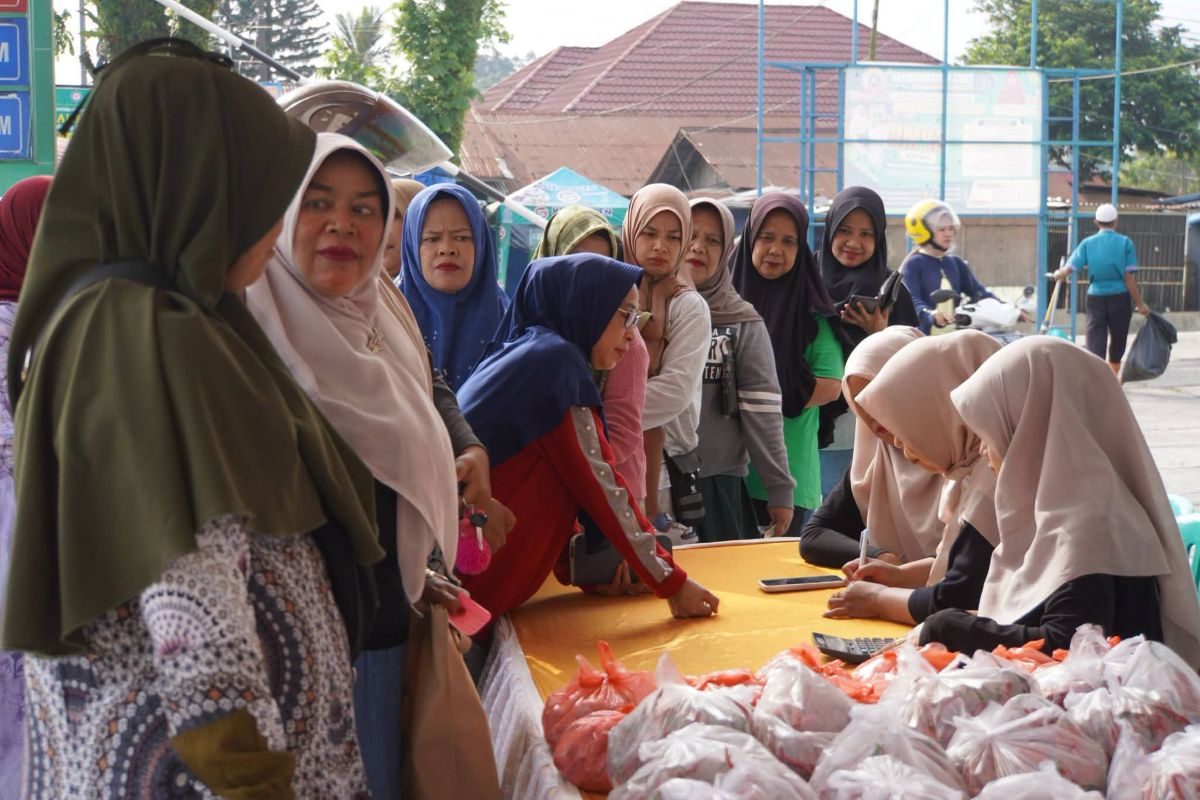
The Padang Panjang City Government has once again held the Affordable Food Movement (Gerakan Pangan Murah, GPM) as an effort to maintain the stability of food supplies and prices whilst helping residents obtain basic necessities at affordable prices.
The event took place at the Muhammadiyah Mosque car park on Tuesday (28 July) and received an enthusiastic response from the public.
Through the GPM, residents can buy various food commodities at below-market prices, including red chillies, shallots, garlic, potatoes, aubergines, green beans, leeks, celery, lettuce, carrots, cabbage and various other vegetables.
The vegetables were harvested by three Women’s Farming Groups (Kelompok Wanita Tani, KWT) nurtured by the Food and Agriculture Office (Dispangtan).
In addition, the Fish Seed Centre (BBI) provided farmed tilapia, whilst Perum Bulog brought a food truck selling various staple goods such as rice, cooking oil and other food commodities.
The Head of the Food and Agriculture Office, Varia Warvis, said the GPM is a concrete step by the government to keep food prices affordable whilst controlling regional inflation.
“Public enthusiasm is always high. Even before 11am Western Indonesia Time, most commodities are usually sold out. We are working to hold the GPM regularly every month so that its benefits can be felt more widely by the public,” she said.
Varia explained that all commodities are sold at lower prices than market rates as a form of government intervention to protect people’s purchasing power.
Among the commodities on sale were red chillies at Rp35,000 per kilogram, local shallots at Rp22,000 per kilogram, imported shallots at Rp13,000 per kilogram, garlic at Rp12,000 per half kilogram, potatoes at Rp12,000 per kilogram and tilapia at Rp16,000 per half kilogram.
One resident, Ros, said she had benefited from the GPM because the prices offered were far cheaper than market prices.
“We hope activities like this continue to be held regularly because they really help the public, especially when prices of basic necessities rise,” she said.