
Pacitan Farmers Adapt to Water Scarcity with Secondary Crops and Tobacco
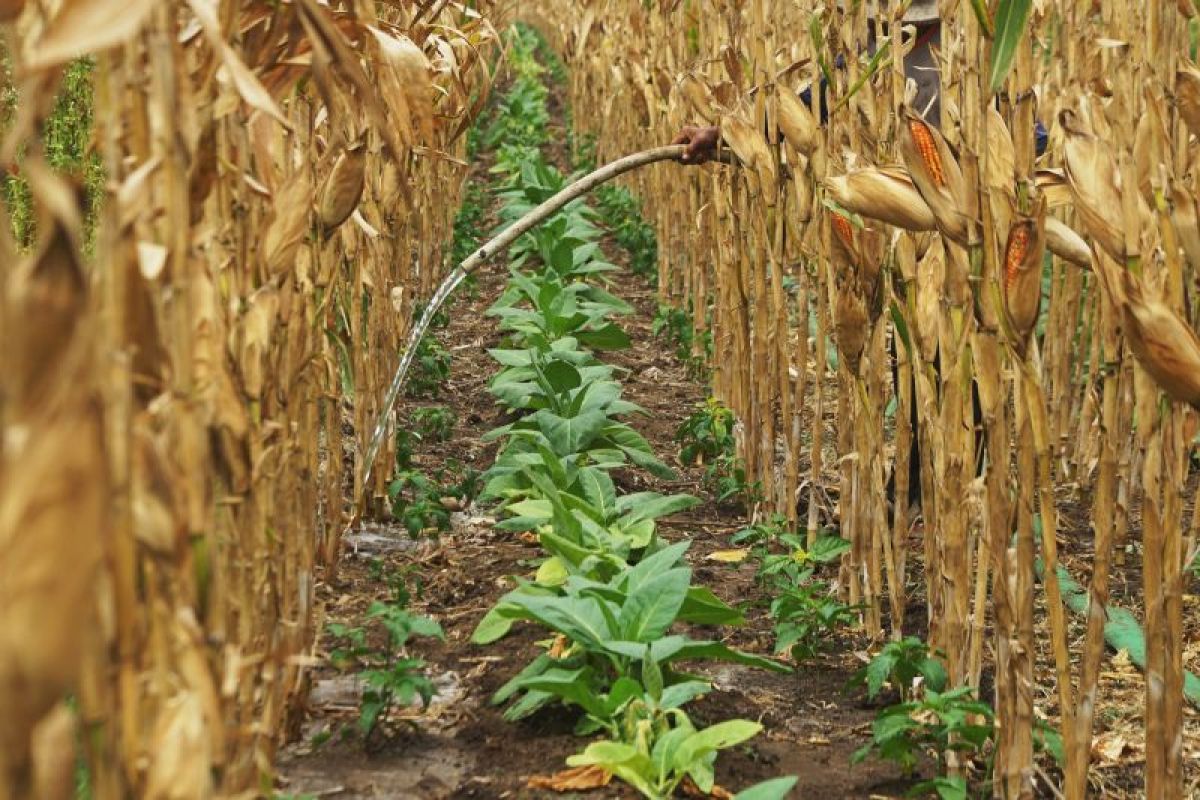
Pacitan, East Java (ANTARA) - Farmers in Pacitan Regency, East Java, are adjusting their planting patterns in response to minimal water availability caused by drought, by implementing an intercropping system of secondary crops (palawija) and tobacco.
The Head of the Food Security and Agriculture Office (DKPP) of Pacitan Regency, Sugeng Santoso, stated on Tuesday that some farmers are choosing to plant secondary crops or tobacco in fields with limited irrigation supplies, while land without water sources is being left fallow.
“Some have switched to secondary crops or tobacco. Others have left the land fallow where there is no water available,” Sugeng said when confirmed in Pacitan.
He noted that, based on reports from Plant Pest Control (POPT) officers, approximately 0.1 hectares of agricultural land has suffered crop failure in Ngadirojo District due to water limitations.
However, according to him, the situation has not yet had a widespread impact on the paddy fields in Pacitan. A number of farmers are still able to plant rice by utilising water sources from pumping irrigation networks.
Sugeng mentioned that the total area of permanent rice fields (LBS) in Pacitan Regency reaches approximately 14,296 hectares. Of that total, the area currently covered by rice or cover crops is about 1,109 hectares.
“In several paddy field locations, rice is still being planted by utilising pumping irrigation,” he added.
On the other hand, POPT reports indicate that approximately two hectares of land are at risk of drought, with five hectares in a state of alert in Kebonagung District.
Sugeng stated that the Pacitan DKPP is taking several steps to protect these seven hectares of land from crop failure.
These efforts include regulating water distribution, installing piping, and using agricultural machinery, such as water pumps, to supply the necessary water for the crops.
“The efforts to save the seven hectares at risk of drought include regulating water distribution, piping, and the use of agricultural machinery in the form of water pumps,” he said.
He added that adjusting planting patterns is one of the strategies used by farmers to face water limitations, while simultaneously ensuring the land remains productive according to the available water resources.
The Pacitan DKPP continues to monitor land conditions through field officers and is optimising water distribution and pumping facilities in areas that can still be salvaged.