
Pacific Ocean Alert: The Strongest El Niño to Arrive, Altering Regional Weather
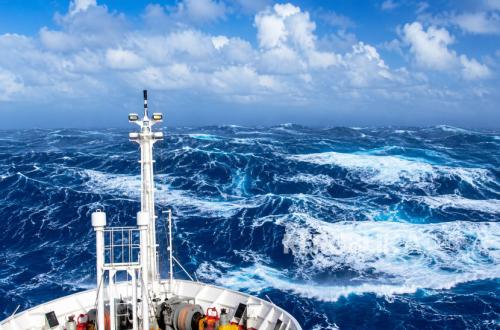
Scientists and global meteorological institutions are increasing vigilance regarding the potential intensification of the El Niño phenomenon, forecast to develop in the coming weeks and capable of triggering extreme weather in various parts of the world. Several global climate forecasting models show strong signals that the warm phase of the Pacific Ocean is forming after the global climate system previously operated in neutral conditions following the end of La Niña in early April. Zeke Hausfather, Director of Climate and Energy at the Breakthrough Institute and scientist at Berkeley Earth, stated that most climate models predict this El Niño could be quite strong. “This could be one of the strongest El Niño events in modern history, although it is still too early to confirm fully,” he said, as reported by USA Today on Saturday (9/5/2026). Concerns arise because El Niño is predicted to arrive when global temperatures are already above normal due to long-term climate warming. This condition is assessed to worsen global heatwaves, increase sea temperatures, trigger droughts, major floods, and forest fires in several world regions. The El Niño phenomenon has long been known to have a significant impact on the global weather system because changes in Pacific Ocean temperatures can affect wind patterns, rainfall, and the distribution of atmospheric heat on Earth. The Cooperative Institute for Research in Environmental Sciences at the University of Colorado Boulder even describes the El Niño-Southern Oscillation as one of the most influential climate drivers on the planet. The US National Oceanic and Atmospheric Administration (NOAA) in its April update estimated the chance of a strong El Niño at around 25 percent. NOAA is scheduled to issue its latest update on 14 May. NOAA satellite data shows a sharp increase in sea surface temperatures in the central and eastern Pacific region throughout April. The pattern of red and orange colours along the equator west of South America illustrates ocean warming identical to El Niño formation.