
Pacific Island Leaders Highlight Climate Change Threats at UN
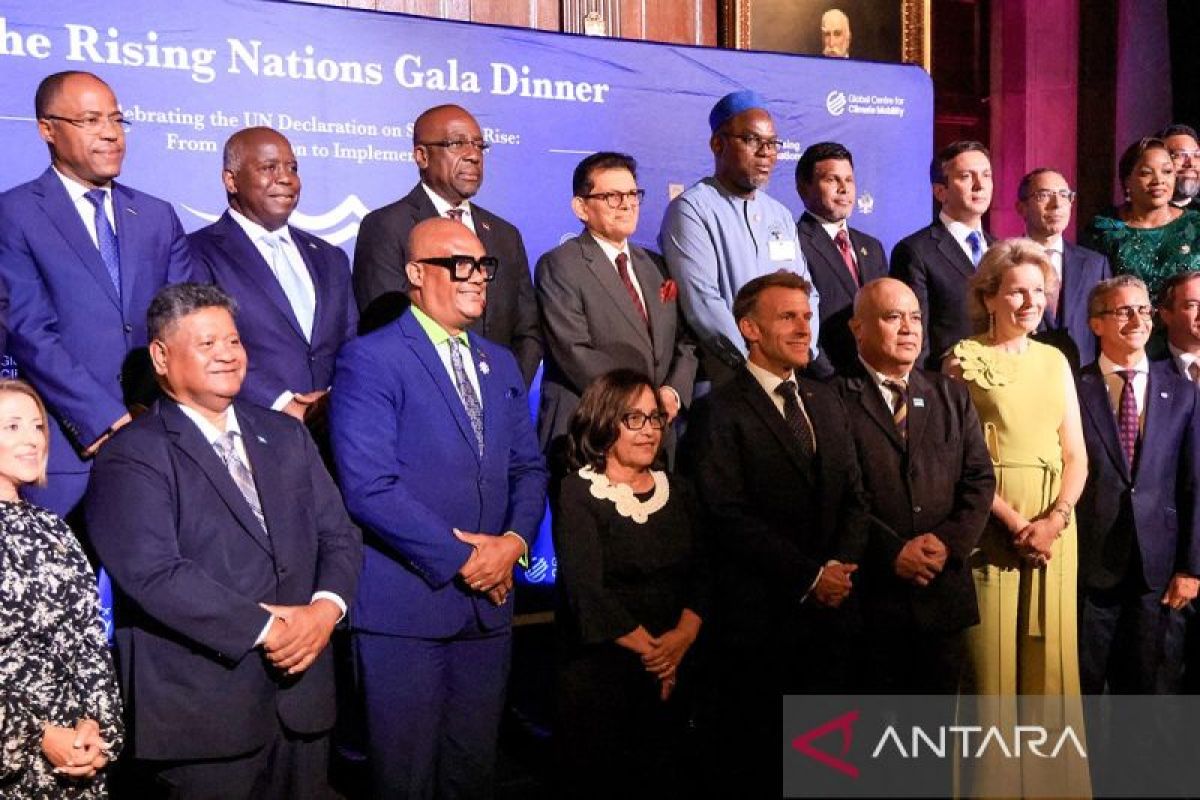
New York — Leaders of Pacific Island nations highlighted the threat of climate change during the UN General Assembly in New York on Friday (25/9).
The Prime Minister of Tuvalu, Feleti Teo, stated that rising sea levels are not a “future threat” but a “current reality” for his country. “Climate change is the greatest existential threat to the survival, security, and sustainable development of Tuvalu,” he added.
He also mentioned that a coastal adaptation project has successfully reclaimed 15.3 hectares of elevated land in the capital, Funafuti, with reclamation of another 10 hectares currently underway. Teo argued that climate funding must be provided in the form of “grusts of an adequate scale to address the inevitable climate impacts as well as the increasing loss and damage caused by further global warming.”
He urged for accelerated progress towards the Sustainable Development Goals (SDGs), particularly SDG 14 regarding marine ecosystems.
Development gains vanish instantly
The Prime Minister of the Solomon Islands, Jeremiah Manele, said his nation remains highly vulnerable to external shocks, where a single natural disaster can wipe out national development gains achieved over many years. He stated that the Multidimensional Vulnerability Index provides a more accurate depiction of the specific conditions of small island nations compared to using income measures alone.
The Multidimensional Vulnerability Index is a UN instrument designed to measure the structural vulnerability and lack of resilience of developing nations to external shocks. Manele warned that armed conflict, energy crises, and global trade disruptions impact the economies of small island nations; higher fuel prices trigger increases in the cost of shipping, electricity, food, and essential services.
He noted that global military spending exceeded $2.9 trillion last year, far surpassing official development assistance and climate funding for developing countries. “In less than 18 days, the world spends more on weaponry than the amount of climate funding provided by developed nations over an entire year,” he remarked.
One Earth for all
The Prime Minister of Papua New Guinea, James Marape, stated that “we only have one Earth,” while urging world leaders to prioritise human welfare, peace, and environmental protection over war and narrow geopolitical interests. “What is the use of development if we destroy the environment that sustains human life?” he asked, warning of deforestation, ocean pollution, and increasing climate instability. “The challenges facing humanity do not care about the size of an economy, military power, or the territorial boundaries on our maps,” he added.
Separately, leaders of the Pacific Islands Forum (PIF) held a meeting with UN Secretary-General Antonio Guterres to discuss the implementation of the Blue Pacific Ocean of Peace Declaration and the reform processes of both the PIF and the UN.
The Forum consists of 18 members: Australia, Cook Islands, Fiji, French Polynesia, Kiribati, Marshall Islands, Federated States of Micronesia, Nauru, New Caledonia, New Zealand, Niue, Palau, Papua New Guinea, Samoa, Solomon Islands, Tonga, Tuvalu, and Vanuatu. American Samoa and Guam hold associate member status.