
P2MI Minister and Central Java Governor Sign MoU to Protect Migrant Workers
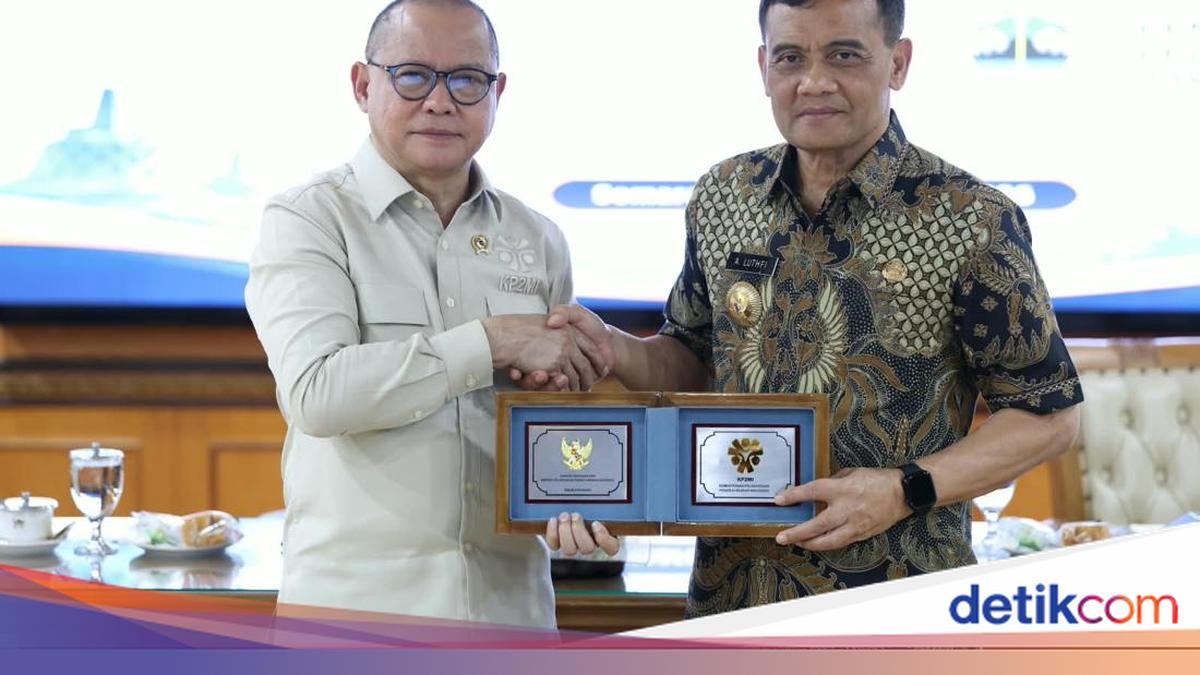
Indonesia’s Migrant Worker Protection Minister (P2MI) Mukhtarudin and Central Java Governor Ahmad Luthfi have signed a memorandum of understanding (MoU) to strengthen coordination on the placement, protection and empowerment of Indonesian migrant workers. The agreement is intended to build a safe migration ecosystem and improve the skills of prospective migrant workers from Central Java so they can compete in international labour markets.
The MoU was signed in Semarang on Thursday (12 November), marking cooperation between the central and regional governments to improve services for migrant workers. It covers human resource development, placement, protection and the empowerment of migrant workers and their families.
Mukhtarudin said the agreement formed part of the government’s commitment to improving the quality of public services. He thanked Governor Ahmad Luthfi and the Central Java provincial government for supporting closer cooperation with the central government.
“Today’s opportunity is encouraging for us, as we work together to strengthen synergy between the central and regional governments in providing services to our migrant workers, covering protection, placement, empowerment and capacity-building,” Mukhtarudin said in a written statement on Thursday (12 November 2026).
The closer cooperation is in line with the government’s institutional transformation to improve the management of migrant workers. Mukhtarudin said the establishment of the Ministry of P2MI was part of the institutional changes introduced by President Prabowo Subianto to strengthen the state’s responsibility for managing migrant workers’ placement and protection.
In carrying out that responsibility, President Prabowo gave the ministry two main directives. The first is to strengthen protection before workers leave, while they are employed overseas and after they return to Indonesia. The second is to improve workers’ skills, moving them from lower-skilled roles towards medium- and high-skilled work so they can meet demand for formal and professional labour in various countries.
One way to improve skills is through the SMK Go Global programme, which is already running in Central Java. The programme has a quota of about 8,000 participants and has attracted nearly 9,000 applicants. Around 5,000 participants have undergone capacity-building, up to the programme’s second cohort.
“This is the programme we will implement through SMK Go Global, a programme of President Prabowo and one of the national priorities. We want to improve the capacity of Indonesian migrant workers so they can fill formal and professional roles around the world,” he said.
Strong public interest has prompted the government to expand SMK Go Global next year. The national target of 32,000 participants in 2026 is expected to rise to 140,000 in 2027.
The expansion could give Central Java a larger quota for skills development. The province makes a substantial contribution to Indonesian migrant worker placement, according to SISKOP2MI data covering 2025 to 9 November 2026.
“Central Java has the opportunity to receive a larger capacity-building quota, covering language, technical skills and certification. All these programmes are funded through the state budget,” Mukhtarudin said.
According to SISKOP2MI data, the Ministry of P2MI has facilitated 613,288 migrant worker placement services nationwide. Central Java accounted for 127,906 of these, or about 20.85 per cent.
The scale of the province’s contribution is also reflected in the range of destinations for its migrant workers. The five main destinations are Taiwan, Hong Kong, Malaysia, South Korea and Japan.
At the local level, Cilacap, Brebes and Kendal are among the main areas of origin for migrant workers and require strong support from central and regional governments, particularly to ensure that placements are safe.
The large number of migrant workers from Central Java not only underlines the need for stronger services but also brings economic benefits to their home communities. Mukhtarudin said their contribution boosts family welfare and generates a multiplier effect, as remittances stimulate local economic activity.
“Money sent directly by migrant workers to their families can strengthen household finances, increase purchasing power, support small and medium-sized enterprises and drive economic growth at village level,” he added.
These benefits are one reason regional governments must help ensure that migration is safe. Mukhtarudin said local governments should play an active role in building a safe migration ecosystem, as mandated by Law No. 18/2017 on the Protection of Indonesian Migrant Workers.
The cooperation between the Ministry of P2MI and the Central Java provincial government covers several areas, including disseminating information about overseas job opportunities and safe migration, mapping prospective workers and their interests, education and training, and health services.
“Let us realise safe migration and prosperity for the people, as we work towards a developed Indonesia,” he said.
Governor Ahmad Luthfi welcomed the agreement as a step towards strengthening oversight and services for migrant workers. He said it was expected to provide certainty and protection for workers from Central Java while empowering them with the skills and competitiveness they need.
Luthfi also presented figures on the distribution of migrant workers across the province. Cilacap has nearly 12,000 migrant workers, followed by Brebes and Kendal with about 6,000 each, and Banyumas with around 4,000.
The main destinations for workers from Central Java reflect a similar pattern. Taiwan is the leading destination, with nearly 21,000 workers, followed by Hong Kong with about 18,000 and Malaysia with around 4,000.
Given the large number of migrant workers in the province, Ahmad Luthfi said implementation of the agreement would require the involvement of all relevant regional government agencies. Coordination across agencies is needed to ensure that worker placement and protection programmes are integrated down to village level.
“So that migrant worker placement and protection programmes can be carried out in an integrated way, all the way down to village level,” Luthfi said.
The regional government’s role is expected to be strengthened through guidance and support from the Ministry of P2MI. Luthfi said he hoped this would improve cross-sector coordination and ensure that people receive accurate information and access to services before deciding to work overseas.
Under the agreement, the Ministry of P2MI and the Central Java provincial government have pledged to strengthen the governance of migrant worker placement and protection. The collaboration is intended to help Central Java residents work overseas safely, professionally and with dignity, while improving their welfare.
Source: jawawa.id (https://jawawa.id/newsitem/p2mi-minister-and-central-java-governor-sign-mou-to-protect-migrant-workers-1794484487)
Originally published by detikcom (https://news.detik.com/berita/d-8750328/menteri-p2mi-dan-gubernur-jateng-teken-mou-pelindungan-pekerja-migran), translated from Indonesian