
Owning Your First Home Without Straining Your Finances? Start with These Steps
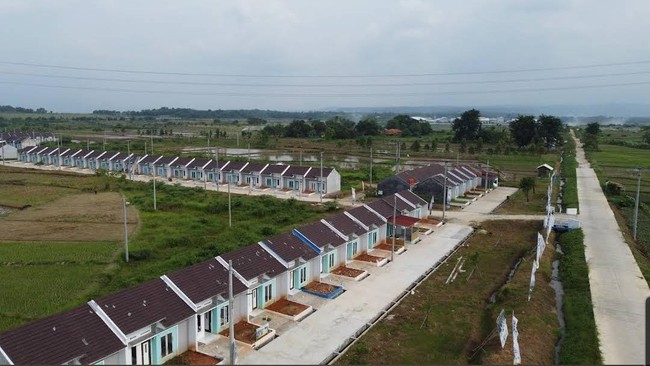
Owning a home remains one of the major goals for many young people. The problem is that this target must compete with living costs, vehicle instalments, family needs, emergency funds, and the desire to still enjoy life. It is no wonder that buying a house is often considered a plan for ‘later, once I am settled’. In fact, a first home can begin to be prepared now, as long as the target is realistic and financial conditions are built up gradually. Before starting to look at houses, there are seven steps that can be taken to make the plan of owning a first home feel more sensible.
Look for a house that suits your financial condition, not for prestige. A first home does not have to be immediately large, luxurious, or located in an area that is currently popular on social media. Focus on a dwelling that matches your income, needs, and life plans for the next few years. A cheap price also does not always mean more economical. Consider the distance from work, transport access, travel costs, and the time that will be spent on the road. Do not let the house instalment look light, but daily expenses actually swell because the location is too far away.
Create a special savings account for the house. If house funds are still mixed with accounts for food, shopping, and entertainment, the likelihood of them being used will be greater. Therefore, prepare a separate account and arrange an automatic transfer every time you receive income. Bonuses, allowances, or additional income can be allocated to accelerate the target. These funds can also be placed in low-risk instruments that match the purchase timeframe. Avoid chasing high returns if the money will be used in the near future.
Remember, the cost of buying a house is not just the down payment. The down payment is indeed the most frequently discussed cost, but it is not the only one that must be prepared. There may be booking fees, bank administration fees, property appraisal, notary fees, taxes, insurance, moving costs, and the purchase of basic furniture. Before paying a booking fee, ask the developer and bank for a detailed breakdown of costs. That way, you can find out the actual funds needed and will not be surprised when the transaction begins.
Tidy up your instalments and credit history. Before approving a mortgage, the bank will assess the prospective buyer’s ability to pay instalments. If you currently still have many consumer loans, start reducing them and avoid taking on new debt before applying for a mortgage. Also ensure that all bills are paid on time. Debtor information can be checked through the Financial Information Service System (SLIK) of the OJK. A good payment history can support the assessment process, although final approval still follows each bank’s policy.
Do not sacrifice your emergency fund. Successfully paying the down payment does not mean all savings may be spent. After owning a home, vehicles can still break down, health costs can arise, and employment conditions may change. Set aside an emergency fund so that unexpected needs do not immediately disrupt your home instalments. A home should add a sense of security, not make your financial condition more fragile.
Do not be enticed only by the initial interest rate. Low interest rates are indeed attractive, but promotional figures do not always reflect the entire cost of a mortgage. Find out how long the interest rate applies, when the instalment changes, whether the interest is fixed or floating, and what the costs are if you want to repay the loan early. Also compare the down payment, tenor, insurance costs, and total payment until fully repaid. A monthly instalment that looks light could come from a very long tenor, so the total funds paid become larger.
Compare the house and its financing at the same time. A suitable house does not necessarily have a suitable mortgage scheme. Conversely, an attractive financing offer is also not enough if the location or quality of the dwelling does not meet your needs. Therefore, compare properties and financing simultaneously. Pay attention to price, location, legality and project readiness, developer reputation, transport access, down payment, interest pattern, and the ability to pay instalments in the long term.
Various options can be found at the Danantara Housing Expo 2026, which takes place on 27-30 August 2026 at the Nusantara International Convention Exhibition (NICE), PIK 2. The exhibition presents more than 15,000 housing units in 96 locations and 17 provinces, equipped with various conveniences and financing alternatives from Himbara banks.
Indeed, owning a home requires a long-term commitment. However, if your financial condition is ready and the instalments are still within your means, do not delay just to wait for circumstances that feel perfect. Start comparing options, calculate the financing scheme, and take steps towards your first home at the Danantara Housing Expo 2026. Because the right home is not only to be planned, but also needs to be fought for to be owned!