
Over Ukraine, German Chancellor Accused of Blackmailing Friendly Nations
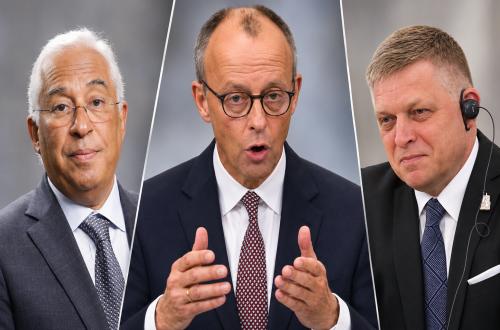
JAKARTA — German Chancellor Friedrich Merz is facing accusations of political blackmail from fellow EU leaders after threatening to obstruct the bloc’s long-term budget agreement. The dispute was triggered by Merz’s demand that all member states, without exception, help meet Ukraine’s financing needs; Kyiv is projected to face a funding shortfall of €70 billion in 2027.
Slovak Prime Minister Robert Fico publicly accused Merz of using Germany’s economic power to pressure friendly countries that oppose additional funding for Kyiv. He made the accusation while hosting Czech Prime Minister Andrej Babiš in Bratislava on Tuesday, 10 November 2026.
“What the Federal Chancellor is doing is a clear example of blackmail, and I reject it,” Fico said, as reported by Euronews on Tuesday, 10 November 2026.
Fico stressed that Slovakia is a sovereign country with the right to determine its own foreign and budgetary policies. He warned that Bratislava has the same veto rights as Berlin in EU budget decisions.
“We have the same veto rights as the German Federal Chancellor,” Fico said.
According to German broadcaster N-TV, Fico also said he would not yield to the pressure. He said the Slovak government had its own views on the Russia-Ukraine conflict and on how European countries should share the costs of financing support.
The dispute points to a new rift among EU countries, which have sought to maintain support for Ukraine. Differences are becoming more pronounced as the costs of the war and domestic needs begin to shape negotiations over the bloc’s common budget.
Germany threatens to block EU budget
Tensions began after Merz sent a letter to European Council President António Costa. In the document, obtained by Reuters and the Financial Times, Merz linked approval of the EU’s 2028–2034 budget to a commitment from all members to provide additional financial support to Ukraine.
Merz argued that EU countries had not shared the cost of financing Ukraine evenly. Berlin therefore wants a fairer distribution of the burden before discussions on other financial matters continue.
“A joint commitment that we will all, without exception, contribute fairly to closing this shortfall is an important precondition,” Merz wrote in the letter, as quoted by Reuters.
Merz also said support for Ukraine was directly connected to Europe’s collective security. In his view, the responsibility for protecting the region should be reflected in financial contributions from every EU member state.
The position has created a new complication because approval of the EU’s long-term budget framework requires unanimity among all member states. This means both Germany and Slovakia can obstruct an agreement if they reject the proposal.
The Slovak and Czech governments oppose linking the two issues, Berliner Zeitung reported on Tuesday, 10 November 2026. Both countries have questioned why approval of a seven-year budget should depend on agreement to provide additional aid to Ukraine.
Four countries oppose Merz’s demand
Opposition to Merz’s approach has not come only from Slovakia and the Czech Republic. Hungary and Bulgaria have also objected to plans for additional financing for Ukraine, which could increase member states’ debt burdens.
Czech Prime Minister Andrej Babiš warned that threatening to block the EU budget could instead hinder the funding intended for Ukraine.
Babiš also referred to the draft long-term budget, which provides for the possibility of up to €100 billion in support for Ukraine. However, that allocation would apply only from 2028 and would not directly address Kyiv’s funding needs in 2027.
Hungarian Prime Minister Péter Magyar also raised objections when he met Merz in Berlin on Tuesday, 10 November 2026.
Magyar said Hungary was facing a budget deficit that his government needed to address. Budapest therefore could not approve the issuance of billions of euros in new debt without taking its domestic fiscal position into account.
Although he opposed linking Ukraine financing to the EU budget, Magyar did not use the term “blackmail”, as Fico had.
“I do not consider this blackmail,” Magyar said at a joint press conference with Merz.
However, he questioned the political message conveyed when negotiations on the common budget are tied to another policy that has not won the approval of all members.
Bulgarian Prime Minister Rumen Radev also objected to the possibility of his country joining an additional loan for Ukraine. He cited Bulgaria’s high budget deficit, while stressing that his country continued to support Ukraine through other forms of assistance, including energy supplies.
Source: jawawa.id (https://jawawa.id/newsitem/over-ukraine-german-chancellor-accused-of-blackmailing-friendly-nations-1794365468)
Originally published by Republika (https://news.republika.co.id/berita/tobdvz451/demi-ukraina-kanselir-jerman-dituduh-memeras-negara-sahabat), translated from Indonesian