
Over a Century of Rails in Lampung, KAI Strengthens Southern Sumatra Connectivity
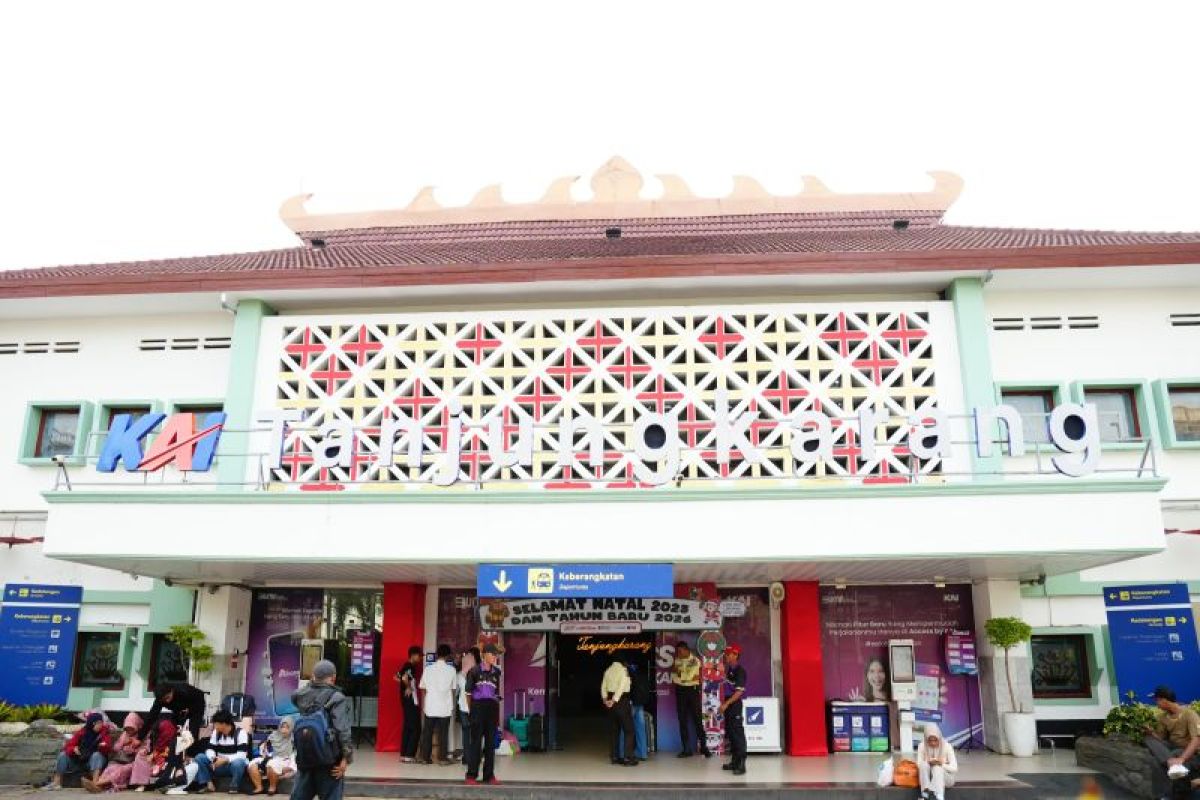
President Prabowo Subianto’s directive to prioritise the development of the national railway system provides a new context for the long history of railways in Sumatra. In Lampung, the railway has been present for more than a century. The line, originally built to connect production centres, ports, and cities, has now evolved into a driver of public mobility and the distribution of strategic goods in southern Sumatra.
The railway line in Lampung began construction in 1911 by the Zuid-Sumatra Staatsspoorwegen (ZSS) during the Dutch colonial period. In the initial phase, development was directed at connecting Tanjungkarang with commodity-producing areas in South Sumatra. As it developed, the Lampung rail network was connected to port areas, including Panjang and Tarahan, giving it an important role from the outset in the distribution of agricultural products, coal, and industrial needs.
‘The history of the rail in Lampung shows that the railway was present from the start to open up access. From agricultural product lines, ports, to residential centres, the railway has shaped connectivity that remains an important part of community life and the regional economy today,’ said KAI Vice President Corporate Communication Anne Purba.
Currently, KAI’s operational area in Lampung and parts of South Sumatra has an operational line spanning 451.280 km’sp with 47 operational stations. The network stretches from Bandar Lampung, South Lampung, Central Lampung, North Lampung, Way Kanan, East Ogan Komering Ulu, Ogan Komering Ulu, Muara Enim, to Prabumulih. Tanjungkarang and Tarahan stations serve as major hubs, while Kotabumi and Baturaja also strengthen passenger and freight services on this route.
For passenger services, KAI operates the Rajabasa train on the Tanjungkarang–Kertapati route and the Kuala Stabas train on the Tanjungkarang–Baturaja round-trip route. From January to May 2026, passenger services in this region recorded 498,104 customers. In detail, the Rajabasa train served 185,167 customers, while the Kuala Stabas train served 312,937 customers.
On the freight side, the railway plays a major role in the logistics chain of southern Sumatra. From January to May 2026, KAI transported 11,437,080 tonnes of goods via 4,029 freight train journeys. Coal on the Tanjung Enim Baru–Tarahan route was the largest commodity at 11,280,793 tonnes. Other commodities transported included 83,680 tonnes of bagged cement, 52,593 tonnes of fuel oil, and 20,014 tonnes of bulk cement.
The large volume of goods demonstrates Lampung’s position as a crucial logistics gateway in southern Sumatra. The lines to Tarahan, Panjang, Tanjungkarang, Kotabumi, Baturaja, and Kertapati connect production areas, industry, ports, and consumption centres. In the context of national logistics costs, rail provides large hauling capacity, more efficient energy consumption, and distribution certainty for strategic commodities.
‘Lampung’s potential must be read from its connectivity map. There are ports, industrial centres, passenger routes, and high-volume freight lines. When the rail is strengthened, the benefits can be felt through more efficient distribution, easier public mobility, and improved regional competitiveness,’ Anne said.
Historically, Lampung also has traces of old lines such as the Garuntang–Telukbetung line, which once strengthened the connection between the city and the port area. Changing times have altered the function of some old traces, while the active network now continues to serve the needs of the community and industry. From this history, it is evident that the development of cities, ports, and economic zones in Lampung has long been connected by rail.
Looking ahead, the potential of Lampung’s railways lies in strengthening energy logistics, building material distribution, port connectivity, and passenger mobility across the Lampung–South Sumatra route. Lampung’s position as the southern gateway to Sumatra also aligns with the direction of national railway network development, including inter-regional connectivity and economic equity based on mass transportation.
‘KAI continues to strengthen safety, operational reliability, and service quality so that the long history of rail in Lampung delivers increasingly relevant benefits. The railway is not merely a story of the past, but part of how regions grow, communities connect, and the economy moves more efficiently,’ Anne concluded.
Source: jawawa.id (https://jawawa.id/newsitem/over-a-century-of-rails-in-lampung-kai-strengthens-southern-sumatra-connectivity-1781769572)
Originally published by Antara (Indonesian) (https://www.antaranews.com/berita/5612713/lebih-dari-seabad-rel-lampung-kai-perkuat-konektivitas-sumatra-bagian-selatan), translated from Indonesian