
Over 3,000 Containers of Indonesian Shrimp Have Smoothly Entered the US
Jakarta, CNBC Indonesia - Indonesian shrimp exports to the United States (US) continue to show a positive trend following the discovery of traces of the radioactive substance Cesium-137 (Cs-137) in a shipment of frozen shrimp by the US Food and Drug Administration (FDA) in 2025.
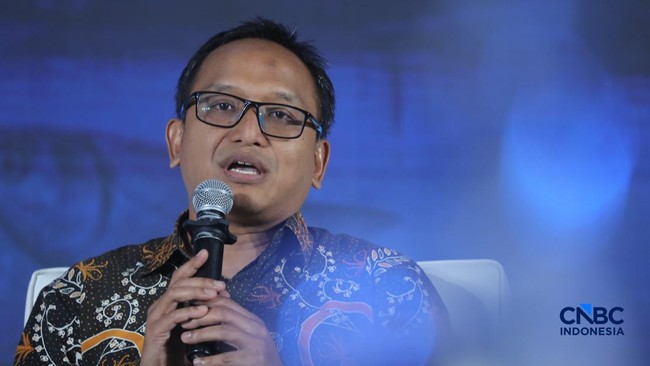
Acting Secretary General of the Ministry of Marine Affairs and Fisheries (KKP) Andi Artha Donny Oktopura stated that as of 26 April 2026, more than 3,000 containers of Indonesian shrimp have been exported to the US. He conveyed this during the Food Summit 2026 CNBC Indonesia, “Indonesia Food Safety Urgency: Towards a New Policy Framework,” in Jakarta on Monday (27/4/2026).
Andi Artha hopes that similar incidents will not recur. Therefore, the KKP is implementing stricter supervision in the field.
“As of 26 April, more than 3,000 containers have entered the US, valued at Rp11 trillion. We hope such incidents do not happen again in the future,” he said.
“Together, we are committed to implementing a system that does not hinder but ensures Indonesian products meet global standards,” Andi Artha added.
Strict supervision, including education, is being intensified.
“That’s correct (field supervision is being tightened). Not only in production, but also regarding supervision and education, including by the KKP. The minister’s directive is to promote ease of service for business actors to make it more efficient,” he stated.
Regarding food quality assurance, he continued, the KKP is prioritising domestic food safety. In this regard, the KKP is developing a domestic food safety framework related to the supply chain.
Moreover, he added, with the involvement of many SMEs, there are aspects that need improvement.
“In the future, the KKP will build a system for upstream certification and processing. We hope it can be adhered to collectively. We are working with local governments and businesses so that our production is safe for public consumption,” said Andi Artha.
“We synergise in supervision so that it truly works in the field. We encourage education for the public, businesses, and local governments to achieve mutual understanding. So that the food consumed is not only affordable but also meets standards,” he added.