
Over 2,200 Independent Palm Oil Farmers in Jambi Achieve Historic Dual RSPO and ISPO Certification
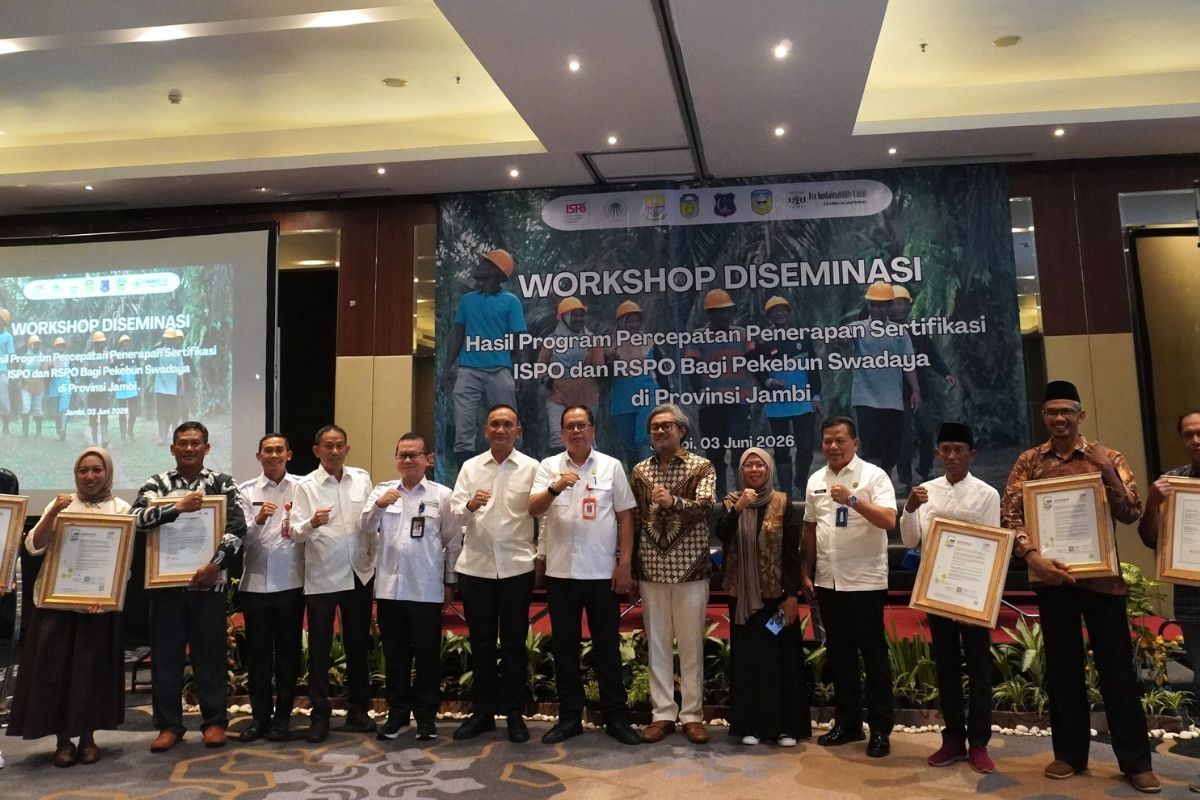
In a historic achievement, 2,266 independent farmers from three farmer groups in Jambi Province have officially received both Roundtable on Sustainable Palm Oil (RSPO) and Indonesian Sustainable Palm Oil (ISPO) certifications, covering a total area of 4,171.62 hectares. This dual certification is the first of its scale and reflects a successful multi-stakeholder effort to overcome long-term challenges, including land legality, institutional capacity, and access to global sustainability standards.
In November 202ng, RSPO, alongside the Jambi Provincial Government, the Setara Jambi Foundation, and the regencies of Tebo, Sarolangun, and Tanjung Jabung Barat, established this multi-stakeholder accelerated certification programme to open global palm oil market access for independent farmers. Guntur Cahyo Prabowo, Head of Smallholders Global at RSPO, stated, “This achievement is more than just the handover of certificates. It proves that Indonesian independent farmers have the capacity and commitment to meet the highest sustainability standards. When government systems, farmer organisations, legal processes, and market players collaborate, the inclusion and certification of smallholders can be realised.”
By adopting a dual-track approach—where ISPO serves as the foundation for national sustainability and RSPO acts as the international sustainability standard—the synergy between the two allows independent farmers to meet domestic market requirements while simultaneously accessing global export markets subject to increasingly strict regulations. Sulistio from the Agro Tani Lestari Consumer Cooperative (KKATL) in Sarolangun shared, “After receiving training and improving our plantation management, we have begun to see increased production. More importantly, for over a year, we have been selling fresh fruit bunches directly to PT Inti Guna Nabati through our partnership agreement. The prices we receive are higher than those of farmers not involved in such partnerships.”
The dual certification model has proven more affordable for farmer groups and helps overcome administrative hurdles that often act as initial barriers to the certification process. Dr Iim Mucharam, Director of Oil Palm Crops at the Directorate General of Estate Crops, Ministry of Agriculture of the Republic of Indonesia, noted, “A key lesson from Jambi is that independent farmers do not view sustainability standards as competing systems. Farmers seek practical solutions that improve legal compliance, strengthen their organisations, open market access, and improve livelihoods.”
The future of sustainable palm oil should focus on building pathways that reward those committed to sustainable practices rather than creating additional burdens for smallholders. Through close collaboration between central and regional governments, civil society organisations, and the support of RSPO and ISPO, this multi-stakeholder partnership model is expected to serve as a blueprint for other regions in Indonesia to expand smallholder access to certification and sustainable palm oil markets.
Source: jawawa.id (https://jawawa.id/newsitem/over-2-200-independent-palm-oil-farmers-in-jambi-achieve-historic-dual-rspo-and-ispo-certification-1780833647)
Originally published by Antara (Indonesian) (https://www.antaranews.com/berita/5593552/lebih-dari-2200-petani-sawit-swadaya-jambi-raih-sertifikasi-ganda-rspo-dan-ispo-bersejarah-buka-akses-pasar-minyak-sawit-berkelanjutan), translated from Indonesian