
Over 10,000 Bali Male Cattle Exported to Java until March 2026
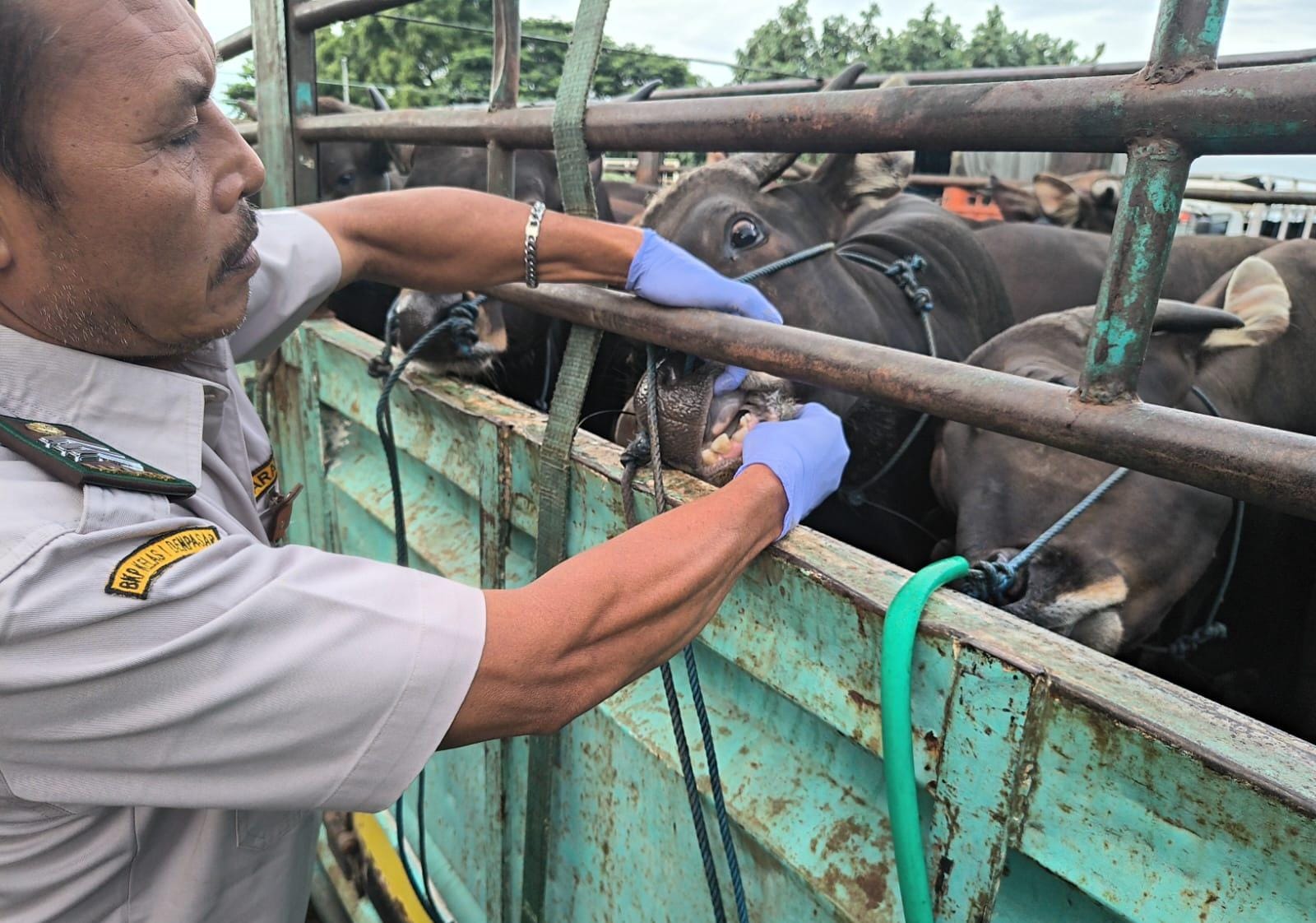
Bali livestock producers consistently maintain Bali cattle breeding stock. This is demonstrated by data provided by the Bali Quarantine Agency. During the period from January through mid-March 2026, more than 10,000 Bali male cattle were successfully transported to Java and several other regions through the Java island route.
Regarding allegations of unlicensed movement of Bali female cattle to Java without inspection, Indonesia’s Quarantine Agency, through the Animal, Fish, and Plant Quarantine Division in Bali (Bali Quarantine), has affirmed that Bali Quarantine has implemented strict quarantine procedures for all livestock movement from Bali Province to areas outside the province.
Heri Yuwono, Head of Bali Quarantine, stated that Bali Quarantine conducts strict supervision and inspection of every cattle leaving Bali. Oversight of livestock movement is conducted consistently to ensure biosecurity and preserve Bali cattle genetic resources.
“The primary focus of Bali Quarantine is to prevent the entry and exit of Quarantine Animal Pests and Diseases (HPHK) from and to Bali. Additionally, Bali Quarantine is committed to preserving Bali cattle germplasm as a genetically valuable resource,” he explained.
For this reason, female cattle are not permitted to leave Bali.
The quarantine supervision and inspection process is carried out in accordance with the provisions of Law Number 21 of 2019 concerning Animal, Fish, and Plant Quarantine, as well as Government Regulation Number 29 of 2023 on the Implementation of Law 21 of 2019, which governs comprehensive quarantine procedures.
In practice, Bali Quarantine officers perform a series of quarantine measures on cattle to be transported from Bali. This process includes administrative and document compliance examination, physical health inspection of animals, and oversight of livestock conditions.
“If clinical symptoms are detected, the animal will immediately undergo follow-up action including isolation, observation, and treatment. Only animals declared healthy and free from HPHK can be issued health certificates for subsequent transport,” he stated.
For information, during the period from January 2026 through 13 March 2026, quarantine measures were applied to 10,039 male cattle transported out of Bali with a shipment frequency of 430 times.
“During this period, Bali Quarantine confirms that no health certificates were issued for the export of female breeding cattle from Bali. Therefore, every livestock movement that follows official procedures is ensured to comply with applicable regulations,” he said.
Indonesia’s Quarantine Agency calls on all stakeholders, including business operators, local governments, and the community to jointly maintain food security and protect Indonesia’s biological resources. Synergy and compliance with quarantine procedures are key to preventing the spread of Quarantine Animal Pests and Diseases (HPHK), Quarantine Fish Pests and Diseases (HPIK), and Quarantine Plant Pest Organisms (OPTK) to maintain the health of animals, fish, and plants in Indonesia.