
Our Independence and Human Rights
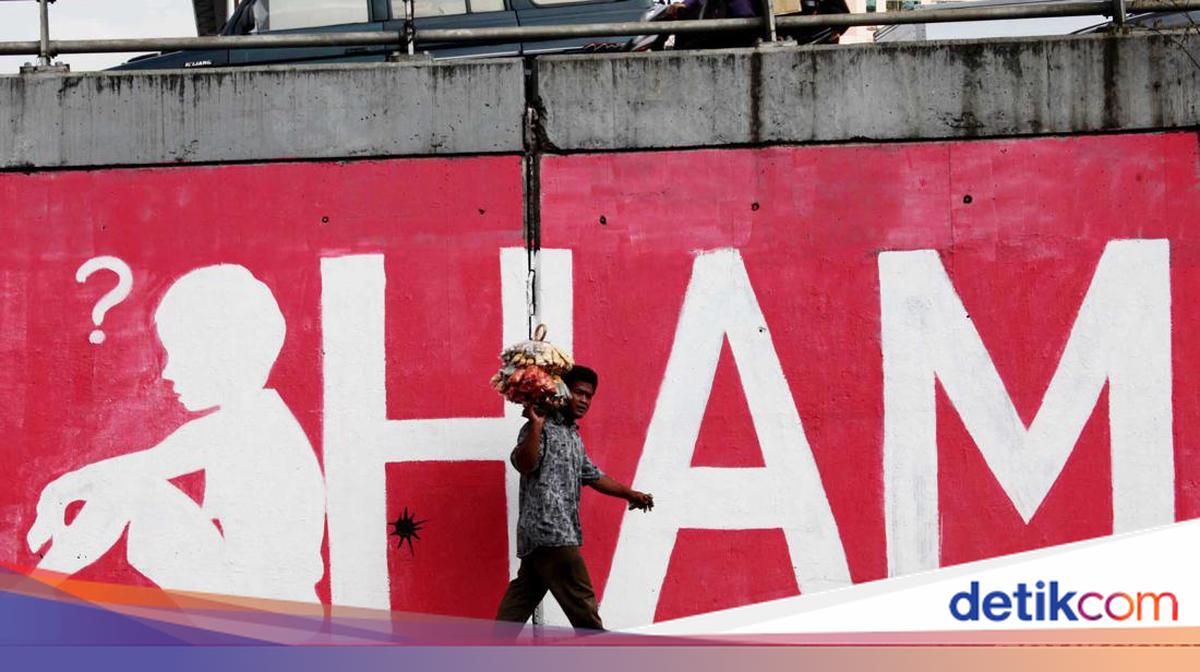
Celebrating Indonesia’s independence today must be understood within the framework of protecting and fulfilling the human rights of every person in Indonesia. Without the protection and fulfilment of human rights, independence becomes hollow, or the commemoration of independence appears to be no more than a military parade ceremony, cracker-eating competitions, and greased pole climbing.
The government in an independent Indonesia is the duty-bearer responsible for protecting and fulfilling human rights. The guidelines for this are ‘Just and civilised humanity’ and ‘Social justice for all the people of Indonesia’, as well as Articles 28A-28J of the 1945 Constitution. In the language of human rights, all Indonesian people—including those in the valleys of the Papuan mountains—are human beings with equal dignity and worth, and must receive equal services and protection from the government.
It can be said that the difference between the colonial era and the era of independence lies in how the government treats human rights. During the colonial period, a politics of racial discrimination prevailed: indigenous people were placed at the lowest stratum, while the colonial elite sat at the top of society. The prevailing laws reinforced this distinction: indigenous people were subject to their own laws, while Europeans were subject to European law. During colonisation, structural violence occurred, access to education was restricted, health services were minimal, and land seizures took place over the long term. The proclamation of independence was a sharp weapon that severed the colonial web entangling the colonised people.
Therefore, independence is a manifestation of the will to become human beings free from all forms of human rights violations. Vijay Prashad, in his book Nations of Colour: A History of the Third World (2026), argues that the foundations of colonised nations in their struggle for independence were, first, their experience as colonised people grappling against colonialism, and second, their aspiration to realise justice.
The basis for the formation of nations in former colonial territories was the experience of being treated unjustly and having their dignity and worth degraded by colonial rulers. Thus, nations in former colonial territories were not formed by shared ethnicity, skin colour, or language. In other words, the Indonesian nation was formed to eliminate the suffering caused by human rights violations and to realise social justice for all citizens.
However, what is happening now? Acts that degrade human dignity, especially in Papua and regions outside Java, still occur frequently. As an illustration, in Central Papua and Highland Papua from January to June 2026 alone, 59 people have died in 42 incidents of armed violence. Previous years have also shown high numbers of armed violence incidents resulting in fatalities.
Over the past ten years, armed violence has surged by an average of around 20 per cent annually. This is evident throughout 2025 with 67 deaths, 2024 with 119 deaths, and 2023 with 90 deaths. These fatalities include ordinary civilians, state apparatus, and members of armed groups. The victims may be indigenous Papuans or people of other ethnicities residing in Papua.
Armed violence, in addition to claiming lives, also brings other consequences such as displacement. The number of people who have left their home villages is estimated to reach 100,000. They are scattered across several locations, both near district centres and in remote areas of the interior. The most prominent armed violence and population displacement have occurred in Nduga, Yahukimo, Intan Jaya, Puncak, Pegunungan Bintang, and Maybrat regencies. It can be said that the displaced residents have not had their basic rights as human beings and as citizens fulfilled.
Reflecting on what is happening in Papua, on this 81st anniversary of independence, we need to reconsider the mandate of the constitution or the 1945 Constitution. The constitution clearly commands the protection and fulfilment of human rights for every person within Indonesian territory. In particular, the constitution affirms that ‘the right to life is a human right that cannot be derogated under any circumstances.’ The reality in Papua today shows how vast the distance is between conditions on the ground and the constitutional mandate.
To reflect on the current state of human rights in Indonesia in the context of 81 years of independence, the thinking of Kathryn Sikkink, professor of human rights and politics at Harvard University, in her book Evidence of Hope: Making Human Rights Work in the 21st Century (2017) argues that human rights are in fact the fruit of the long struggle of colonised nations in the Global South, such as Asia, Latin America, and Africa. These nations fought for human rights against the colonial powers of Europe and America. One important moment in the human rights struggle was the Asia-Africa Conference in Bandung in 1955. It was the largest forum of newly independent nations to demonstrate courage and intelligence in defending human rights worldwide in order to break free from all forms of colonisation.
It can be interpreted that an independent Indonesia is both the fruit of the struggle for human rights and an instrument for protecting and fulfilling those human rights. However, over 81 years of Indonesia’s journey as an independent nation, the challenge of upholding and protecting human rights has experienced ups and downs. Indonesia even sank deeply in the protection and fulfilment of human rights during the Soeharto era. Todung Mulya Lubis, in his book In Search of Human Rights: The Legal-Political Dilemma of Indonesia’s New Order Era, notes that during the Soeharto period, human rights were considered taboo to discuss, regarded as foreign thinking, and not…