
Otto Hasibuan Calls on Law Enforcement to Follow Procedure and Respect Human Rights
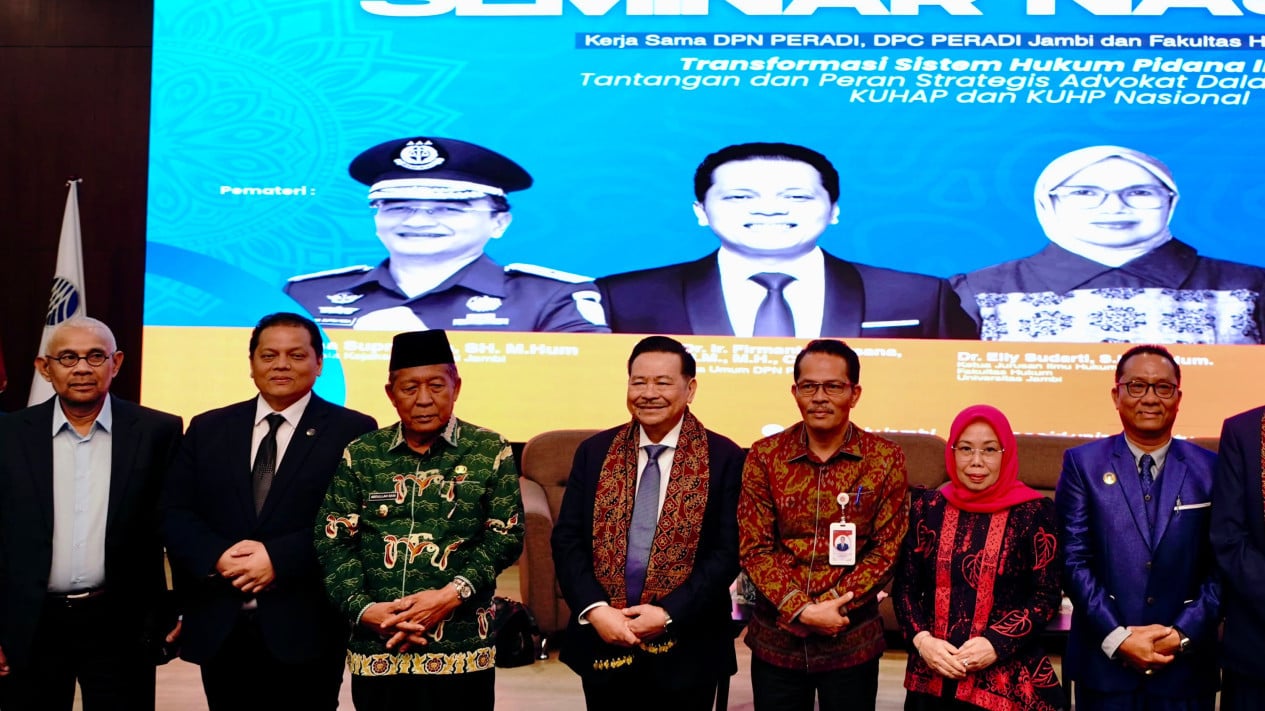
Deputy Coordinating Minister for Law, Human Rights, Immigration, and Corrections (Wamenko Kumham Imipas), Otto Hasibuan, has stressed that law enforcement officials must carry out legal processes lawfully, fairly, and with respect for human rights in accordance with the principle of due process of law. According to Otto, all law enforcement actions must not be carried out arbitrarily and must remain within the corridors of law and justice. “It must always be ensured that everyone follows due process of law,” Otto said in a statement on Thursday, 25 June 2026. He stated that every law enforcement process must comply with lawful procedures so as not to harm justice seekers. Furthermore, law enforcement must be carried out by upholding the principles of justice, not merely as a formality of prosecution. “All implementation of the law must follow the rules of law and justice, it cannot be done carelessly and harm those seeking justice,” he explained. Otto explained that this principle is in line with the paradigm in the National Criminal Code (KUHP Nasional) which emphasises corrective, restorative, and rehabilitative justice. Therefore, changes to criminal law cannot be understood merely as a change of rules, but also as a change in perspective in law enforcement. In addition, Otto emphasised the importance of disseminating the Criminal Code to the public. Once the regulation is enacted, he said, every person is essentially considered to know the applicable law so they cannot claim ignorance of a prohibition or criminal provision. “You cannot say, ‘Oh, I didn’t know that was a violation because I was never told or never read it.’ No, we are still considered to know the law,” he said. Meanwhile, the Vice Chairman and Head of the PKPA, Certification, and Cooperation Division of the DPN Peradi, Firmanto Laksana Pangaribuan, mentioned five strategic roles for advocates following the enactment of the National Criminal Code. “As legitimate law enforcers, guardians of fair legal process, a counterbalance power, negotiators and facilitators, and providers of pro bono legal aid,” he said.