
OSIS: Learning Democracy
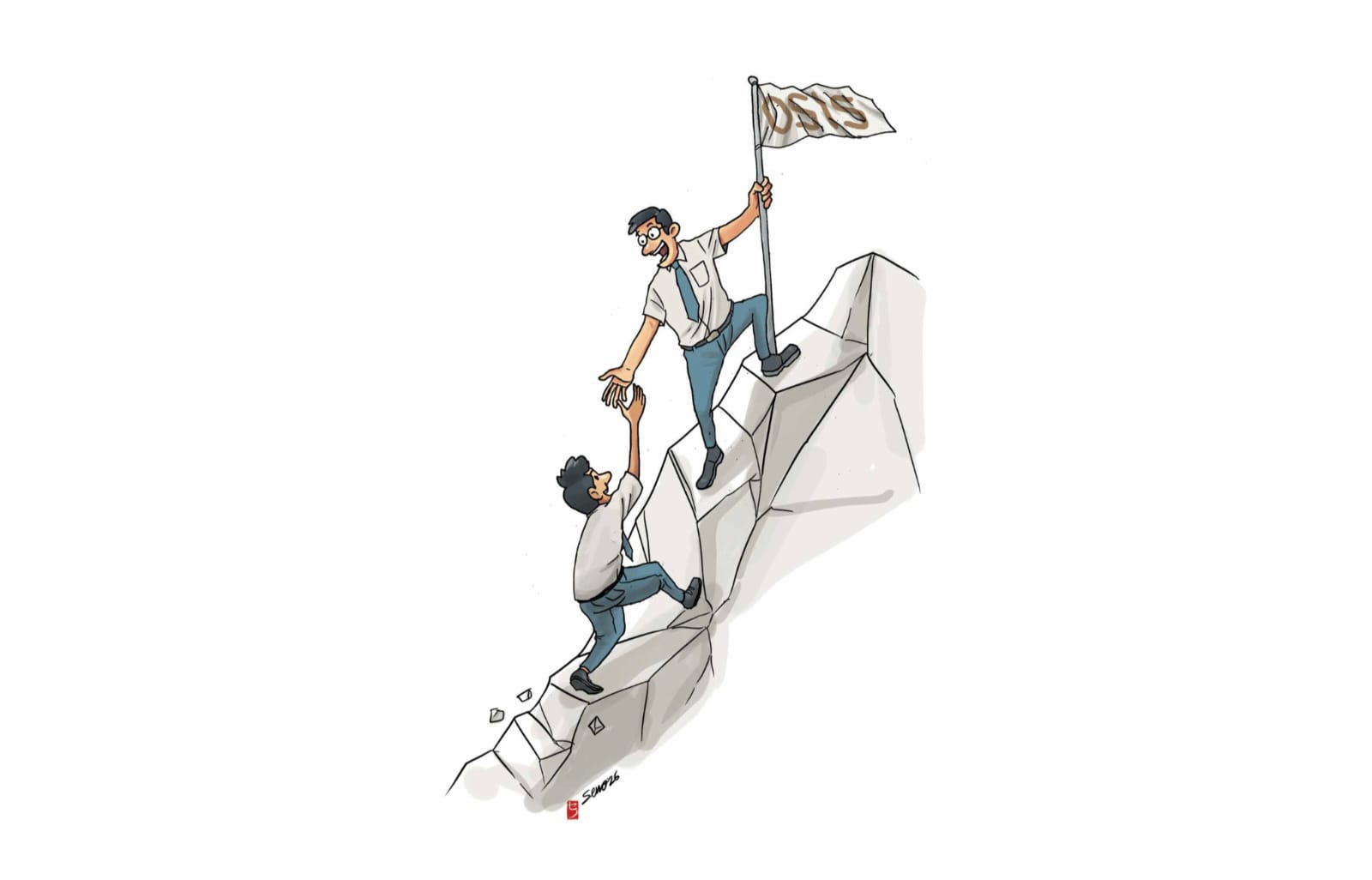
Lately, democratic practices in public spaces have been unhealthy. Disagreements easily turn into arguments, consultation is increasingly rare, and decisions are often made without involving many voices. Democracy still exists, but its core values—such as listening to each other, respecting differences, and taking responsibility for decisions—are fading.
Indicators such as Setara Institute’s 2023 data on student intolerance suggest a weakening of youth democratic literacy. Many students understand democracy theoretically but are unaccustomed to practising it daily. As John Dewey stated, ‘Democracy has to be born anew every generation, and education is its midwife.’ Democracy does not emerge spontaneously; it must be cultivated through education.
As educators, this concern cannot be separated from the education sector. If societal democracy declines—marked by rising polarisation, rampant hate speech on social media, and eroding tolerance—how can democratic values be instilled from an early age? Schools must move beyond teaching democracy as a concept; they must become spaces for practice. This is where OSIS becomes vital.
Through OSIS, students learn to elect leaders, voice opinions, discuss, and accept collective decisions. They understand that leading does not mean commanding and differences are not reasons for hostility. Unfortunately, OSIS is often viewed merely as an event committee or administrative formality. Yet, when managed well, it can serve as a crucial democratic leadership laboratory for shaping student character.
A simple democratic practice in schools is electing OSIS chair and vice-chair. The process mirrors general elections: candidate registration, campaigning, vision-mission debates, and transparent vote counting. Beyond candidates, student participation as voters is vital to democratic learning.
Students learn much from this process. Candidates prepare themselves, articulate ideas, and accept outcomes gracefully. They grasp that leadership involves not just guiding others but self-management. For those not elected, the experience teaches valuable lessons in accepting defeat and bouncing back. An 11th-grade student noted that while defeat is painful initially, it fuels future success. To them, defeat is not an end but the start of the next victory, as they believe lost battles are merely postponed wins.
However, the practice is not always ideal. Low participation, hasty voting, and unhealthy campaign dynamics still occur. Such phenomena remind us that democracy is more than procedures—it is a long learning process. As Barack Obama said, ‘The most important office in a democracy is the office of citizen.’ In schools, every student is a citizen learning to exercise their rights and responsibilities.
OSIS is more than an event organiser; it is a real space for leadership learning. Here, students learn responsibility, time management, consultation, communication, and problem-solving. A leader does not merely issue orders but also learns to rally others in upholding the school’s reputation—a reflection from a 12th-grade student’s experience.
In practice, leadership is not always smooth. Conflicts arise from uneven task distribution, unclear communication, or personal egos. Yet, it is through these dynamics that students learn the meaning of cooperation and responsibility. As John Dewey said, ‘Failure is instructive.’ Failure is not an end but part of the learning process.
For OSIS to truly be a democratic learning space, its programmes must include dialogue opportunities. Student aspiration forums, open discussions, or joint evaluations can be vital for honing democratic skills. Thus, students do more than carry out activities—they learn to listen, deliberate, and make collective decisions.
This is where OSIS’s role as a ‘democracy laboratory’ becomes relevant. In a lab, not all experiments succeed. Mistakes, failures, and improvement processes occur. Similarly, in OSIS, failure is not the end but part of learning.
The role of supervising teachers is crucial. Teachers must shift from controllers to facilitators. When teachers dominate, students only learn obedience, not leadership.
As facilitators, teachers guide students in decision-making, help assess risks, and direct without taking over. They also listen and bridge students with the school. This approach teaches students to take responsibility for their decisions. However, this role shift is not easy. It requires trust in students and readiness to accept that leadership learning is rarely perfect. Mistakes are integral to learning.
OSIS, with all its limitations, is a small space where democratic values can