
Orthopaedic Doctors Deployed to Treat NTT Earthquake Victims
The Indonesian Orthopaedic and Traumatology Association (PABOI) has deployed medical teams to treat victims of the earthquake in Nusa Tenggara Timur (NTT). The move was taken to anticipate a high number of bone fractures resulting from the disaster.
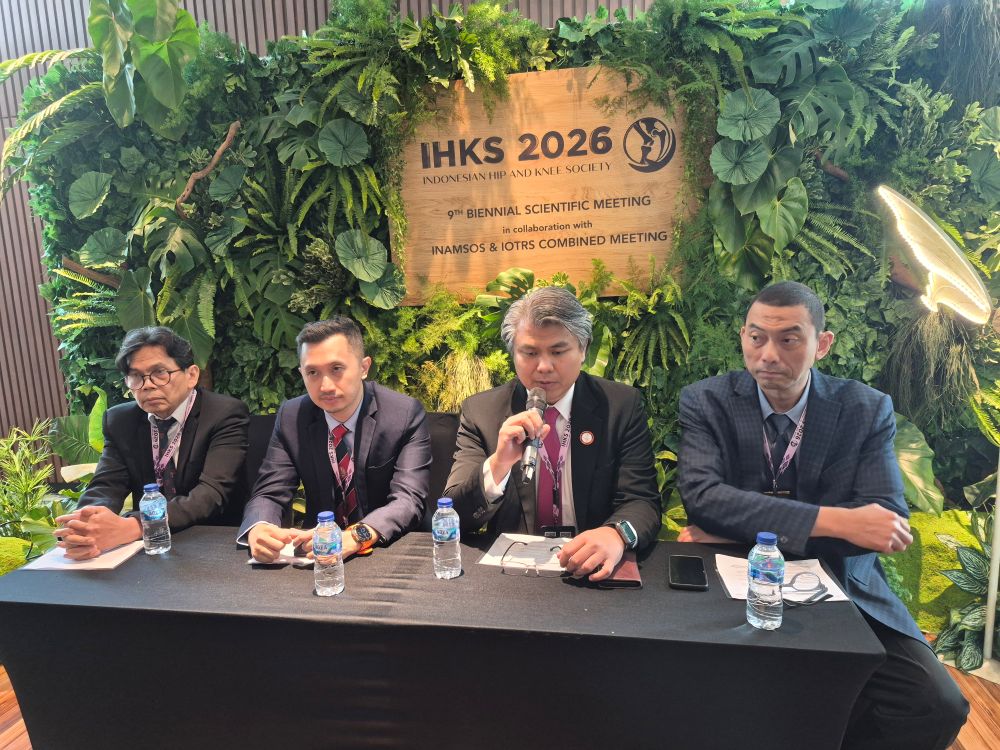
President of the Indonesia Hip and Knee Society (IHKS) Rizki Rahmadian said coordination began several hours after news of the earthquake was received. PABOI, together with its subsidiary organisations including IHKS, the Indonesian Orthopaedic Trauma and Reconstruction Society (IOTRS), and the Indonesia Arthroplasty Society (INAMSOS), immediately prepared medical teams.
“A few hours after the incident we held a Zoom meeting at PABOI with all subsidiary organisations and branches across Indonesia, and concluded that we must depart for the location as soon as possible,” Rizki told journalists at the Marriott Hotel in Sleman, Special Region of Yogyakarta, on Friday (21/8).
According to Rizki, a rapid response was necessary because the number of orthopaedic specialists in the affected areas is limited. At the time, Ende was largely supported by general surgeons, while the nearest orthopaedic specialists were in Labuan Bajo and West Nusa Tenggara.
PABOI estimated that the number of victims with fractures would rise after the earthquake. Previous disaster response experience was among the considerations in deploying the medical teams. “We imagined that fracture cases would be very numerous. In an earthquake, fracture cases are very likely to be abundant,” he said.
The first medical team from Makassar was dispatched on the morning after the earthquake. A team from Surabaya followed to reinforce the handling of victims at the disaster site.
PABOI also prepared ongoing services by rotating branches and orthopaedic education centres from various regions. The measure was taken to ensure that treatment of victims continues throughout the recovery period.
In addition to disaster victim treatment, bone and joint health issues were discussed at the IHKS 2026 international scientific forum in Yogyakarta. The forum was attended by hundreds of experts from 15 countries.
Rizki said current orthopaedic technology development is directed at preserving a patient’s natural joint for as long as possible. Treatment can be carried out through cartilage tissue care up to minimally invasive surgery or arthroscopy.
If a joint can no longer be preserved, joint replacement can be performed with the support of technology such as artificial intelligence and robotic-assisted surgery.
At the forum, doctors also discussed Indonesia’s dependence on imported medical device products, particularly orthopaedic implants. President of the Indonesian Orthopaedic Trauma Society (IOTRS) Norman Zainal said dependence on imported implants remains very high. Based on data he presented, the proportion of imported medical implants fell from 96% in 2013 to 94% in 2017 through the National Implant Engineering Programme (Prorigna).
According to Norman, domestic implant development faces challenges in the form of production complexity that requires cross-disciplinary collaboration and funding support.
Technology development, including artificial intelligence and medical engineering, is considered necessary to strengthen domestic implant production.
Adjustments to medical education curricula are also needed so that doctors and experts in orthopaedics have the ability to understand implant development.
“When we studied medicine, we learned pharmacy to make drugs. But during school, we did not learn how to make implants that are placed in the body,” Norman said.