
Origin of Ice Chunk That Crashed Through Bantul Resident’s Roof Remains a Mystery
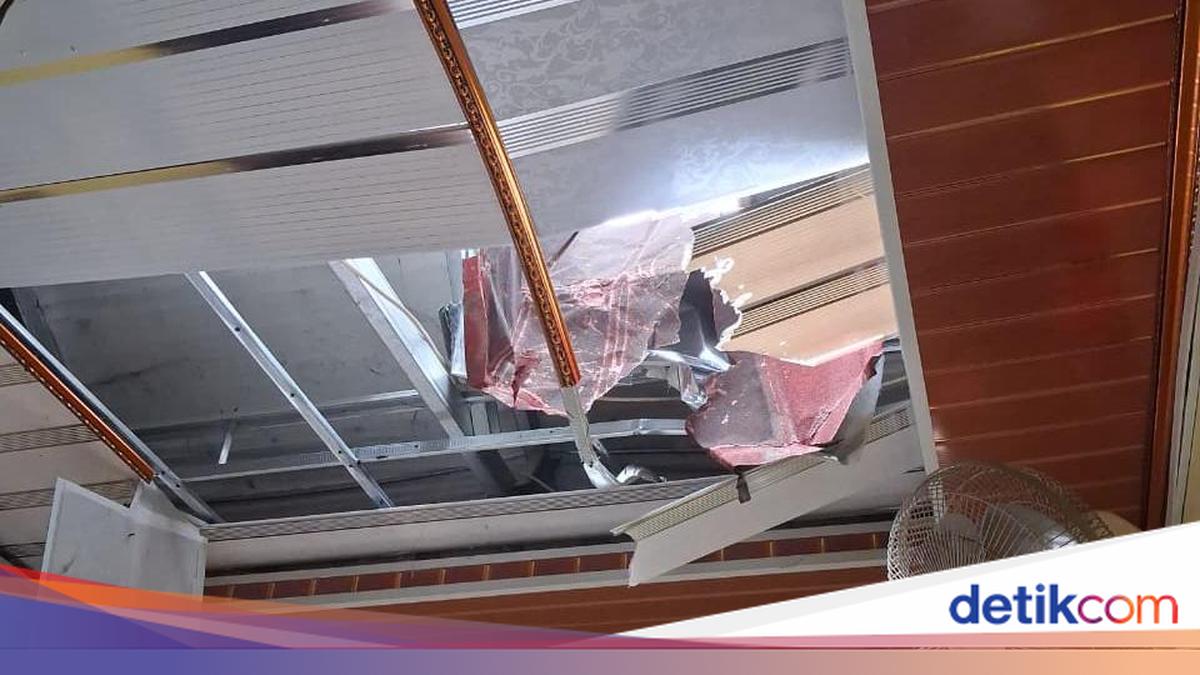
A resident’s roof in Pandak, Bantul, was damaged when a large chunk of ice fell on it. The source of the ice remains a mystery, although it is suspected to be linked to a natural phenomenon.
The impact also broke a wooden chair. The incident was among the stories that attracted readers’ attention on detikJogja over the past week.
How the incident unfolded
The incident occurred at about 8am local time on Monday, 2 November. Part of a resident’s roof in Jodog, Gilangharjo, Pandak, Bantul, was damaged after being struck by a large chunk of ice.
“Correct, a resident’s roof in Jodog was damaged after being hit by a chunk of ice,” Ribut Bimo Haryo Tejo, secretary of the Bantul Regency Disaster Management Agency (BPBD), told detikJogja by phone on Monday, 2 November 2026.
The house belongs to a resident who was out of town. At the time, someone was sitting in a gazebo in the yard and suddenly heard a loud bang from inside the house.
“The witness then checked and found a chunk of ice, 20 centimetres in diameter, which had fallen onto the roof above the living room,” he said.
The damage included the sand-coated galvalume roof, the PVC ceiling and its frame, and a wooden chair broken by the falling ice.
“The damaged section of the living-room roof measured 1 by 1 metre. There were no deaths or injuries, as the house was empty,” he said.
Given the damage, the chunk of ice is suspected to have fallen from a considerable height. However, the parties involved have not been able to establish which natural phenomenon may have caused it.
BMKG’s account
The Jogja Meteorological Station of the Meteorology, Climatology and Geophysics Agency (BMKG) recorded no rain at the time of the incident.
“Our radar data showed no rain when the incident occurred. Rain in Pandak only began at 9am, and it was light,” said Heri, a forecaster on duty at the Jogja Meteorological Station, speaking to detikJogja by phone on Monday, 2 November 2026.
Radar analysis for that morning did show rain clouds, but they were located to the north-west, around Pajangan, and to the north, around Panggungharjo in Sewon—not at the site of the incident, he said.
Heri added that BMKG’s preliminary weather analysis found a potential atmospheric disturbance associated with the Madden-Julian Oscillation (MJO) over Java. However, this has not been confirmed as the cause of the ice falling in Pandak.
“The MJO phenomenon covered parts of Java, but this was a localised incident, so more detailed analysis is needed. It happened at one specific house in Pandak, and further analysis using more detailed data is needed to determine where the ice came from,” he said.
Climatology expert’s view
Dr Emilya Nurjani, a climatology expert at Gadjah Mada University (UGM), also said she could not confirm the origin of the chunk, which was suspected to have fallen from the sky. She dismissed the suggestion that it came from a cumulonimbus cloud.
“If what is meant is that it came from a cumulonimbus, probably not,” she told detikJogja on Tuesday, 3 November 2026.
Cumulonimbus clouds are convective clouds that rise high into the atmosphere. Their shape resembles a mushroom, with a cap-like formation at the top.
In tropical regions, these clouds can reach heights of more than 18 kilometres and penetrate the stratosphere, a phenomenon usually known as an overshooting top cumulonimbus.
Seen from the ground, cumulonimbus clouds appear thick, dark and tall. They can bring extreme weather, heavy rain, lightning and strong winds.
A single-cell cumulonimbus cloud has a life cycle of around 30 to 60 minutes, while multi-cell or supercell cumulonimbus clouds can last longer.
Could it have come from an aircraft?
Some speculation has suggested the ice may have come from icing—the shedding of ice that has accumulated on an aircraft. Dr Emilya said this possibility would also need to be verified.
“If it was icing from an aircraft, data would need to be checked to see whether a plane passed over the area at the time,” she said.
Bayu Yunarko, the Jodog hamlet head, said no aircraft had passed over the area when the incident occurred. The weather was also dry.
“No planes passed during the incident; it was only cloudy,” he told detikJogja by phone.
Bayu also said there was no ice factory in Jodog, making it more likely that the chunk had come from above.
“There is no ice factory, and there were no strong winds at the time,” he said.
Source: jawawa.id (https://jawawa.id/newsitem/origin-of-ice-chunk-that-crashed-through-bantul-residents-roof-remains-a-mystery-1794117030)
Originally published by detikJogja (https://www.detik.com/jogja/berita/d-8743497/asal-muasal-bongkahan-es-jebol-rumah-warga-bantul-masih-misterius), translated from Indonesian