
ORI Reminds Ministry of Manpower to Ensure THR Payments Are Fully Settled on Time Before 2 April
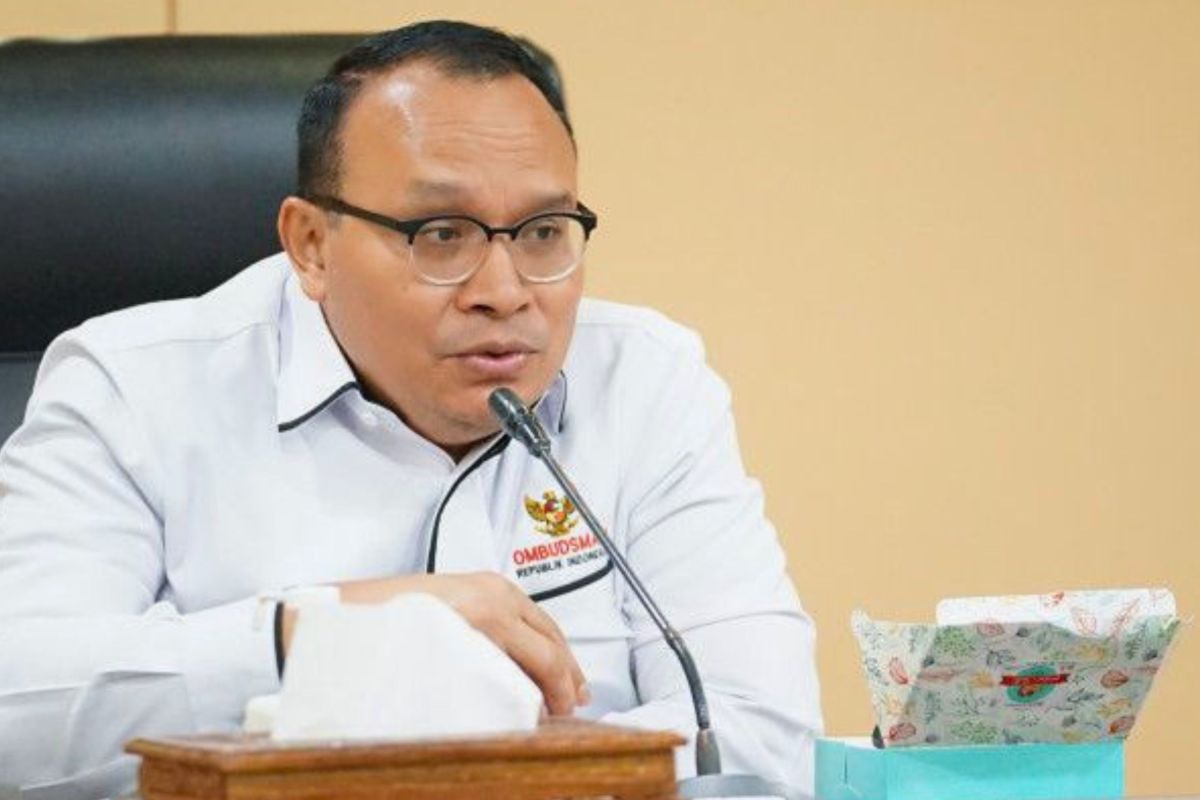
Jakarta (ANTARA) - The Ombudsman of the Republic of Indonesia (ORI) has reminded the Ministry of Manpower (Kemnaker) and regional governments (pemda) not to neglect their legal obligations in ensuring that workers’ Holiday Allowance (THR) rights are fully and timely met.
Labour Minister Yassierli previously set a deadline until Thursday (2/4) for certain companies found paying THR incompletely or in instalments to immediately settle the shortfall.
“As the THR payment deadline for 2026 approaches, ORI’s monitoring in 11 provinces in March 2026 revealed various problems,” said ORI member Robert Na Endi Jaweng, when contacted in Jakarta on Wednesday.
He detailed the findings, which span policy levels, field implementation, complaint management, and macro-level issues.
At the policy level, the Ombudsman highlighted the weakness of regulatory instruments, which are still in the form of ministerial circulars (SE Menteri) with limited binding power.
Additionally, there is a lack of synchronisation between labour regulations (regarding rule enforcement) and licensing regulations (regarding sanction enforcement), as well as limited authority of regional governments in implementing labour licensing.
He revealed that these problems were at least found in several regencies with dense industrial areas on Java Island.
Then, at the field implementation level, Robert continued, there are two crucial issues. First, the absence of Standard Operating Procedures (SOP) due to the lack of technical guidelines integrating the violation handling flow from supervision to sanction execution.
Second, the limited authority of labour inspectors, who can only perform guidance functions without coercive powers.
“The absence of SOP results in case handling in the field being highly dependent on the discretion and initiative of individual officials in the regions, without standard service and uniform work systems,” he said.
In terms of complaint management, ORI found several problems, including suboptimal updates of complaint data at the regency/city level (Jambi Province), absence of complaint resolution time standards (Bekasi Regency and Bogor City), and lack of integration of local THR complaint posts with the national system at poskothr.kemnaker.go.id.
Meanwhile, at the macro level, he said field findings showed practices of public service maladministration, including delays in THR payments, neglect of the prohibition on instalment THR payments, and failure to issue inspection notes to violating companies.
He stated that such maladministration has persisted from 2023 to 2025, with 652 complaints. Therefore, ongoing supervision and evaluation are crucial to ensure every THR complaint is resolved.
In 2026, Robert noted there are 1,461 new complaints that could become “debts” for the following year if not promptly addressed.
Given the layered nature of these problems, ORI urges Kemnaker and pemda to undertake comprehensive improvements, including policy enhancements and rule enforcement related to the prohibition on instalment THR payments.
This includes strengthening supervision through harmonisation of cross-ministerial sanction enforcement, optimising the integrated THR post work system involving data sharing and business processes, and increasing budget support for labour supervision.
“Various steps are aimed at guaranteeing administrative and substantive justice for workers regarding their normative rights, while promoting fair and welfare-oriented business practices,” Robert stated.